

The Hindsight Trading Trap (And How to Break It)
Hindsight trading triggers a cycle of regret, revenge trades, and losses. Learn how the trap works and how mechanical rules break the loop.
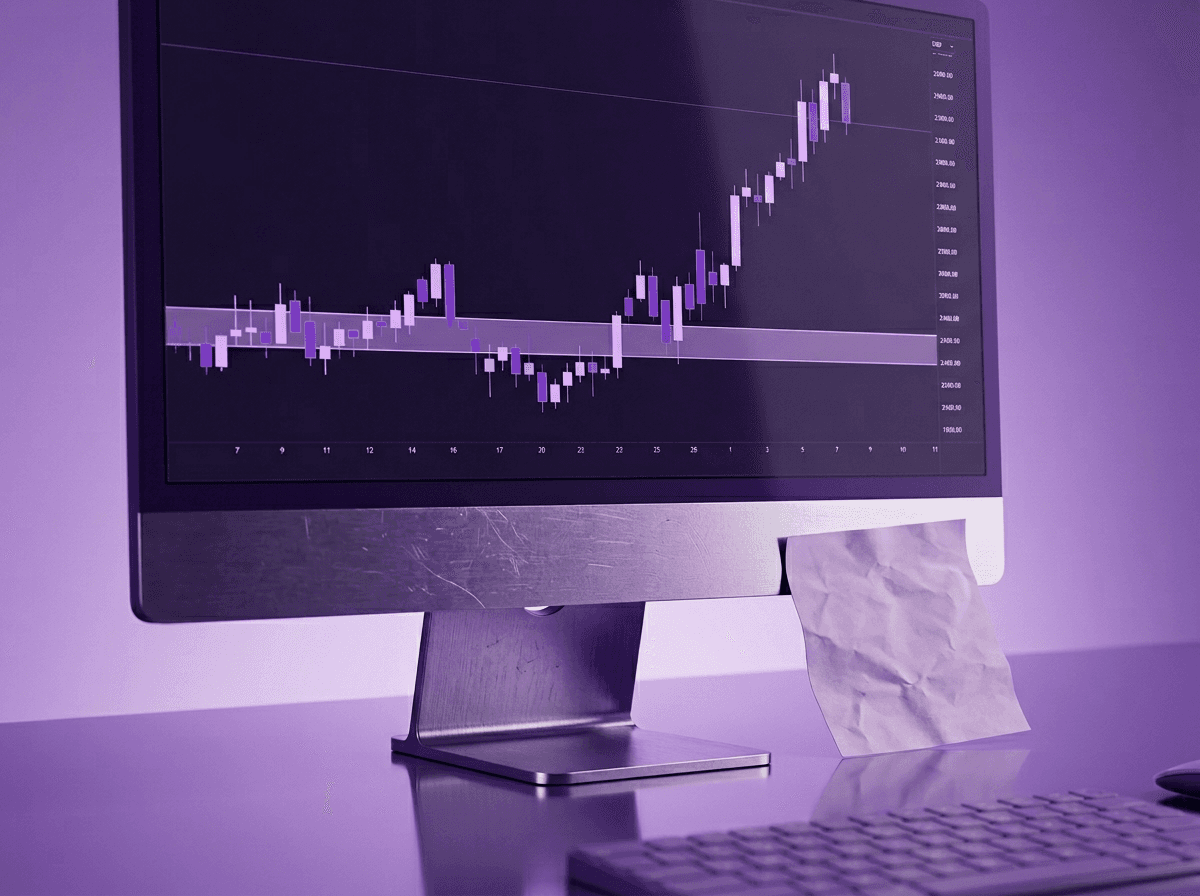
Hindsight trading is when you look at a completed move on the chart and convince yourself you should have taken it. "I knew that was going to happen." "I should have entered." Sound familiar? That thought is the first domino in a cycle that leads to regret, revenge trades, and blown accounts. The trap is not the missed trade. The trap is what you do next.
TL;DR
Hindsight trading means beating yourself up over a move that already happened, which you had no plan to take in the first place.
The cycle runs: hindsight regret, then revenge trading, then losses, then lower confidence, then more missed trades, then more hindsight regret.
Discretionary traders are especially vulnerable because they have no written rules to evaluate what counts as a valid setup.
Mechanical rules break the loop by removing the "should have" question entirely: if it met your criteria, you took it. If it did not, it was never your trade.
The fix is structural, not psychological. You do not need more willpower. You need a better system.
The Hindsight Trap: What It Looks Like
You just went through a losing streak. Maybe two or three trades hit your stop. Your confidence drops. The next time your setup appears, you hesitate. "What if this one loses too?" So you skip it.
Price moves exactly where you expected. You sit there watching the candle push 80 pips in your favor, and you are not in the trade.
Now the hindsight kicks in. "I knew it. I knew that was going to happen. If only I had entered, I would have made $800."
This is the moment the trap snaps shut. Because what happens next is not rational analysis. It is emotional reaction.
Walkthrough: A Hindsight Trap on GBP/USD
A trader using a 4-hour supply and demand strategy sees price pull back into a demand zone at 1.2650 during London session. The setup checks all their criteria, but they hesitate because their last two trades lost. They skip the entry.
Price rallies from 1.2650 to 1.2730 over the next six hours. That is 80 pips. At 0.5 lots ($5/pip), the missed profit would have been $400.
Math check: 0.5 lots on GBP/USD = $5/pip. $5 times 80 pips = $400 potential profit.
The trader did not lose money on this trade. But the emotional impact of seeing $400 walk away feels worse than an actual loss.
That feeling of "I should have" is hindsight bias dressed up as self-awareness. It feels like you are learning from a mistake. You are not. You are setting yourself up for the next one.
Why Regret Leads to Revenge Trading
The regret from a missed trade creates a specific kind of pressure. Not just disappointment, but urgency. "I already missed one good setup. I cannot afford to miss another."
That urgency is the bridge between hindsight and revenge trading.
Here is how it plays out. After missing the GBP/USD move, the trader is scanning charts looking for anything that resembles an opportunity. They see a setup on EUR/USD that sort of looks like their criteria, but the demand zone is weak, the structure is unclear, and the time frame does not match their plan.
Normally, they would skip it. But today is different. Today they are carrying the weight of that missed $400. So they enter.
The trade loses. Now they are down money and carrying the emotional baggage of the missed trade plus a new loss. Their confidence drops even further.
This is not a one-time event. It is a pattern. And it runs on a specific fuel: the absence of clear rules.
When you trade without defined criteria, every move on the chart looks like a trade you "should have taken." There is no filter. Every missed move triggers regret. Every bout of regret increases the pressure to act. And acting without a plan produces losses.
The FOMO component amplifies it. You are not just regretting the past trade. You are afraid of missing the next one. Two emotional forces pulling you toward the same bad decision.
The Cycle That Keeps You Losing
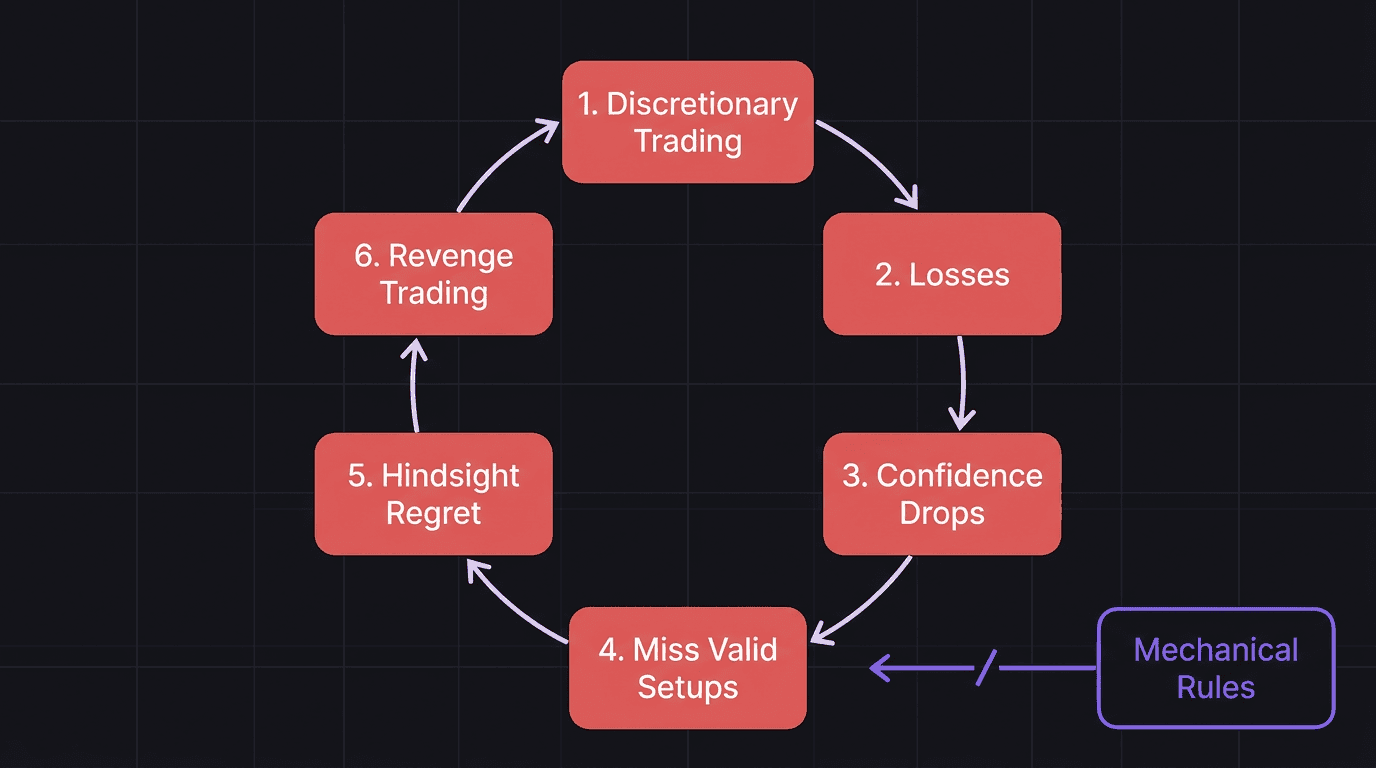
The full cycle looks like this, and it repeats until you break it:
Discretionary trading. You trade based on gut feeling, without specific written trading rules.
Losses. Emotion-driven entries produce random results. Bad setups lose.
Confidence drops. After losses, you start doubting yourself and your strategy.
Missed setups. Low confidence makes you hesitate on valid setups.
Hindsight regret. The missed setup plays out, and you beat yourself up.
Revenge trading. Regret pushes you into forcing a low-quality trade.
More losses. The forced trade loses because it was not based on your plan.
Back to step 1. Confidence drops further, and the cycle restarts.
The bottom 90% of traders live inside this loop. Some have been in it for years without recognizing it. Every cycle strips a little more capital and a little more belief that trading can work.
Walkthrough: A Full Cycle in One Week
Monday: Trader enters EUR/USD based on a "gut feeling" that price will bounce from 1.0880. No structural criteria met. Price drops to 1.0840. Stop hit at 1.0860. Loss: 20 pips at 0.5 lots = $100.
Tuesday: Confidence low. Trader sees a valid setup at 1.0820 demand zone but hesitates. Skips it. Price rallies to 1.0890, a 70-pip move.
Wednesday: Regret from Tuesday's missed trade. Trader forces an entry on a weak zone at 1.0870. Price drops to 1.0840. Stop hit at 1.0850. Loss: 20 pips at 0.5 lots = $100.
Math check (week total): Monday loss: 0.5 lots times 20 pips = $100. Wednesday loss: 0.5 lots times 20 pips = $100. Total losses: $100 + $100 = $200. Missed opportunity (Tuesday): 0.5 lots times 70 pips = $350. Net result: down $200 with $350 left on the table.
One valid trade skipped, two invalid trades taken. That is the cycle in action.
The painful part is that the trader had a setup that worked on Tuesday. They just could not take it because the cycle had already compromised their decision-making.
Breaking the Loop With Mechanical Rules
The cycle runs on one thing: the absence of rules. Every step in the loop depends on the trader making emotion-based decisions. Mechanical rules cut the power supply.
Here is how each part of the cycle changes when you have a defined plan:
"I should have entered." If the setup met your written criteria and you skipped it, the fix is execution discipline, not a different strategy. If it did not meet your criteria, it was never your trade. There is nothing to regret.
"I need to make up for the missed trade." Your plan says you only take setups that check every box. The next trade is evaluated on its own merit, not on what happened before it.
"My confidence is low after losses." Your data shows a 55% win rate over 50 trades. Three losses in a row is normal variance within that rate. The confidence comes from the data, not from the last trade.
"I feel like I need to trade." Your plan says: if no valid setup exists, stay out. Capital preservation beats activity.
The shift is structural. You are not trying to feel less regret or be more disciplined through willpower. You are changing the environment so the emotion has nowhere to go.
When your trading rules are specific enough that you can look at any setup and answer "does this check every box, yes or no?" the hindsight question disappears. You either took a valid trade or you did not take an invalid one. Both outcomes are correct.
The trading mistakes that feed the cycle (skipping valid setups, forcing invalid ones, abandoning the plan) all trace back to the same root cause: emotions during trading running the show because there is no system to override them.
How EdgeFlo Helps You Stay in the System
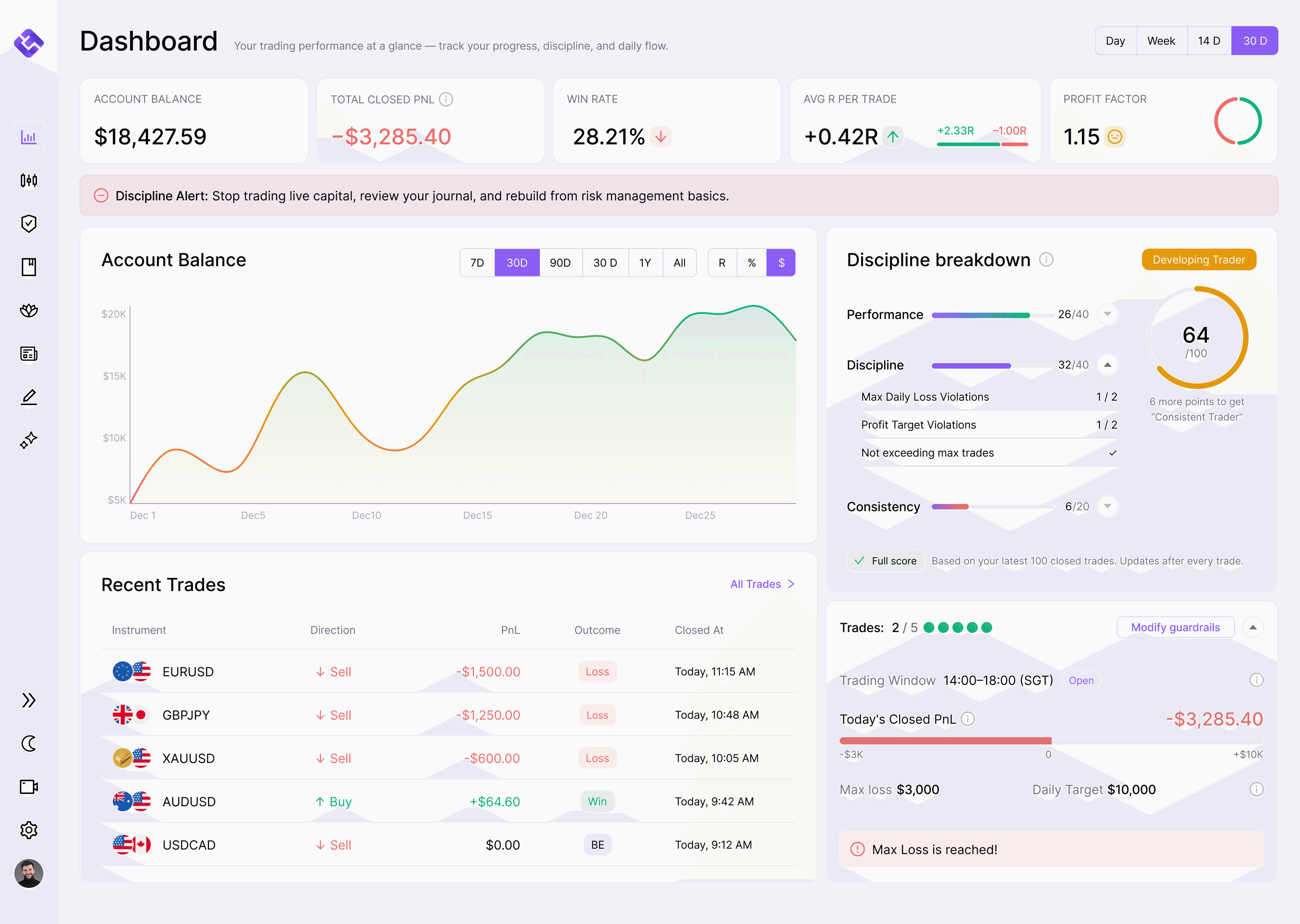
Breaking the hindsight cycle requires a plan that stays visible while you trade, not one that sits in a drawer. EdgeFlo's Edge feature lets you document your entry criteria, exit rules, and management method in one place, then reference them before and during every trade.
After each trade, post-trade self-reporting asks a direct question: did you follow the plan? Over time, that single data point reveals whether your losses come from strategy problems or execution problems. If you followed the plan and still lost, the strategy needs a tweak. If you broke the plan, the cycle is running.
EdgeFlo's guardrails add a second layer. If you hit your daily loss limit, a restriction appears before your next trade. You can override it, but you have to make a conscious choice. That pause is often enough to stop a revenge trade before it starts.
The Edge Brief
Receive Insights on trading psychology, discipline, and the behavioral patterns that create consistent traders from our Founder and the EdgeFlo team, delivered to your inbox.
Think different. Trade different.
What is hindsight trading?
How does hindsight lead to revenge trading?
Can you completely eliminate hindsight bias in trading?
Why do traders keep falling into the hindsight cycle?

Turn discipline on.
Every session.
EdgeFlo is the environment serious traders operate inside.
Start 7-Day Free Trial
Cancel anytime.
No long-term commitment.

Think Different, Trade Different.