

How to Choose Your Trading Style in 4 Steps
Choose between scalping, day trading, swing, and position trading using 4 filters: goals, schedule, personality, and strengths.
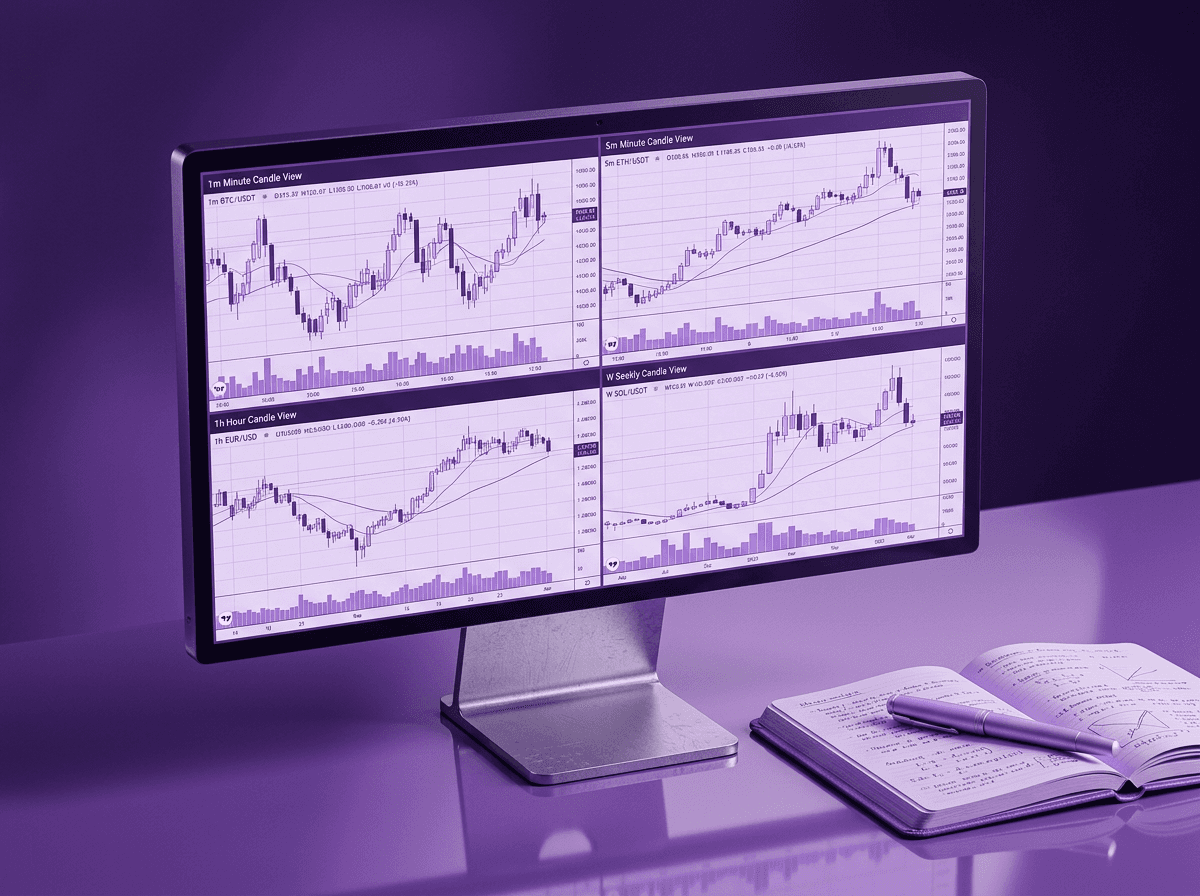
Four trading styles exist, and only one of them fits your life right now. Scalping, day trading, swing trading, and position trading each demand different time, energy, and temperament. The right choice depends on four factors: your goals, your schedule, your personality, and your strengths. Run each style through those four filters, and the answer becomes obvious without trial-and-error blowups.
TL;DR
Four trading styles (scalping, day, swing, position) differ by hold time, pip targets, and chart timeframe.
Your goals should be process-based (execution quality), not dollar-based ($10K/month dreams).
Your schedule dictates your timeframe: limited hours means swing or position trading.
Your personality and emotional tendencies reveal which pace you can sustain long term.
Your journal data exposes your real strengths, not your assumptions about them.
The Four Trading Styles in Plain English
Before you pick a style, you need to know what each one actually demands.
Scalping means seconds to minutes per trade. You target 5 to 15 pips, trade on the 1-minute or 5-minute chart, and take dozens of positions per session. It requires constant screen attention, fast reactions, and low emotional reactivity.
Day trading stretches the hold time to minutes or hours. You close everything before the session ends. Targets range from 20 to 50 pips on the 15-minute or 1-hour chart. Less frantic than scalping, but still a full-session commitment.
Swing trading holds positions for days to weeks. You enter on the 4-hour or daily chart, target 100 to 300 pips, and check charts once or twice a day. This is the style that fits around a job.
Position trading is the longest hold. Weeks to months, targeting major moves on the daily or weekly chart. Minimal screen time, maximum patience required.
The differences are not just technical. They are lifestyle differences. A scalper and a day trader live completely different trading lives even though they both stare at the same currency pairs.
Step One: Match Your Goals to a Timeframe
Here is where most traders go wrong. They set a dollar target ("I want $10,000 per month") and pick whichever style sounds fastest.
That is backwards. You cannot control how much the market gives you. You can control how you execute.
Set process goals instead. "I want to follow my plan on 90% of trades this month." "I want to journal every single position." "I want zero revenge trades this week." These are goals you can actually achieve, and they compound into profitability over time.
Now connect those goals to a style. If your goal is to define your trading style around a 9-to-5 job, swing trading is the obvious fit. You cannot scalp during a meeting. If your goal is full-time trading income and you have the hours, day trading or scalping opens up.
Walkthrough: The Goal Mismatch
A trader sets a goal of $5,000/month. He picks scalping because it "offers more opportunities." He works a full-time job from 8 AM to 5 PM. He tries to scalp the New York session on his phone during lunch breaks. He misses entries, panic-exits, and averages 2 to 3 rushed trades per day. After two months, he is down 8% and frustrated. The problem was never his strategy. The problem was his goal (dollar target) did not match his reality (limited hours). If he had set a process goal (execute 3 clean swing trades per week) and matched it to his schedule, the outcome would have been completely different.
Step Two: Audit Your Available Hours
This step is brutally simple, and most people skip it.
Write down your actual weekly schedule. Not the idealized version where you wake up at 5 AM and trade for three hours before work. The real one. The one with the commute, the meetings, the dinner with family.
Now answer these questions:
How many hours per day can you sit in front of charts?
Which days of the week are genuinely available?
What trading session falls inside your free hours?
What time zone are you in, and does that align with liquid market hours?
If you have 1 to 2 hours in the evening, you are a swing trader. That is not a limitation; it is a filter that saves you years of frustration. The 4-hour and daily chart do not care if you checked them at 7 PM or 7 AM.
If you have 4 or more uninterrupted hours during London or New York, day trading or scalping becomes realistic.
The key rule: tailor your trading to your current life. Not the life you hope to have in six months.
Step Three: Be Honest About Your Personality
This is the step that separates traders who last from traders who burn out.
Ask yourself three questions:
Do you enjoy watching charts, or does it stress you out?
Are you naturally patient, or do you need constant action?
Are you more emotional or more analytical under pressure?
If you are calm and patient, swing trading or position trading will feel natural. You can set a trade and walk away without checking it every five minutes.
If you are competitive and fast-reacting, scalping or day trading might suit your wiring. But be careful here. "I like action" is different from "I handle losses well at high frequency." Scalping punishes emotional reactivity harder than any other style.
If you are emotional and reactive, less screen time protects you. Staring at charts all day when you are prone to revenge trading is like an alcoholic working in a bar. The temptation compounds with exposure. Swing trading reduces that exposure by design.
Walkthrough: Personality Mismatch in Action
A trader loves the idea of scalping. Fast entries, quick profits, exciting pace. She starts scalping EUR/USD on the 1-minute chart during New York open. After a 3-trade losing streak (each losing about 8 pips, or $80 per trade at 1 standard lot), she feels the urge to "make it back." She doubles her lot size on trade 4. It goes against her for 12 pips. At 2 standard lots, that is $240 lost on a single revenge trade. Her personality (emotional, reactive) does not match the style (fast, high-frequency). If she switched to swing trading on the 4-hour chart, those same emotional impulses would have hours to cool before reaching the next decision point.
How to Use Your Journal to Pick Your Style
Your assumptions about your strengths are usually wrong. Your data is not.
After 30 or more trades, open your trading journal and look for patterns. Which session produced your best results? Which timeframe? Which setups? Where did your biggest losses cluster?
If your best trades are all swing entries on the 4-hour chart and your worst trades are all scalps on the 1-minute chart, the data is telling you something. Listen to it.
Here is what to look for:
Win rate by timeframe. If your 4H trades win at 55% and your 1-minute trades win at 35%, the data has already chosen your style for you.
Average R by session. Maybe your London session trades average 1.8R while your New York trades average 0.6R. That tells you where your edge lives.
Emotional patterns. If your journal notes say "frustrated" or "angry" on every scalping day but "calm" on swing trading days, your personality is voting.
Do more of what works. Less of what does not. This is not a new concept, but most traders never actually look at the data that proves it.
Building a mechanical trading plan becomes much easier once you know which style your data supports. The plan writes itself when the data is clear.
When to Change Styles (And When Not To)
Changing your trading style every week is strategy hopping in disguise. But refusing to change when the data clearly says "this is not working" is just stubbornness.
The rule: commit to one style for at least 30 to 50 trades. That gives you enough data to separate signal from noise. If after 50 tracked trades your win rate, average R, and emotional state all point away from your current style, make the switch deliberately.
Valid reasons to change:
Your schedule permanently shifted (new job, new time zone).
50 or more trades show consistent underperformance on your current timeframe.
Your journal reveals repeated emotional breakdowns tied to the pace of your current style.
Invalid reasons to change:
You had 3 losing trades in a row on Tuesday.
You saw a YouTube video about a different style.
Someone in a Discord group is profitable doing something different.
Change based on data, not emotion. That single principle will save you years.
How EdgeFlo Edge Plan Locks Your Style Into Your System
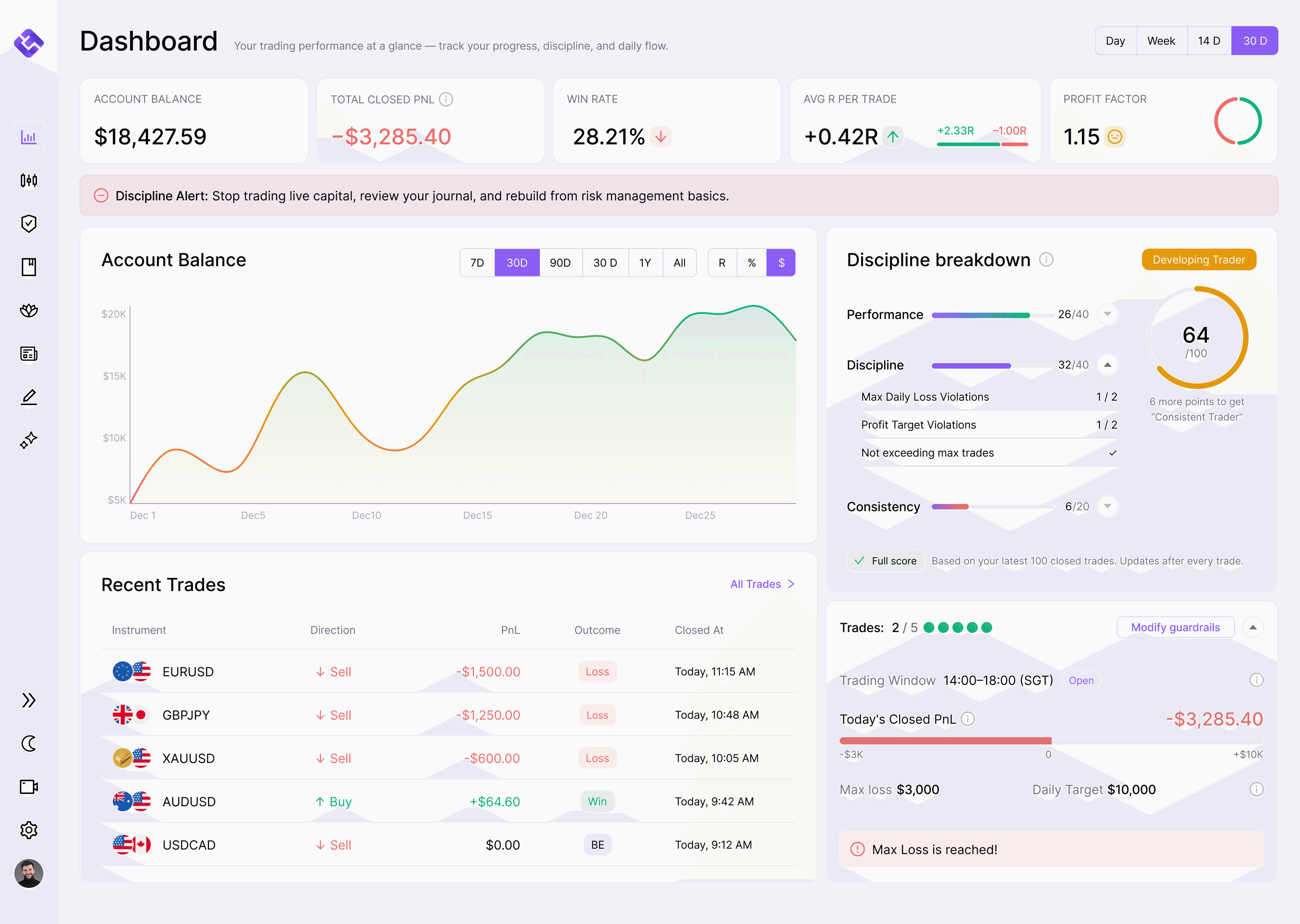
Once you choose a style, the next challenge is sticking with it when losses test your conviction. EdgeFlo's Edge plan builder lets you document your chosen trading style, timeframe, and entry criteria in one place. Your plan stays visible during every session, so you cannot quietly drift into a different style mid-trade.
After each trade, EdgeFlo's post-trade self-reporting asks whether you followed your plan. Over time, the plan stats (available on Plus) reveal your adherence rate and performance within your documented style. That data loop removes guesswork from the "should I switch styles?" question.
Instead of guessing based on feelings, you see the numbers. And the numbers do not lie.
The Edge Brief
Receive Insights on trading psychology, discipline, and the behavioral patterns that create consistent traders from our Founder and the EdgeFlo team, delivered to your inbox.
Think different. Trade different.
What are the four main trading styles?
How do I know which trading style fits me?
Can I change my trading style later?
Do I need to try all four styles before choosing?

Turn discipline on.
Every session.
EdgeFlo is the environment serious traders operate inside.
Start 7-Day Free Trial
Cancel anytime.
No long-term commitment.

Think Different, Trade Different.