

The Best Time to Trade Forex: London, New York, or the Overlap
London Open (3-6 AM EST), New York (8 AM EST), and the overlap (8-11 AM EST) are the three forex windows worth trading. Here is why timing is half the equation.
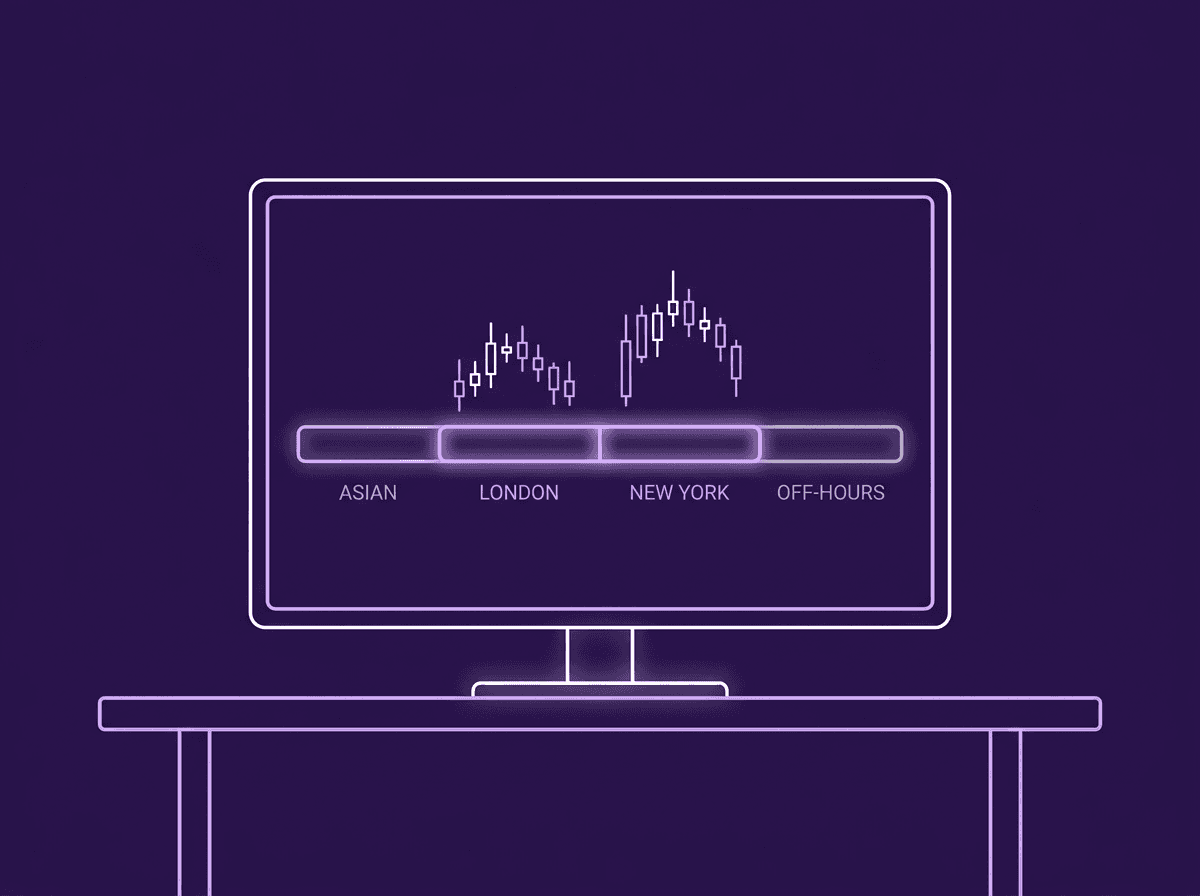
The best time to trade forex is during the London Open (3:00 to 6:00 AM EST), the London/New York overlap (8:00 to 11:00 AM EST), or the New York session open (8:00 AM EST onward). These three windows produce the highest trading volume, the sharpest structural moves, and the most reliable setups because this is when institutional money actively enters the market. Trading outside these windows, especially during the Asian session, puts you in low-volume conditions where price chops sideways and stops you out before the real move begins.
TL;DR
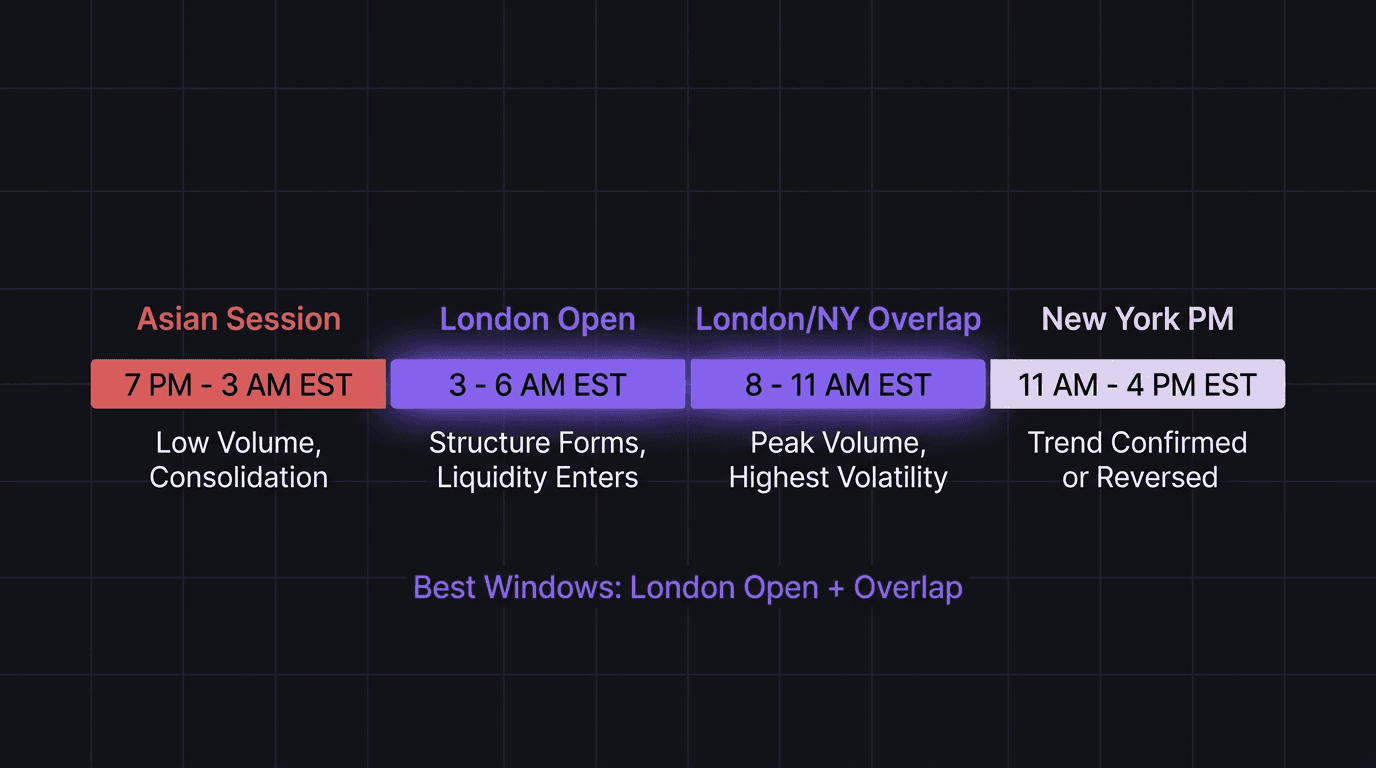
London Open (3:00 to 6:00 AM EST) is when banks open, orders execute, and market structure starts forming. This is where liquidity first enters the market.
The London/New York overlap (8:00 to 11:00 AM EST) produces the highest volume of the day as both sessions trade simultaneously.
New York session (8:00 AM EST onward) either extends the London move or reverses it, often confirming the daily trend direction.
The Asian session (roughly 7:00 PM to 3:00 AM EST) consolidates. Treat it as the calm before the storm, not a trading opportunity.
Pick one session and master it. Trading every session leads to overtrading and exhaustion.
London Open: Where Structure Forms
The London Open runs from 3:00 to 6:00 AM EST. This is the first major injection of institutional liquidity into the forex market each day. Banks in London, Frankfurt, and Zurich start executing orders. Market structure begins forming. Price moves with purpose.
Before London opens, the Asian session typically creates a tight consolidation range. Orders accumulate above and below that range as traders place breakout entries and stops. When London opens, institutional money sweeps one side of that range, grabbing the resting liquidity, and then drives price in the intended direction.
This is why the London Open produces such clean moves. The Asian consolidation fills the fuel tank. London lights the ignition.
If you can only trade one window, the London Open is the strongest candidate. It tends to set the initial trend direction for the day. Your pre-market routine should happen 30 to 60 minutes before 3:00 AM EST: mark your bias, identify your zones, note where liquidity sits, and then wait for the session to open.
Walkthrough: London Open Sweep on EUR/USD
During the Asian session, EUR/USD consolidates between 1.0850 and 1.0870. Buy stops sit above 1.0870. Sell stops sit below 1.0850. At 3:05 AM EST, London opens. Price drops to 1.0843, sweeping below the Asian range. A strong bullish candle closes back above 1.0855. You enter long at 1.0858 with your stop at 1.0838.
Price rallies through the London session. By 5:30 AM EST, it reaches 1.0918. You close at 3R. The entire move was fueled by the Asian session liquidity that London swept at the open.
The key detail: the setup did not exist at 2:00 AM. It required London participation to trigger the sweep and create the entry. Timing made the trade.
The London/New York Overlap: Peak Volatility
From 8:00 to 11:00 AM EST, London traders are still active and New York traders have just joined. This overlap produces the highest trading volume of the entire day. Two major financial centers pushing orders into the market at the same time creates significant volatility and large-range candles.
The overlap is where the day's real move often gets confirmed. If London established a bullish trend, the overlap either extends that trend (continuation) or reverses it (New York reversal). Either way, the move is backed by massive volume, which means cleaner structure and fewer false signals.
This window is ideal for traders who cannot wake up at 3:00 AM. The 8:00 to 11:00 AM EST window fits a normal morning schedule in the US, and it delivers institutional-grade volatility.
The trade-off: the overlap can produce violent whipsaws when London and New York fight for directional control. Your daily bias matters here. If you mapped the trend direction before the session and you see the overlap confirming that direction, you have a high-probability setup. If the overlap is choppy and undecided, stepping aside is the correct play.
New York Session: Continuation or Reversal
The New York session opens at 8:00 AM EST. US institutions, Wall Street banks, and fund managers enter the market. This is where the daily candlestick often gets decided.
New York does one of two things: it continues the move that London started, or it reverses it entirely. In most cases, the trend direction established during the New York session determines the daily close. That makes it the most important session for daily bias.
If London pushed price bullish and New York continues bullish, the trend is confirmed. If London pushed bullish but New York reverses, the daily candle may close bearish. Understanding which scenario is playing out is critical for trade management.
A practical pattern: if you took a trade at London Open and price is still trending in your direction when New York opens, you can trail your stop to lock profits. If New York reverses against you, you exit at breakeven rather than giving back the London gains.
Walkthrough: New York Reversal After London Move
London pushed GBP/USD from 1.2650 to 1.2720 during the morning. You are long from 1.2665, stop moved to breakeven at 1.2665. At 8:30 AM EST, New York opens and prints a bearish engulfing candle at 1.2720. Price drops to 1.2685 within 20 minutes. Your breakeven stop is not hit. But the momentum is clearly shifting. You close at 1.2695, locking in 30 pips rather than hoping for continuation.
That 30-pip gain required reading the session transition. Without awareness of timing, you might have held through the reversal and lost the entire trade.
Why the Asian Session Is Not Worth Trading
The Asian session (roughly 7:00 PM to 3:00 AM EST, covering Sydney and Tokyo) has low institutional participation compared to London and New York. Price action during this window is characterized by small candles, tight ranges, and choppy back-and-forth moves.
Two things happen when you trade the Asian session as an intraday trader. First, you get chopped out. Price oscillates within a narrow range, triggering your stop before moving back to your entry. Second, you enter a trade early and then sit through hours of nothing, only to watch price finally move during London, often against your position.
The Asian session is not useless. It is useful for analysis. This is your planning window. Mark your key levels, identify liquidity locations, and build your bias. Just do not execute trades during this period unless you are specifically trading a multi-day swing setup.
There is a beginner exception: if you are brand new and need to practice reading charts in a low-pressure environment, the Asian session is a good practice ground. But do not expect to make consistent money from it. The fuel tank is filling. The ignition has not arrived.
How EdgeFlo Restricts Your Trading Window
Knowing which sessions to trade is the easy part. Actually staying out of the market during off-hours is the hard part. You see a "setup" at 11:00 PM, you know you should not trade it, and you take it anyway. Sound familiar?
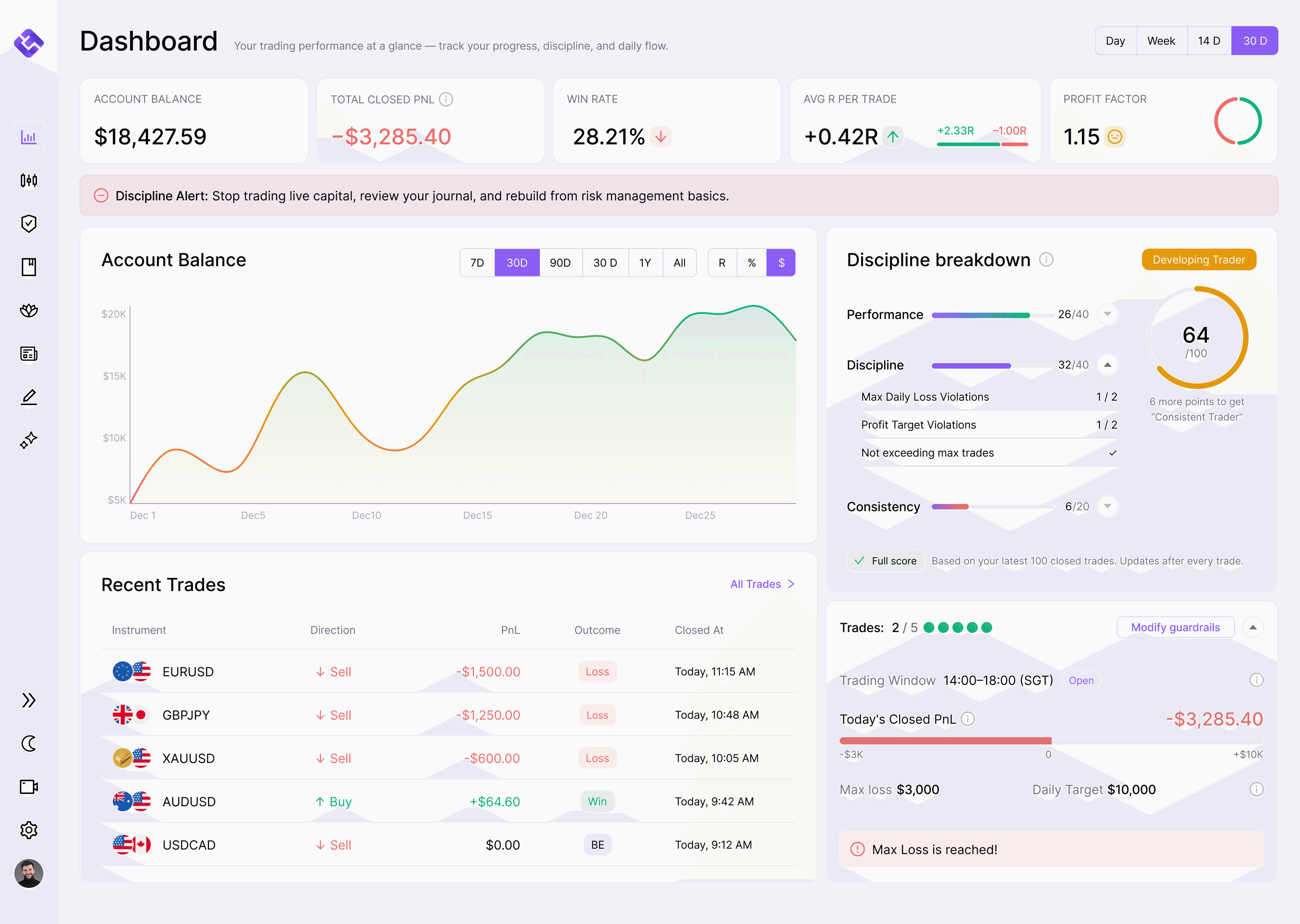
EdgeFlo's trading windows feature lets you set your chosen session, for example 3:00 AM to 6:00 AM EST. Outside that window, the trade button is greyed out. You can override it (you always have that option), but the override forces a conscious decision rather than an unconscious habit.
This is environment design applied to timing. Instead of relying on willpower to stay out of the Asian session, you set the constraint once and the system holds you to it. Over time, your journal data will show exactly how many trades you took inside your window versus outside it, and what each group returned.
Most traders who commit to one session and enforce it with a hard constraint see their win rate improve within the first month. Understanding how each forex session works is the first step. Not because the strategy changed, but because they stopped diluting good setups with low-quality entries taken during dead hours. The fewer trades you take outside your window, the cleaner your data becomes.
The Edge Brief
Receive Insights on trading psychology, discipline, and the behavioral patterns that create consistent traders from our Founder and the EdgeFlo team, delivered to your inbox.
Think different. Trade different.
What is the best time to trade forex?
Why should I avoid trading the Asian session?
What are kill zones in forex?
Can I be profitable trading only one session?

Turn discipline on.
Every session.
EdgeFlo is the environment serious traders operate inside.
Start 7-Day Free Trial
Cancel anytime.
No long-term commitment.

Think Different, Trade Different.