

The Two-Strike Rule for Trading Zones
Attack a supply or demand zone twice max. If price breaks through both times, the level is dead. Learn the two-strike rule that prevents overtrading zones.

You mark a supply zone on EUR/USD. Price enters the zone, you sell, and it stops you out. Price returns to the zone 30 minutes later. You sell again. Stopped out again.
Now price is heading back toward the zone a third time. Everything in you says "this time it will hold." It rarely does.
The two-strike rule is a hard cap on how many times you attack a single price zone: twice, and done. If a zone does not produce a winner within two attempts, the level is likely invalid. Continuing to trade it is not persistence. It is wishful thinking.
TL;DR
Attack any supply or demand zone a maximum of two times.
If both trades lose, the zone is considered dead. Do not re-enter.
This rule prevents the most common form of overtrading: repeatedly hitting the same broken level.
Combine it with your pre-trade checklist to catch zone fatigue before entry.
Two strikes protect capital and force you to find the next valid setup instead of fixating on one.
Why Traders Overtrade a Single Zone
A good supply or demand zone is like a strong first impression. You analyze it, mark it, and wait for price to arrive. By the time price reaches the zone, you are emotionally invested in the idea. You have already decided what is supposed to happen.
When the first trade fails, cognitive bias kicks in. "The zone is still valid." "That was just a liquidity sweep." "The next touch will hold."
Sometimes that is true. Zones absolutely can work on the second touch. But by the third, fourth, or fifth attempt, you are no longer trading the chart. You are trading your ego. You are defending a decision you already made, and every new trade is an attempt to prove yourself right.
Sound familiar? This is one of the most expensive habits in trading. Not because any single loss is large (you are hopefully risking 0.5% to 1% per trade), but because the losses stack up on the same idea, in the same session, with the same emotional baggage.
How the Two-Strike Rule Works
The rule is simple.
Strike 1: Price enters your marked zone. You take the trade with your standard entry confirmation. It loses.
Strike 2: Price returns to the same zone. You take the trade again with confirmation. It loses.
After Strike 2: That zone is done. You cross it off your chart, remove it from your watchlist, and move on. No third attempt, no matter how "perfect" the next entry looks.
What Counts as the "Same Zone"
A zone is defined by the specific price range you originally marked. If you drew a supply zone from 1.0920 to 1.0940 on EUR/USD, any trade entry within that 20-pip range counts as a strike at that zone.
A new zone at a different price level (say, 1.0980 to 1.1000) gets its own two-strike count. The rule is per zone, not per direction.
When to Reset the Count
The strike count resets only when the zone is freshly created or when the market structure has fundamentally changed (a higher-timeframe shift that redefines the entire price range). A mere pullback and re-entry into the same zone does not reset anything.
Walkthrough: Two Strikes on a Supply Zone
You are trading EUR/USD during the London session. Your analysis identifies a supply zone between 1.0920 and 1.0940. The zone formed after a strong bearish impulse leg, and the 4-hour trend is bearish.
Strike 1: Price rallies into the zone at 1.0932. You see a bearish engulfing candle on the 15-minute chart. You enter short at 1.0930 with a 15-pip stop-loss at 1.0945 and a target at 1.0860 (70 pips). Risk: 0.5% of your $10,000 account = $50.
Lot size: $50 risk / (15 pips x $10 per pip per standard lot) = 0.33 lots.
Price pushes through the zone to 1.0946 and stops you out. Loss: $50.
Strike 2: Ninety minutes later, price pulls back from 1.0960 into the zone again. At 1.0935, you see another bearish reaction candle. You enter short at 1.0933 with a 15-pip stop at 1.0948. Same target, same risk.
Price consolidates in the zone for 40 minutes, then blasts through to 1.0952. Stopped out. Loss: $50.
After Strike 2: The zone is dead. You remove it from your chart. Total damage from this zone: $100 (1% of account). You move your attention to the next valid level.
What Happens Without the Rule
Same zone, same first two losses. But this trader does not have the two-strike rule.
Strike 3: Price enters the zone again at 1.0928. The trader thinks "third time is the charm." Short entry, stopped out at 1.0945. Loss: $50.
Strike 4: Price enters one more time at 1.0938. The trader is now angry. Increases lot size to 0.50 lots. Stopped out at 1.0953. Loss: $75.
Strike 5: The trader switches to a buy because "the zone is clearly broken." Enters long at 1.0955 with a quick target. Price reverses and drops. Loss: $50.
Total damage from this zone: $275 (2.75% of account). Nearly three times what the two-strike rule would have allowed.
The Logic Behind Two (Not One, Not Three)
One strike is too few. Zones genuinely work on the second touch more often than the first. The first entry can fail simply because price needs to grab liquidity above or below the zone before reversing. A single-strike rule would have you abandoning valid zones prematurely.
Three or more strikes means you are spending too much capital on a single idea. With each failed attempt at the same zone, the probability that the zone holds decreases. The orders that originally created the zone (the supply or demand) get absorbed with each touch. By the third attempt, most of that institutional interest is gone.
Two strikes is the balance point. It gives the zone a fair chance to work while capping your exposure to a single idea at two risk units.

Integrating the Two-Strike Rule Into Your Process
Add It to Your Pre-Trade Checklist
Before every trade, check: "How many times have I already traded this zone?" If the answer is two, the entry is automatically disqualified. This takes three seconds and saves you from the most common zone-overtrading mistake.
Mark Zones Visually
After the first strike, change the zone color on your chart (for example, from green to yellow). After the second strike, turn it red or delete it entirely. The visual cue prevents you from even considering a third entry.
Pair It With the Three Loss Rule
The two-strike rule limits damage per zone. The three loss rule limits damage per session. Together, they create two layers of protection: you cannot over-commit to a single idea, and you cannot over-commit to a single session. If your first two strikes happen on the same zone and the third loss comes from a different level, both rules work independently.
Journal Each Strike
Log which zones got one strike and which got two. Over 30 days, you will discover patterns. Maybe your supply zones hold more often on the first touch than demand zones. Maybe zones on the 1-hour chart work better than zones on the 15-minute chart. This data helps you refine which zones deserve your capital in the first place.
The Emotional Side: Why Moving On Is the Real Skill
Marking a zone, waiting for price to arrive, and then watching it fail twice feels personal. It feels like the market is specifically targeting your analysis. It is not.
The market does not know about your zone. It does not care about your analysis. Zones fail because the opposing pressure (buyers at supply zones, sellers at demand zones) was stronger than expected. That is not a reflection of your skill. It is a normal outcome in a probabilistic game.
The real skill is not finding the zone. It is letting go of the zone when it fails. Every minute you spend fixating on a dead level is a minute you are not scanning for the next valid setup. The opportunity cost of overtrading a broken zone is often worse than the direct losses.
How EdgeFlo Supports Zone Discipline
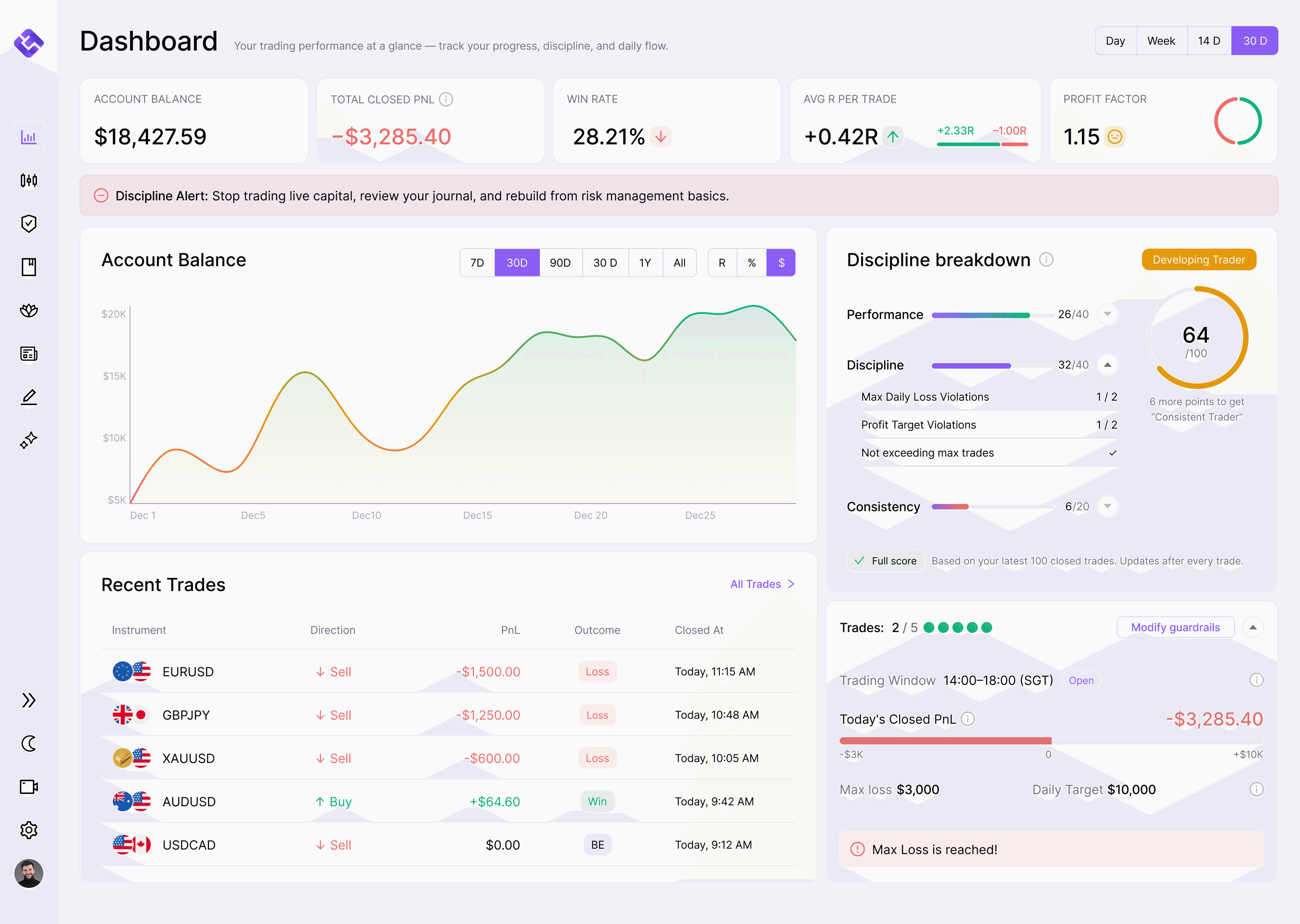
EdgeFlo's trading rules framework lets you define zone-specific parameters as part of your plan. You can document the two-strike rule in your Edge plan, and the post-trade self-reporting prompt will ask whether the trade complied with your zone re-entry limit.
The journal captures every trade tagged by the zone you were attacking. Over time, your performance data shows how zones behave across strikes: first-touch win rate versus second-touch win rate. That data turns the two-strike rule from a feeling into a fact-based boundary.
You do not need more attempts at the same zone. You need better zones and the discipline to walk away from the ones that fail.
The Edge Brief
Receive Insights on trading psychology, discipline, and the behavioral patterns that create consistent traders from our Founder and the EdgeFlo team, delivered to your inbox.
Think different. Trade different.
Why two strikes instead of one or three?
Does the two-strike rule apply to all timeframes?
What if my second strike barely misses and price comes back to the zone?
Can I combine the two-strike rule with the three loss rule?

Turn discipline on.
Every session.
EdgeFlo is the environment serious traders operate inside.
Start 7-Day Free Trial
Cancel anytime.
No long-term commitment.

Think Different, Trade Different.