

Trading Patience: Wait for the Setup or Pay
Patience in trading means waiting days for one A+ setup instead of forcing trades. See how a 7-day wait turned a $30K loss streak into a $22K winner.
Patience is the hardest skill in trading because it does not feel like a skill. It feels like doing nothing while the market moves without you.
You sit at your desk. Charts are open. Price is moving. Other traders are posting wins. And your setup is not there. So you start rationalizing. "This one is close enough." "If I just enter now, I can catch the move before it is gone."
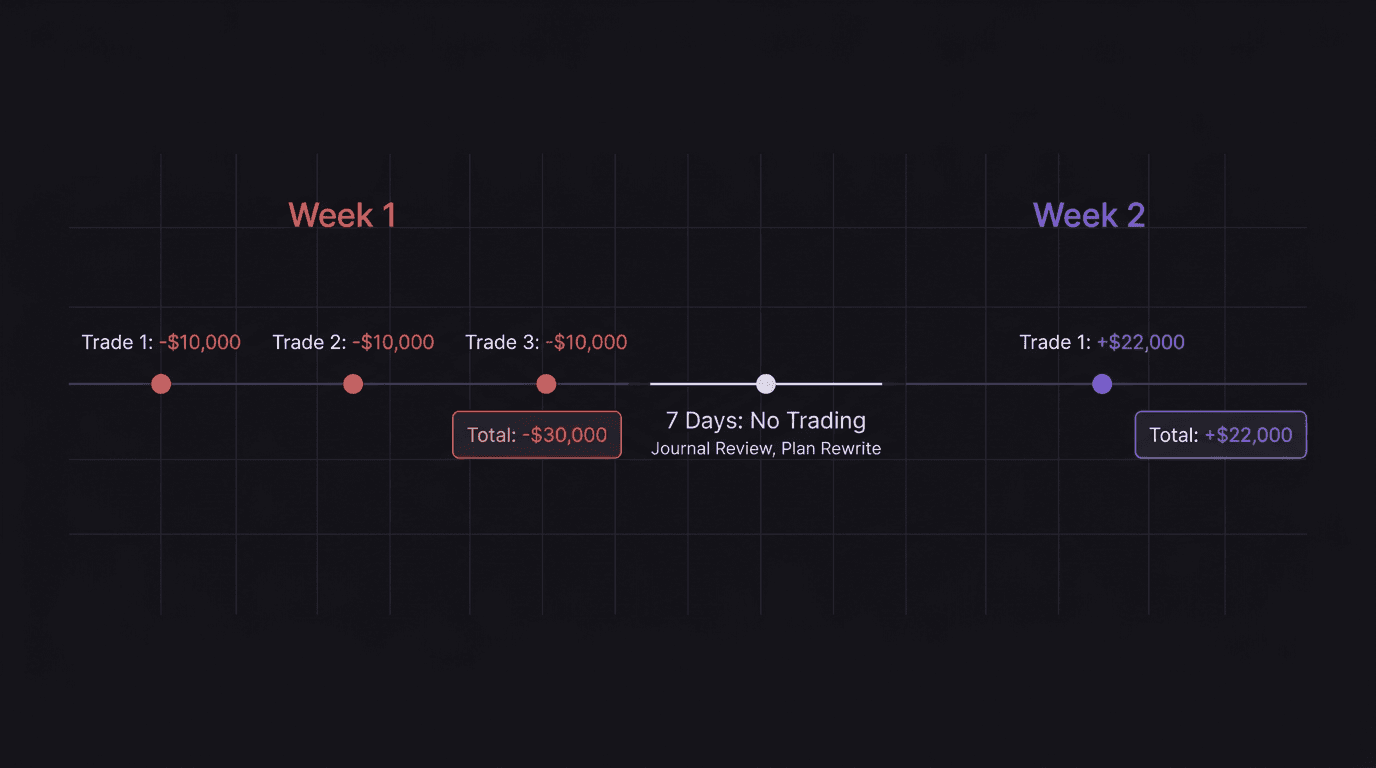
That rationalization is how most traders turn a quiet week into a losing week. One trader learned this lesson the expensive way. He forced three trades in the first week of the month and lost $30,000. Then he did something most traders cannot bring themselves to do: he stopped trading for seven full days. When he finally re-entered the market with a single A+ setup, he made $22,000 in one trade.
The math was simple. Patience paid more than activity.
TL;DR
Forcing trades when your setup is absent is one of the fastest ways to drain your account.
One trader lost $30,000 in a week on three forced entries, then made $22,000 on one patient trade after sitting out for 7 days.
Patience does not mean doing nothing; it means staying engaged (chart review, journal, pre-market routine) without pulling the trigger.
Build patience into your trading rules so it is a system, not willpower.
Quality setups compound; low-quality entries bleed.
Why Patience Feels Wrong
Your brain is wired to reward action. When you see price moving, the same neural circuits that react to food and social approval light up. Sitting still while an opportunity appears to pass feels physically uncomfortable.
This is why overtrading is so common. It is not that traders do not know they should wait. It is that waiting triggers a stress response that feels identical to missing out.
Add financial pressure on top of that and the urge multiplies. If you need this month to be profitable, every day without a trade feels like a day wasted. Your brain starts whispering: "Maybe this setup is good enough. Maybe I should adjust my criteria. Maybe I am being too picky."
Every one of those whispers is your brain trying to relieve discomfort. None of them are market analysis.
The trader who lost $30,000 admitted that his first two losses came from exactly this pattern. He entered before his entry model confirmed because the market was moving and he did not want to miss it. After a profitable previous month, he had the extra layer of complacency: "I have been winning, I do not need to be as careful."
That combination of urgency and complacency is the most expensive emotional cocktail in trading.
The 7-Day Wait That Paid $22K
Walkthrough: GBP/JPY, June Week 2, 4H Chart
After losing three trades in the first week ($30,000 total), the trader made a decision that goes against every instinct a losing trader has. He closed his charts and did not trade for seven days.
During that week, he:
Reviewed every loss in his journal
Identified that two of three losses were bad losses (broke his rules) and one was a good loss (followed the plan, market was choppy)
Noted the emotional patterns: complacency leading to impulse entries, then ego-driven revenge trading
Rewrote his rules to include a mandatory plan review before each session
When he returned to the charts in week two, he was not looking for any trade. He was looking for one specific A+ setup that checked every box in his trade plan.
On GBP/JPY, the 4-hour timeframe showed a clear bullish swing range. Price created higher highs and higher lows on the medium timeframe. Then price pulled back to a demand zone, swept the liquidity below a key swing low, and produced a fractal market shift to the upside.
Every box on his checklist was filled. Higher timeframe bullish. Internal order flow bullish. Liquidity swept. Entry model confirmed.
He entered long, placed his stop loss below the sweep candle, and targeted the supply zone above. The trade hit his take profit while he slept. He woke up to $22,000 in profit.
One trade. Seven days of waiting. No forcing, no rationalizing, no "close enough" entries.
Compare that to the first week: three trades, zero patience, $30,000 in losses.
How to Stay Patient Without Going Crazy
Patience is not about staring at a blank chart for hours. That is a recipe for FOMO. Patience is about staying engaged with the market and your process while keeping your hands off the buy button.
Here is what a patient week looks like:
Morning: Run your pre-market routine. Mark key levels. Identify whether your setup has a chance of forming today. If it does not, close the chart. Session over.
Midday: Review one or two past trades from your journal. Look for details you missed. Update your markup if price structure has changed.
Evening: Check whether any conditions moved closer to your setup criteria. If not, note it in your journal and move on.
This keeps your skills sharp and your chart reading current without creating the pressure to trade. The key insight is that not every chart session needs to produce a trade. Most sessions should produce information, not entries.
The trader from the walkthrough spent his seven days off reviewing losses, tagging emotions, and refining his entry criteria. When the A+ setup appeared, he recognized it instantly because he had been doing the homework. He was not rusty. He was ready.
If you struggle with patience, track it. Write down every day you could have traded but did not because the setup was not there. At the end of the month, compare your "patience days" against your trading consistency. You will likely find that your best months have the most patience days.
Build Patience Into Your Rules
Willpower runs out. Rules do not.
If you rely on discipline alone to stay patient, you will break on the third or fourth day without a trade. Instead, build patience directly into your trading plan so it becomes a mechanical requirement, not a character test.
Three rules that force patience:
Maximum daily trade count. If your plan says one trade per day, you cannot take a second one even if another setup appears. This prevents "well, since I am already trading today" escalation.
Full checklist before every entry. Every criterion on your checklist must be met. Not four out of five. All of them. If you are honest about marking each box, you will naturally filter out setups that are not fully formed.
Mandatory time gap after a loss. After any losing trade, you do not enter another trade for a defined period (24 hours, 48 hours, until your next scheduled session). This kills the revenge sequence before it starts.
The trader from the walkthrough had rules for entry criteria, but he did not enforce a mandatory plan review or a time gap after losses. After the $30,000 week, he added both. The result: five total trades in the month, two winners, three losers, $58,000 in gross profit, and a net positive month of $27,000.
Fewer trades. Higher quality. Better outcomes.
How EdgeFlo Supports Patient Trading
EdgeFlo's pre-market routine prompts you to review your plan before each session. This is not enforced (you can skip it and still trade), but the prompt creates a moment of intentional review that catches the "I do not need to check my plan today" complacency before it costs you.
The routine walks through your levels, your entry criteria, and your risk parameters before the session starts. If your setup is not present after the review, closing the chart feels like completing a task rather than missing an opportunity.
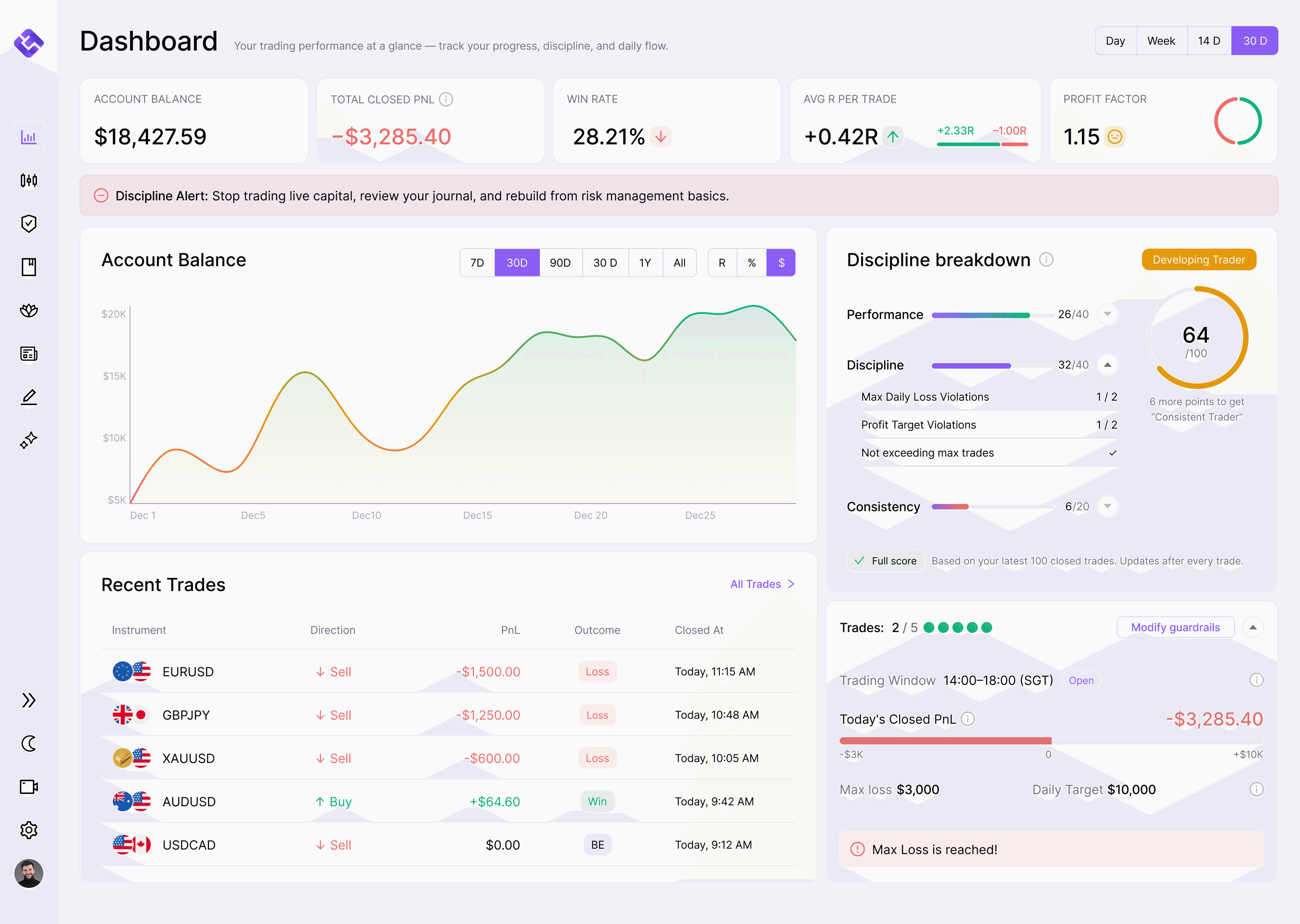
Over time, EdgeFlo tracks how many sessions you trade versus how many you sit out. This data shows you the relationship between patience and profit in your own results, not in theory.
The Edge Brief
Receive Insights on trading psychology, discipline, and the behavioral patterns that create consistent traders from our Founder and the EdgeFlo team, delivered to your inbox.
Think different. Trade different.
How long should I wait between trades?
What do I do while waiting for a setup?
Is it normal to go a whole week without trading?
How do I stop the urge to force trades when nothing is happening?

Turn discipline on.
Every session.
EdgeFlo is the environment serious traders operate inside.
Start 7-Day Free Trial
Cancel anytime.
No long-term commitment.

Think Different, Trade Different.