

Trading Paradigm Shift: Change Your Beliefs First
Your trading paradigm shapes every result. Learn how the belief-action-result loop works and how to shift from losing mindset to process-driven execution.
What a Trading Paradigm Shift Really Means
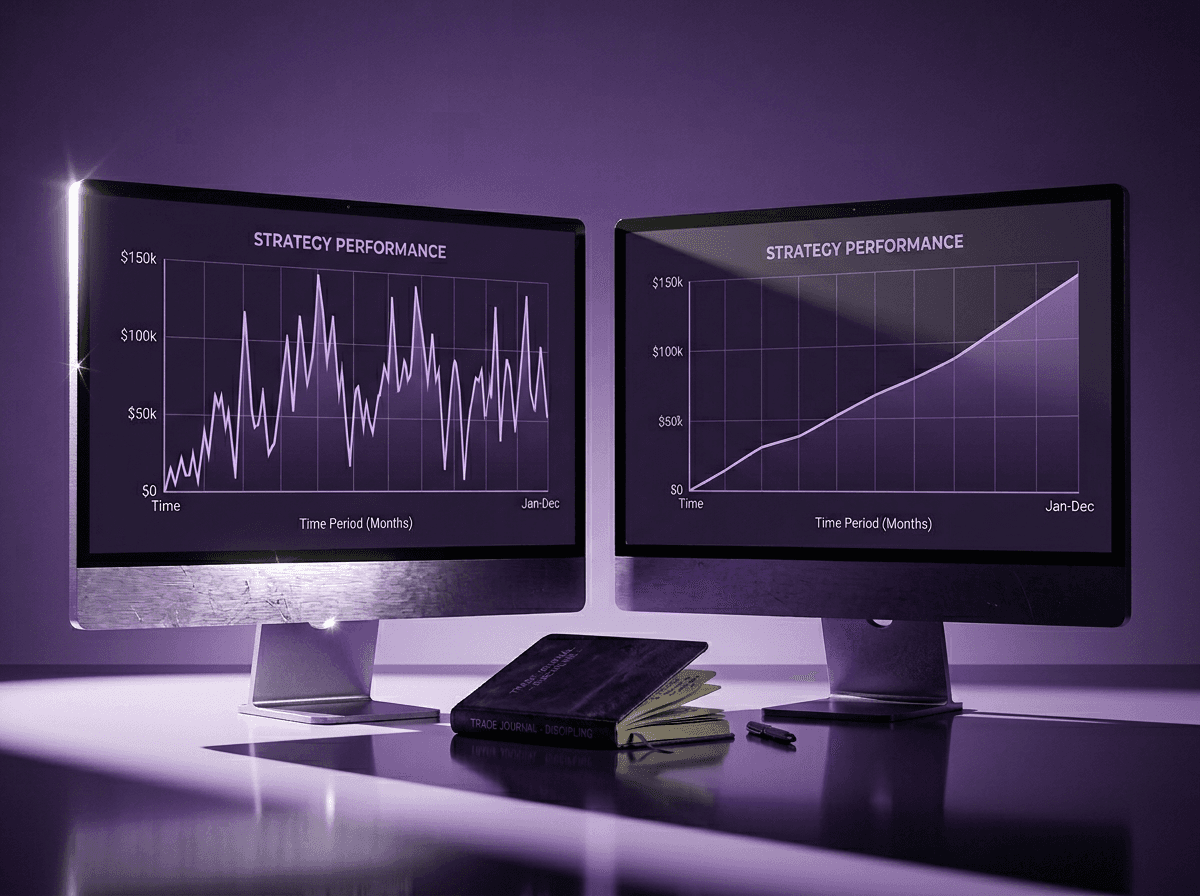
A trading paradigm shift happens when you replace the core beliefs driving your trading behavior. If you believe trading is difficult, you trade hesitantly, take low-quality setups out of fear, lose money, and confirm that trading is difficult. That loop runs on autopilot until you deliberately break it.
Your paradigm is the lens you trade through. Change the lens, and the same chart produces different actions.
TL;DR
A trading paradigm is the belief system that shapes your actions at the chart.
Beliefs create a loop: belief leads to action, action leads to result, result reinforces belief.
Most losing paradigms center on outcome obsession (needing each trade to win).
The shift is from outcome-focused to process-focused: trust the system, accept individual losses.
Proof-based paradigm shifts stick. Feeling-based ones collapse under pressure.
What a Trading Paradigm Is
Your paradigm is not your strategy. It is the collection of beliefs that determine how you use your strategy.
Two traders can use the exact same system. Same entry criteria, same risk, same targets. One makes money. The other blows two accounts. The difference is not in the rules. It is in what each trader believes about the rules.
Trader A believes: "My system has a 40% win rate and positive expectancy. Each trade is one of many. Losses are expected and factored in."
Trader B believes: "If I lose this trade, maybe my strategy is wrong. I need to win most trades to be profitable. Losing streaks mean something is broken."
Same system. Completely different paradigms. Trader A follows the rules during a five-trade losing streak. Trader B abandons the system after loss number three. That is why belief shapes your trading results more than any indicator or strategy ever will.
Paradigms That Keep You Losing
These are the most common belief structures that trap traders in losing cycles.
"I Need to Be Right"
This paradigm makes every loss feel like a personal failure. You start moving stop losses to avoid being "wrong." You hold losers because closing the trade means admitting the mistake. The irony: trying to be right on every trade guarantees you will be wrong on your account.
"More Trades Means More Money"
This belief leads to overtrading. You scan every pair, every session, looking for entries. You take B and C setups because sitting on your hands feels like wasting opportunity. Your journal shows 15 trades a week, but only 3 matched your actual criteria.
"My Strategy Stopped Working"
A five-trade losing streak triggers panic. You add new indicators. You switch timeframes. You join a new Discord for a different approach. This is the strategy-hopping cycle, and it is powered by the belief that a strategy should never lose.
Every strategy loses. The question is whether it loses less than it wins over a large enough sample. But if your paradigm demands constant wins, you will never stay with any system long enough to find out.
Walkthrough: The Paradigm Loop in Action
A trader believes: "If my setup is correct, the trade should win."
He enters a buy on GBP/USD at 1.2720 during London session. Clean demand zone, higher timeframe bullish, liquidity swept below the zone. A textbook entry. Stop loss at 1.2695 (25 pips). Target at 1.2795 (75 pips). Risk: 0.5% of a $20,000 account = $100. Position size: 0.4 lots. 0.4 lots = $4/pip. $4 times 25 pips = $100 risk. $4 times 75 pips = $300 target.
Price hits his stop loss. Loss: $100. His paradigm says: "Correct setups should win." So now he questions the setup, the session, and the strategy.
He takes the next A+ setup with reduced size because he is "not sure anymore." It wins. But at half size, the reward is halved. His belief did not change. His execution got worse.
Over 20 trades, he takes full size on high-confidence trades (which sometimes lose) and half size on uncertain ones (some of which win). His results are erratic. Not because the system is bad, but because his paradigm makes him inconsistent.
The Shift From Outcome to Process
The only paradigm that survives contact with the market is process-based.
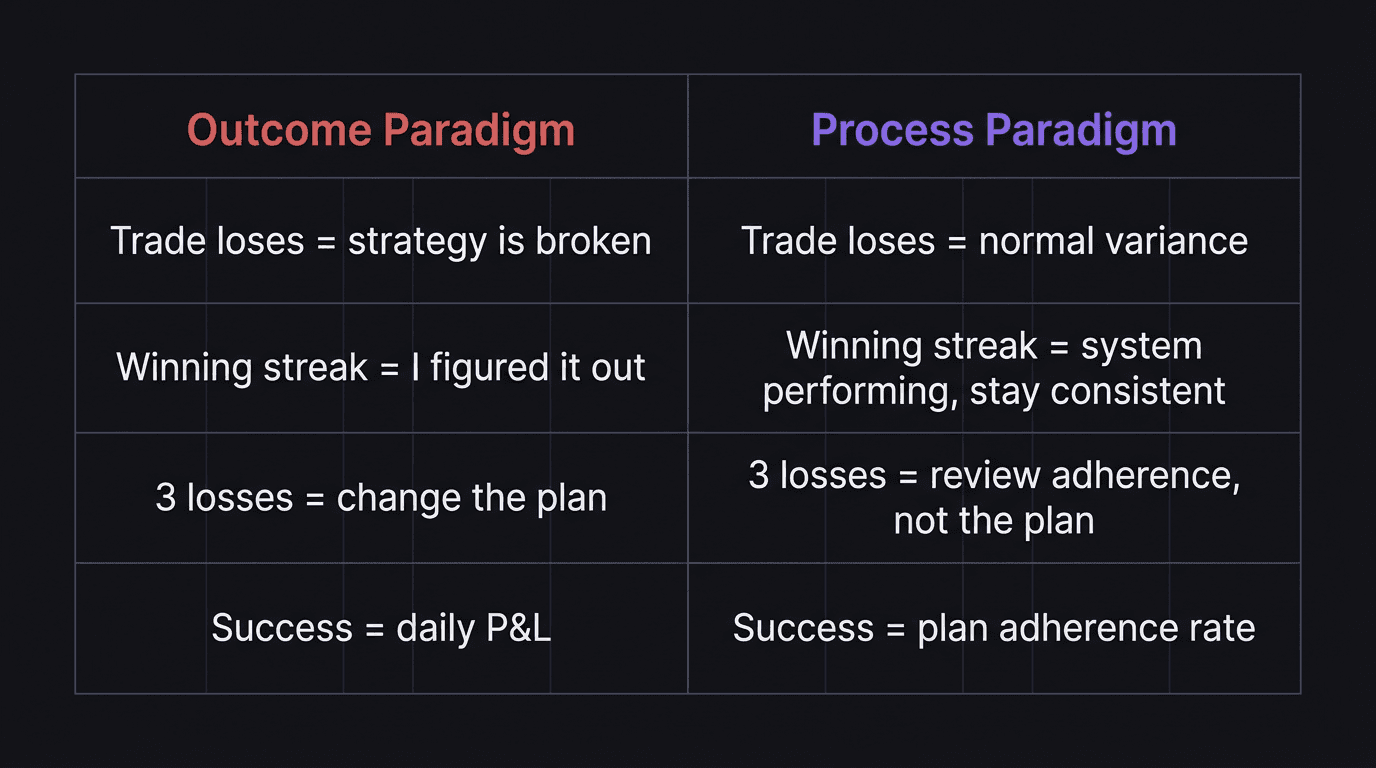
An outcome-based paradigm measures success by whether each trade wins. A process-based paradigm measures success by whether you followed the rules. The difference seems small. It is not.
When your metric is "did I follow my plan," a loss that followed the plan is a success. You took the right action. The market delivered a random result. You move on to the next trade with the same confidence.
When your metric is "did I make money," a loss that followed the plan is a failure. Now you second-guess the plan. You lose trading confidence, and the next trade suffers.
What the Shift Looks Like
Before the shift: "I lost three trades this week, I need to change something."
After the shift: "I followed my plan on 9 out of 10 trades this week. The three losses were on-plan. My adherence rate is 90%. The system will do its job if I keep doing mine."
Same week. Same results. Completely different interpretation. The trader with the process paradigm sleeps well and shows up Monday ready to execute. The trader with the outcome paradigm spends the weekend searching YouTube for a new strategy.
How New Beliefs Create New Results
A paradigm shift does not happen because you read an article or watched a motivational video. It happens when new evidence replaces old evidence in your brain.
This is why backtesting matters far beyond finding a strategy. When you have personally tested 100 or more trades and seen the data, your belief in the system is grounded in proof. You know it loses 60% of the time and still makes money. You have seen the losing streaks inside a winning system. That experience rewires your paradigm.
Step 1: Build the Evidence
Test your system over 100 trades minimum. Write down the win rate, average winner, average loser, and expectancy. Print it out. Tape it to your monitor. This is your anchor when the next losing streak hits.
Step 2: Track Adherence, Not P&L
For the next 30 trading days, score every trade on one metric only: did you follow your plan? A perfect on-plan loss gets a check mark. An off-plan win gets a red mark. Watch what happens to your behavior when the scorecard values process over profit.
Step 3: Review Monthly With Data
At the end of each month, separate your on-plan trades from your off-plan trades. Calculate the expectancy of each group. If on-plan trades have positive expectancy and off-plan trades have negative expectancy, you now have irrefutable proof that the problem was never the system.
This proof, accumulated over months, is what finally shifts the paradigm. Not willpower. Not affirmations. Data.
Getting a proven edge and then following it mechanically is the entire game. The paradigm shift is believing that deeply enough to stop interfering.
How EdgeFlo Supports the Paradigm Shift
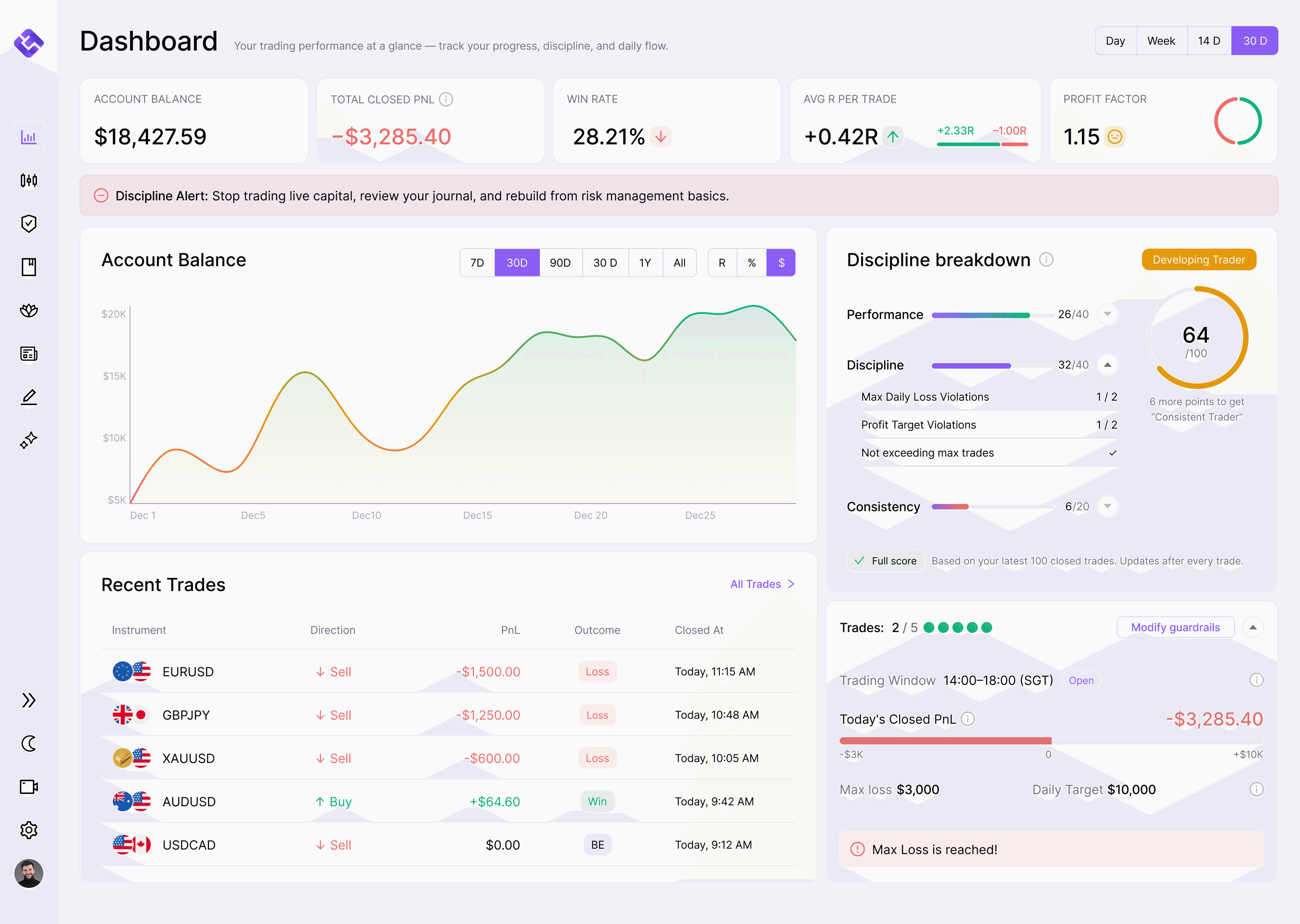
EdgeFlo is built around the process-over-outcome framework. The dashboard tracks plan adherence alongside standard performance metrics, so you can see whether your results come from following the system or from improvising.
The AI-powered journal tags each trade as on-plan or off-plan and calculates your adherence rate automatically. Over time, this data builds the evidence base that makes the paradigm shift permanent. You stop hoping your system works and start seeing the proof.
Weekly AI reports highlight behavioral patterns, not just P&L patterns. They surface things like "your off-plan trades cost 3.2R this week" or "your adherence rate dropped on Thursdays." That visibility is what turns a belief into a behavior.
The Edge Brief
Receive Insights on trading psychology, discipline, and the behavioral patterns that create consistent traders from our Founder and the EdgeFlo team, delivered to your inbox.
Think different. Trade different.
What is a trading paradigm?
How do I shift my trading paradigm?
Why do losing traders stay stuck in losing patterns?
Can I change my trading results by changing my beliefs?

Turn discipline on.
Every session.
EdgeFlo is the environment serious traders operate inside.
Start 7-Day Free Trial
Cancel anytime.
No long-term commitment.

Think Different, Trade Different.