

Trading Edge: How to Know Your Strategy Actually Works
A trading edge is a tested, repeatable strategy. Learn how to back test, forward test, and document your edge so you trade with real confidence.
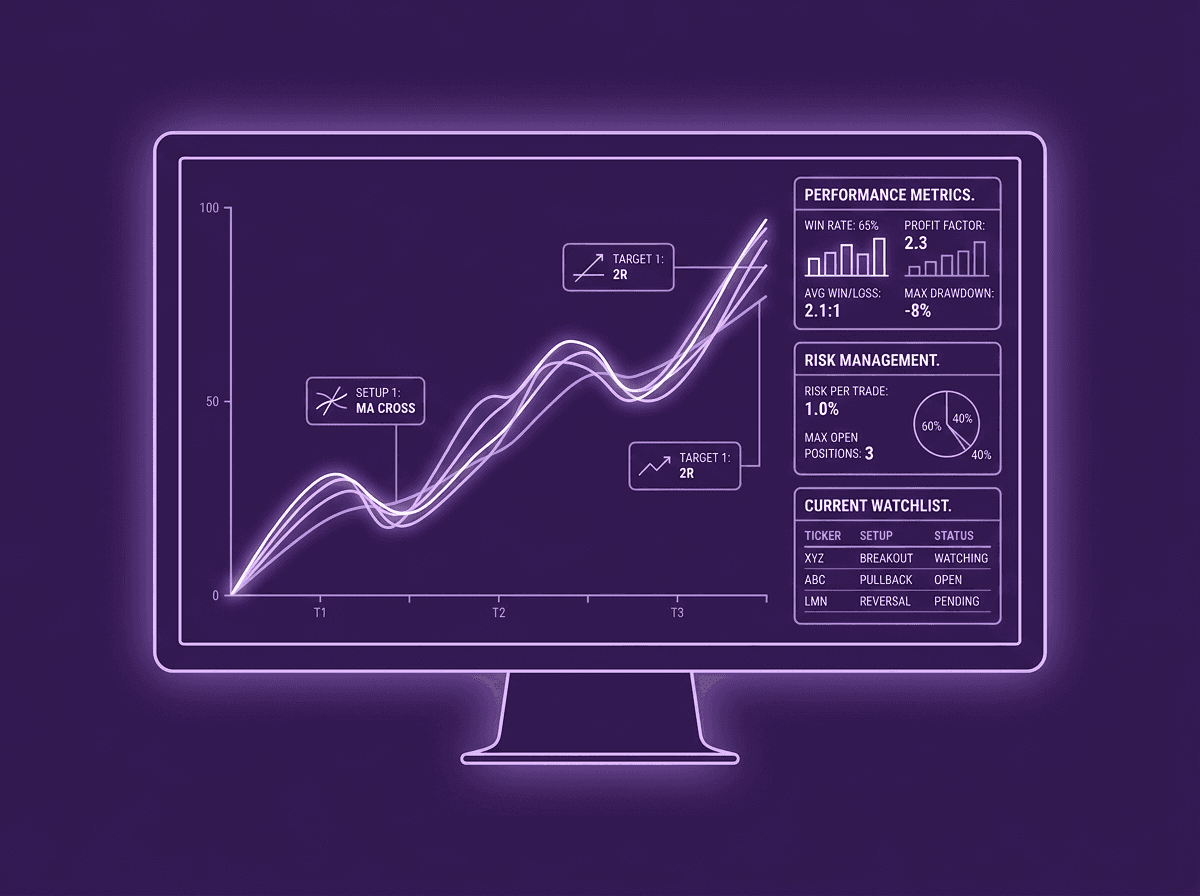
A trading edge is your strategy reduced to a testable set of rules. It tells you when to enter, when to exit, and what conditions need to be true before you risk capital. Without one, you are guessing. With one that has been tested over a meaningful sample, you trade with data behind every decision.
Most traders skip the testing part. They find a setup on YouTube, take a few trades, and call it an edge. That is not how professional traders operate. Professionals collect data, analyze their edge, and refine execution before real money hits the line.
TL;DR
A trading edge is a defined set of entry and exit criteria based on market mechanics, not a secret indicator or setup.
You need at least 100 back tested trades to know if your edge has positive expectancy.
Forward testing confirms your edge works without the benefit of hindsight.
Strategy hopping kills edge development because you never collect enough data on one approach.
Document everything. If you cannot write your edge down in plain rules, it is not an edge yet.
What a Trading Edge Actually Means
An edge is your trading plan boiled down to specific criteria. It tells you when to enter and when to get out. That is it. No mystery. No secret sauce.
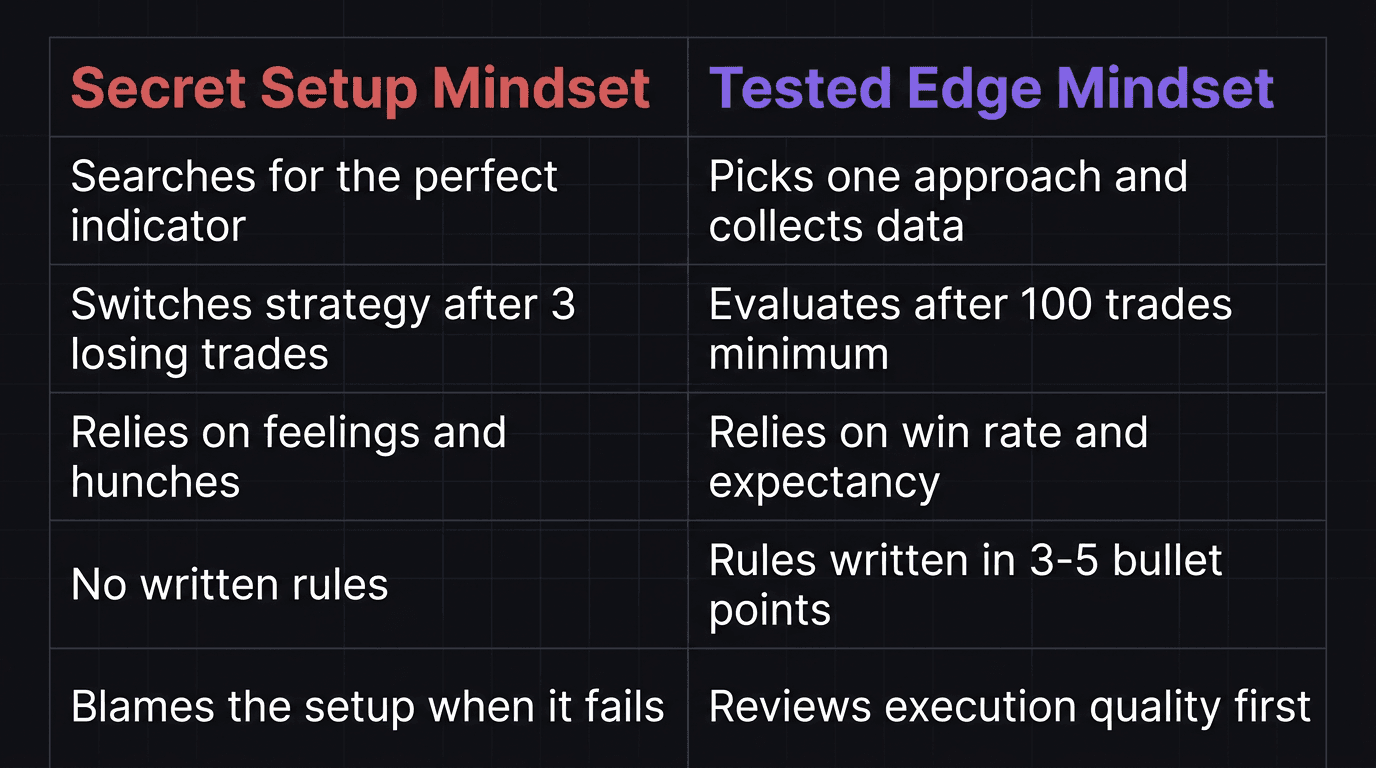
But here is where most beginners get confused. They think an edge is a candlestick pattern. Or a moving average crossover. Or some indicator combination they saw in a course.
Those are setups. A setup is one piece of an edge. The full edge includes the setup, the context around it, the entry trigger, the stop placement, the target, and the conditions that make the whole thing invalid. A good mechanical trading plan removes the guesswork and gives you confidence because every piece is defined before the market opens.
Real edges are built on market mechanics. Market structure. Institutional zones. Liquidity concepts. Order flow. These are the forces that actually move price. Your edge is your specific way of reading those forces and acting on them.
Here is a simple test. Can you write your edge in three to five bullet points that someone else could follow without asking you questions? If not, you do not have an edge. You have a vague idea.
Example: A Supply and Demand Edge, Written Out
Setup: Unmitigated daily supply zone on EUR/USD after a bullish-to-bearish structure shift. Entry trigger: 15-minute bearish engulfing candle inside the zone. Stop: 5 pips above the zone high. Target: Next daily demand zone or 1:2 risk-to-reward, whichever comes first. Invalidation: If price breaks and closes above the zone on the 1-hour, the setup is dead.
That is an edge. Five rules. Clear enough for someone else to execute without calling you.
Edge Is Not a Secret Setup
New traders spend months hunting for the "right" setup. They cycle through indicators, strategies, and trading rooms looking for the one thing that unlocks consistent profits. This is strategy hopping, and it is one of the most common trading mistakes that drains accounts.
The truth is boring. Most edges work. Supply and demand, order blocks, breakouts, mean reversion. All of them can produce positive expectancy when applied with discipline and proper risk management.
What separates traders who make money from traders who do not is not the setup. It is the testing, the data collection, and the willingness to stick with one approach long enough to know if it works.
Think of it like this. A gym routine is not a secret. Push, pull, legs. Everyone knows the exercises. But the person who follows the routine for 12 months straight looks completely different from the person who switches programs every three weeks.
Same thing in trading. Your edge works when you commit to it, test it, and let the data tell you the truth.
How to Test Your Edge (Back Test + Forward Test)
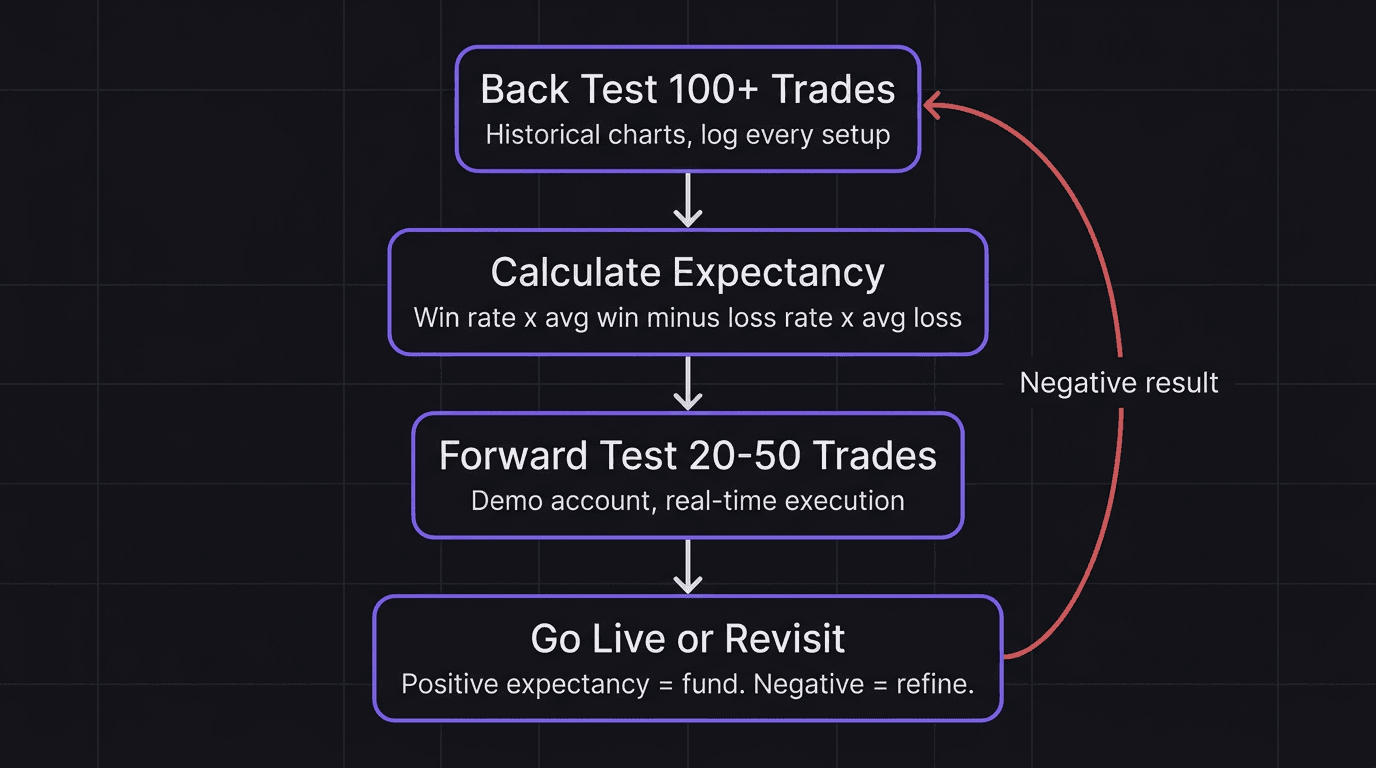
If you do not back test and forward test your trading strategy, you are basically gambling. That is not an opinion. It is math. Without a sample size, you have no idea whether your edge produces positive expectancy or just got lucky three times in a row.
Testing happens in two phases.
Phase 1: Back Testing (100 Trades Minimum)
Backtesting your trading strategy means replaying your rules against historical chart data. You scroll through charts, find setups that match your criteria, and record what would have happened if you had taken each one.
Here is a walkthrough of what this looks like in practice.
Trader: Sarah wants to test a supply and demand setup on GBP/USD, 1-hour chart. Process: She opens her charting platform, scrolls back six months, and starts looking for unmitigated supply zones after bearish structure shifts. Every time she finds one, she checks if her entry trigger fired (15-minute bearish engulfing inside the zone). She logs the result in a spreadsheet: win, loss, or no entry. After 100 trades: Her data shows 58 wins, 42 losses. Average winner: 1.8R. Average loser: 1R. Win rate: 58%. Expectancy per trade: (0.58 x 1.8) - (0.42 x 1.0) = 1.044 - 0.42 = 0.624R. Verdict: Positive expectancy. The edge works on historical data. For every unit of risk, Sarah expects to make 0.624 units over time.
That 0.624R does not mean every trade makes money. It means the math favors her over a large sample. Some trades lose. The system still wins.
Phase 2: Forward Testing (20-50 Trades)
Back testing has a flaw. Hindsight. You already know what happened on the right side of the chart. Forward testing removes that advantage entirely.
Forward testing means applying your exact same rules in real time on a demo or small live account. Same entry criteria. Same stop. Same target. The only difference is you cannot see the future.
Sarah again: She takes her supply and demand edge to a demo account. Over four weeks, she logs 30 forward tested trades. Win rate drops to 52%. Average winner stays at 1.7R. Expectancy: (0.52 x 1.7) - (0.48 x 1.0) = 0.884 - 0.48 = 0.404R. Verdict: Still positive. Lower than the back test, which is normal and expected. The edge holds without hindsight.
But she notices something else. Seven of her losses came from trades she entered early, before the zone was actually tested. She jumped in because she "felt" price was about to reverse. Those were execution errors, not edge failures. The forward test revealed the gap between her plan and her behavior.
If forward testing had shown negative expectancy, that would mean the back test results were inflated by hindsight bias. Back to the drawing board. But for Sarah, the data says go.
When to Trust Your Edge Under Pressure
You have the data. You have back tested. You have forward tested. The numbers check out. Then you go live, take three losses in a row, and suddenly you do not trust any of it.
This is normal. And it is the exact moment where most traders abandon a working edge and restart the strategy-hopping cycle.
Three losses in a row is not a sign your edge is broken. If your win rate is 58%, a streak of three consecutive losses will happen regularly. Five in a row will happen occasionally. That is probability, not a message from the market telling you to quit.
Confidence in trading comes when you know your edge actually works because you have seen it play out over and over. Not five times. Not twenty times. Hundreds of times. The testing phase is not just about gathering numbers for a spreadsheet. It is about building the psychological foundation you need to hold steady when it hurts.
Three Anchors for Holding Through a Drawdown
1. Keep your back test data visible. Print it out or pin it to your second monitor. When you are in a drawdown, look at the data. Your edge had losing streaks in the back test too, and it still came out positive.
2. Define your review threshold before going live. Decide in advance: "I will review my edge after every 50 trades. Not after every loss." This prevents emotional reviews that lead to unnecessary rule changes.
3. Separate execution errors from edge failure. If you lost because you deviated from the rules, that is not the edge failing. That is you failing to follow the edge. Track both categories. They require different fixes.
The Worst Mistake: Changing Your Edge Mid-Drawdown
Example: A trader has a breakout edge tested over 100 trades with 0.5R expectancy. After seven live trades, he hits four losses in a row. He decides breakouts "do not work anymore" and switches to a mean reversion setup he saw on Twitter. He has zero data on this new approach. Result: He just reset to zero. No tested edge. No data. Back to gambling. If the fifth breakout trade would have been a winner, he missed it. And he is now running an untested strategy with real money.
This is the cycle that traps traders for years. Test something, abandon it too early, start over. The only way out is committing to a sample size before you make judgment calls about whether the edge works.
How EdgeFlo Documents and Tracks Your Edge
Writing your edge down is the first step. Keeping it visible while you trade is what makes it stick.
EdgeFlo's Edge feature (the Trade Plan Builder) lets you document your strategy in structured fields: entry criteria, exit rules, invalidation conditions, and risk parameters. Your plan sits inside your trading environment, not in a forgotten notebook or a Google Doc you never reopen. When a setup appears, you check your written rules before pulling the trigger.
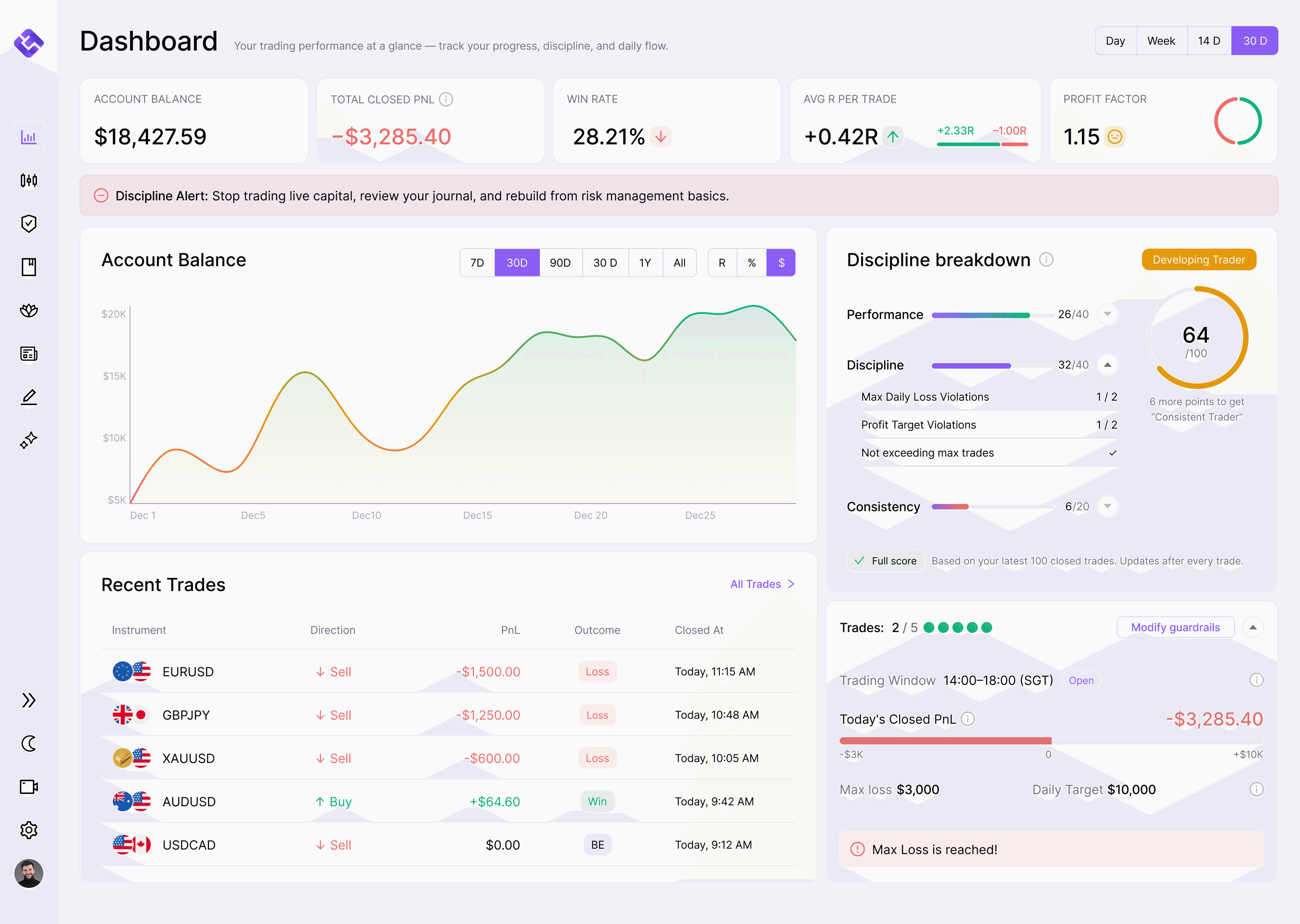
For traders on the Plus plan, Plan Stats track how your documented edge performs over time. You see win rate, average R, and other key metrics filtered by the specific plan you are running. That closes the feedback loop between your documented rules and your actual results. When those numbers start shifting over 30 or more trades, you catch it early instead of discovering the problem after a blown month.
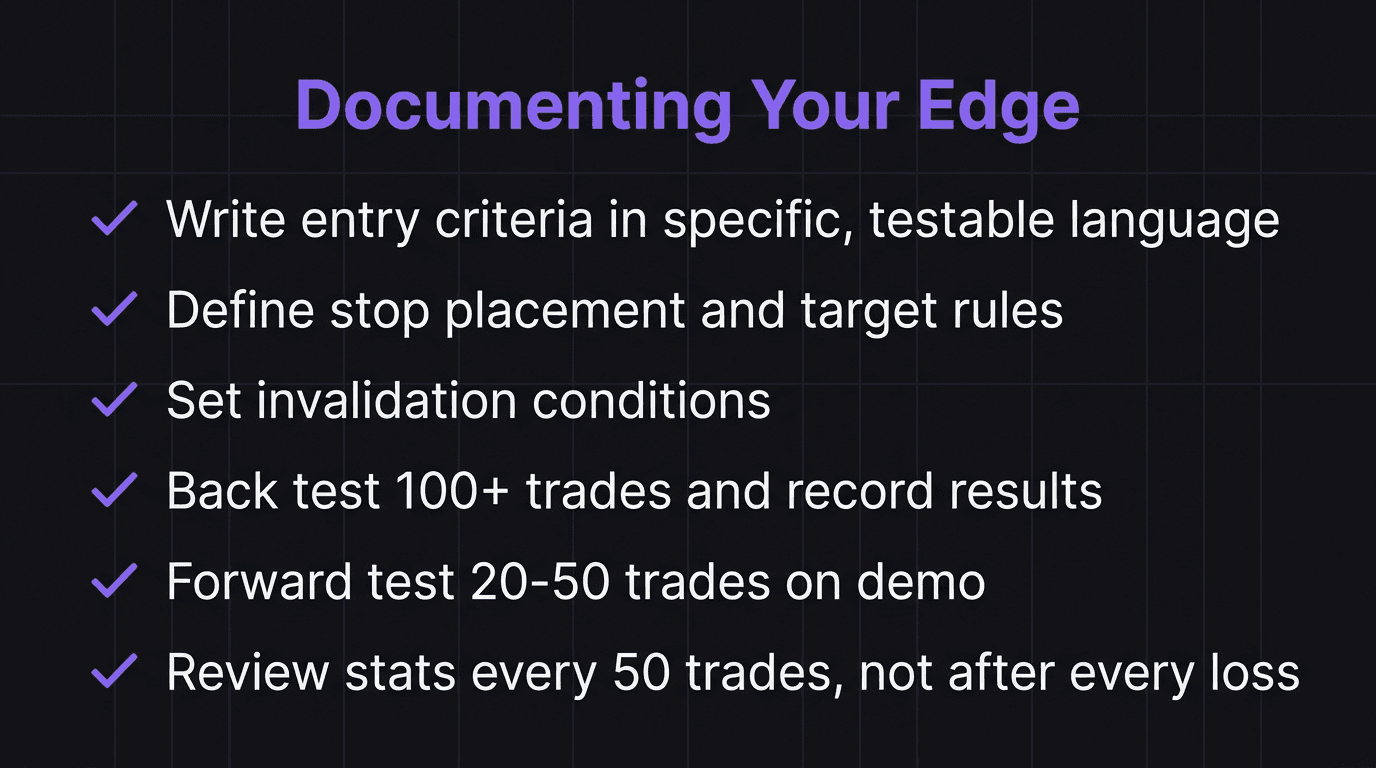
The point is not the tool. The point is that your edge exists as a written, tested, tracked document. If it only lives in your head, it will shift every time the market makes you uncomfortable. Written rules do not flinch.
The Edge Brief
Receive Insights on trading psychology, discipline, and the behavioral patterns that create consistent traders from our Founder and the EdgeFlo team, delivered to your inbox.
Think different. Trade different.
What is a trading edge?
How many trades do I need to test my edge?
Can a trading edge stop working?
What is the difference between back testing and forward testing?

Turn discipline on.
Every session.
EdgeFlo is the environment serious traders operate inside.
Start 7-Day Free Trial
Cancel anytime.
No long-term commitment.

Think Different, Trade Different.