

Why Traders Skip Their Journal (And How to Fix It)
Most traders know journaling works but still skip it. Here are three fixes that make the trading journal habit stick in under two minutes per trade.
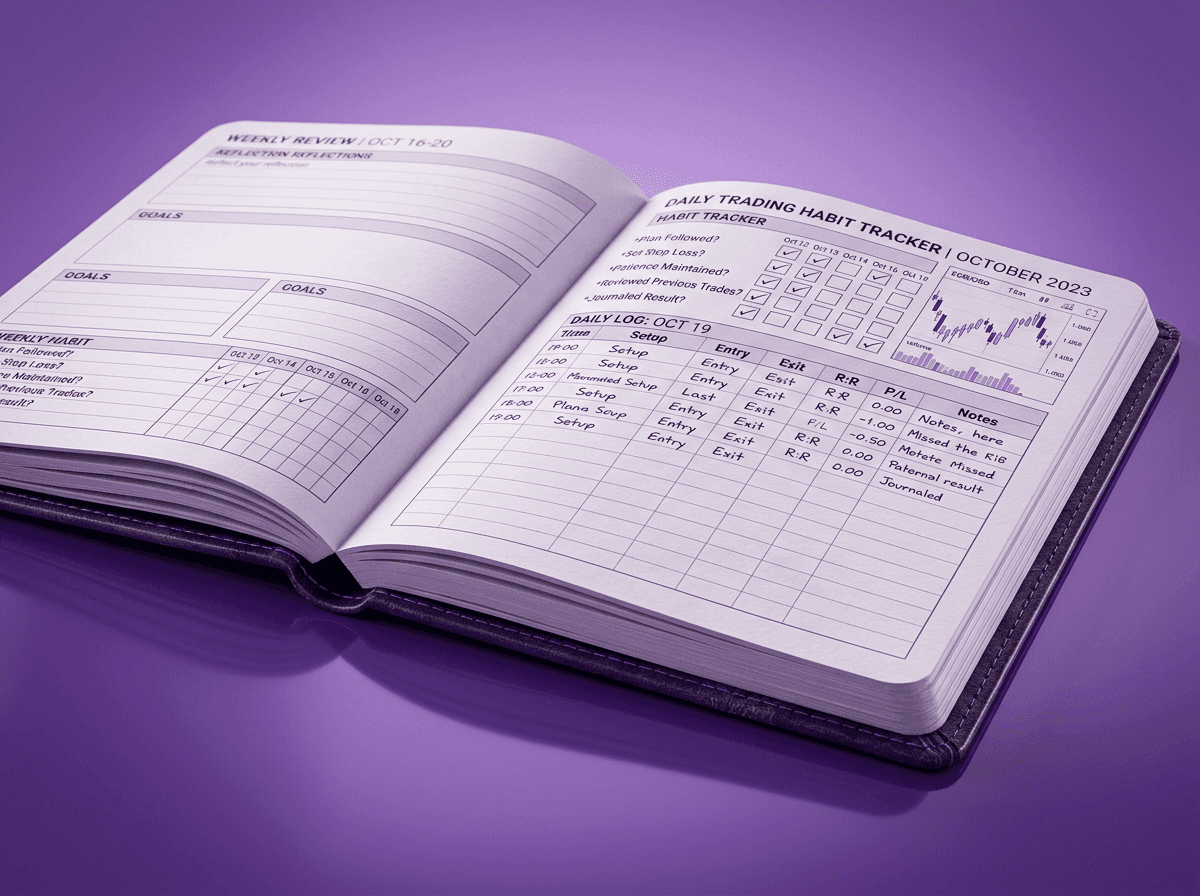
You already know you should journal your trades. Every trading book says it. Every mentor says it. And you still skip it.
That is not a knowledge problem. It is a friction problem. The traders who actually build a trading journal habit are not more disciplined than you. They just made journaling easier to start, harder to forget, and more rewarding to maintain.
Here is what that looks like in practice, and how to fix the three things that keep killing your consistency.
TL;DR
Most traders skip journaling because it feels slow, lives in a separate app, or does not show immediate value.
Cut your entry to two minutes: pair, setup, plan adherence, one emotional note. That is it.
Journal where you trade. If you have to open a different app, you will not do it.
After 20 to 30 logged trades, patterns emerge that you cannot see any other way.
EdgeFlo auto-imports your trades and supports voice-to-text notes, so the friction drops to near zero.
The Three Reasons You Skip Your Journal
The first reason is time. You just closed a trade. The market is still moving. The last thing you want to do is open a spreadsheet and fill out 15 fields. So you tell yourself you will do it later. Later never comes.
The second reason is location. Your journal lives somewhere else. A Google Sheet. A Notion page. A notebook on your desk. Every extra click between your chart and your journal is a chance to bail. Most traders bail.
The third reason is payoff. You log ten trades and nothing happens. No insight. No pattern. No reward. Just data sitting in a file. Why would you keep doing something that gives you nothing back?
These three problems feed each other. Journaling takes too long, so you skip it. You skip it, so you never collect enough data to see patterns. You never see patterns, so it feels pointless. And the cycle repeats.
Every chart you study, every losing trade you review, every hour you spend refining your edge, that is what separates dreamers from doers. But you cannot review what you never recorded.
Make It Fast: The 2-Minute Post-Trade Entry
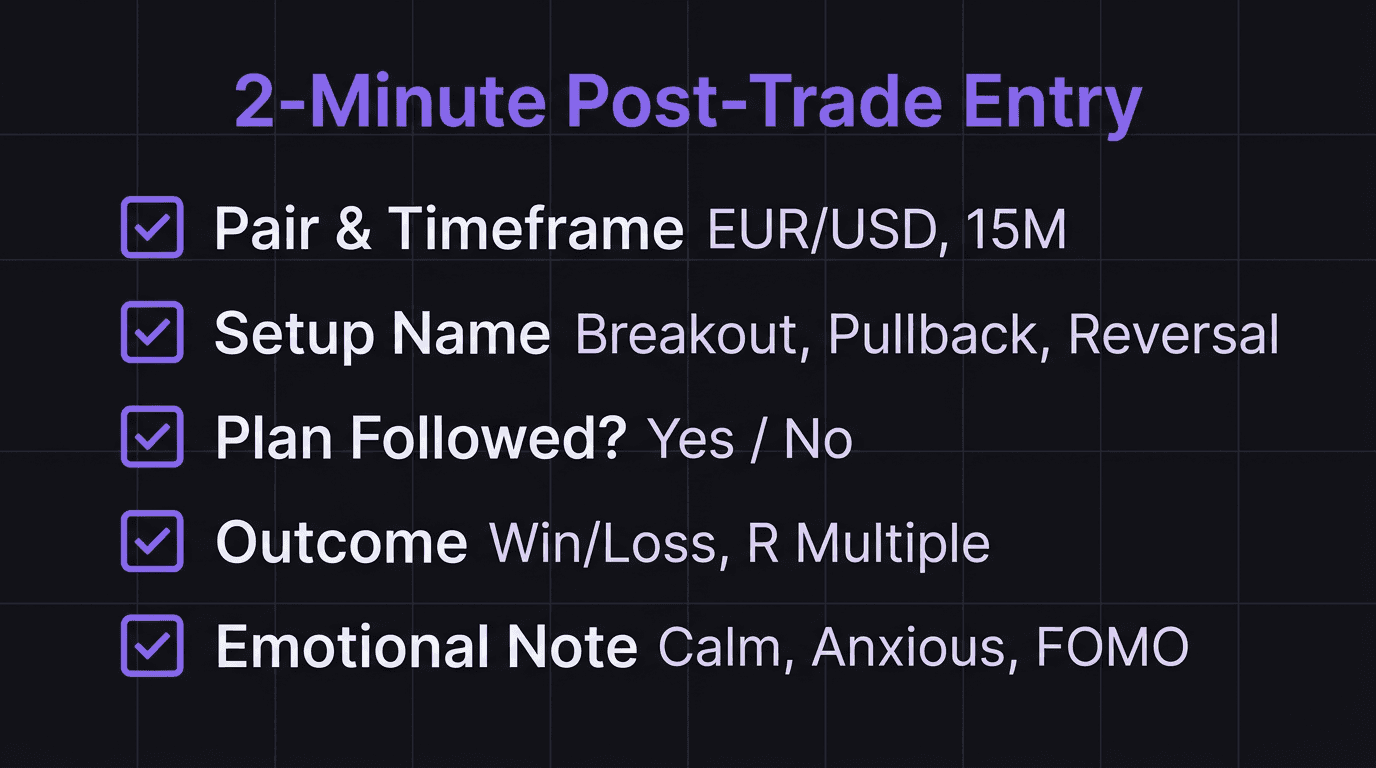
The fix for the time problem is brutal simplification. Your journal entry does not need to be an essay. It needs five things:
Pair and timeframe (EUR/USD, 15M)
Setup name (breakout, pullback, reversal)
Did you follow the plan? (yes/no)
Outcome (win/loss, R multiple)
One emotional note (calm, anxious, revenge-traded, FOMO entry)
That is it. Two minutes. Maybe less.
Walkthrough: A Real 2-Minute Entry
You short GBP/USD on the 1H chart at 1.2740 after price rejects a supply zone you marked during your pre-market routine. Stop is above the zone at 1.2770. Target is previous structure at 1.2680. Price drops to 1.2695 and you close early because you got nervous.
Your 2-minute entry looks like this: - Pair/TF: GBP/USD 1H - Setup: Supply zone rejection - Plan followed? Entry yes, exit no (closed early at 1.2695, target was 1.2680) - Result: +1.5R (would have been +2R) - Feeling: Anxious after 30 mins in trade, cut early
Total time: 90 seconds. And that one note about anxiety after 30 minutes? After logging it five more times, you will realize you have a pattern of cutting winners short when trades run longer than 20 minutes. That is the kind of insight that only journals reveal.
The detailed post-trade review happens later, during your weekly review session. The post-trade entry is just the raw capture. Think of it like a receipt. You do not write a financial report at the register. You just keep the receipt so you can reconcile later.
Make It Visible: Journal Where You Trade
If your journal is a separate app, you are fighting human nature. The moment you finish a trade, your attention moves to the next setup. Opening a different tab, logging into a different tool, finding the right row in your spreadsheet. Each step is a tiny decision. And decisions cost energy you have already spent on trading.
The fix: your journal needs to live inside your trading environment. Same screen. Same workflow. No context switching.
This is why a dedicated trading journal template matters more than most traders realize. The template is not about format. It is about placement. A template that sits next to your chart, pre-filled with the fields you need, removes the decision of what to write and where to put it.
Some traders pin a note widget on their second monitor. Some use a browser extension that opens a form over their chart. The method matters less than the principle: zero clicks between closing a trade and starting your entry.
Sound familiar? You finish a trade, think "I'll journal that one later," and then the next candle forms and you are already analyzing the next move. The journal never happens. But if the entry form is already on your screen, you fill it out on reflex. Same way you glance at your P&L after a close. Make it that automatic.
Make It Rewarding: Patterns That Only Journals Reveal
Here is the payoff that most traders never reach because they quit too early.
After 20 to 30 logged trades, you start seeing things that are invisible without data. Not vague feelings. Concrete, actionable patterns.
Common patterns that journals surface:
Time-of-day bias. You win 70% of trades taken between 9:30 and 11:00 AM, but only 35% of trades after 2:00 PM. Without the journal, you would never notice.
Setup-specific edge. Your pullback entries hit at 2.1R average. Your breakout entries average 0.8R. The journal tells you to stop trading breakouts.
Emotional triggers. Every time you log "revenge trade" or "FOMO," the result is a loss. Every single time. You knew it felt bad, but seeing it in the data makes it real.
This is exactly what a solid trading review process relies on. You cannot review what you did not record. And you cannot improve what you cannot measure.
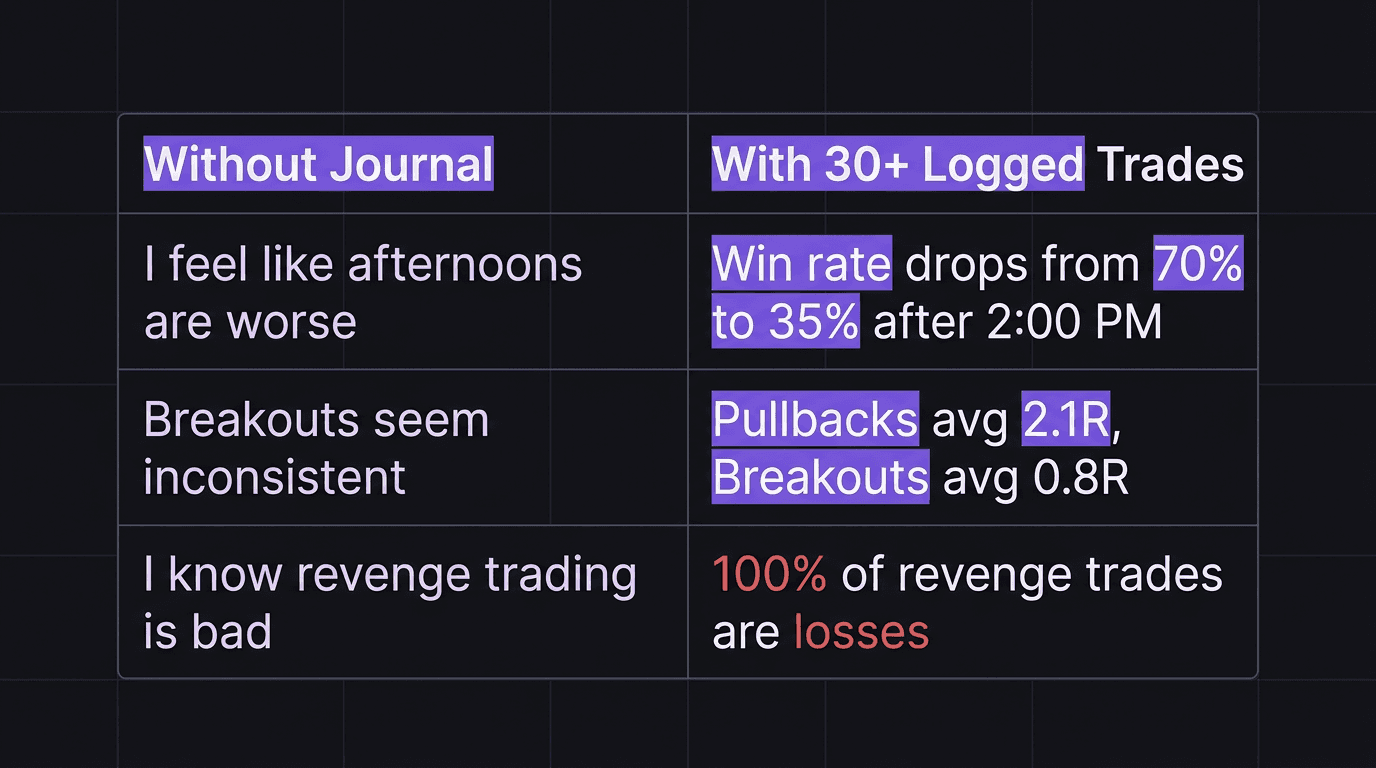
The difference between "I think I have a problem with afternoon trades" and "my win rate drops 35 percentage points after 2 PM" is the difference between a guess and a strategy. One you might act on. The other you will act on.
This is also where most trading mistakes become visible for the first time. You cannot fix a pattern you cannot see. And you cannot see a pattern you did not log.
How EdgeFlo Removes the Friction
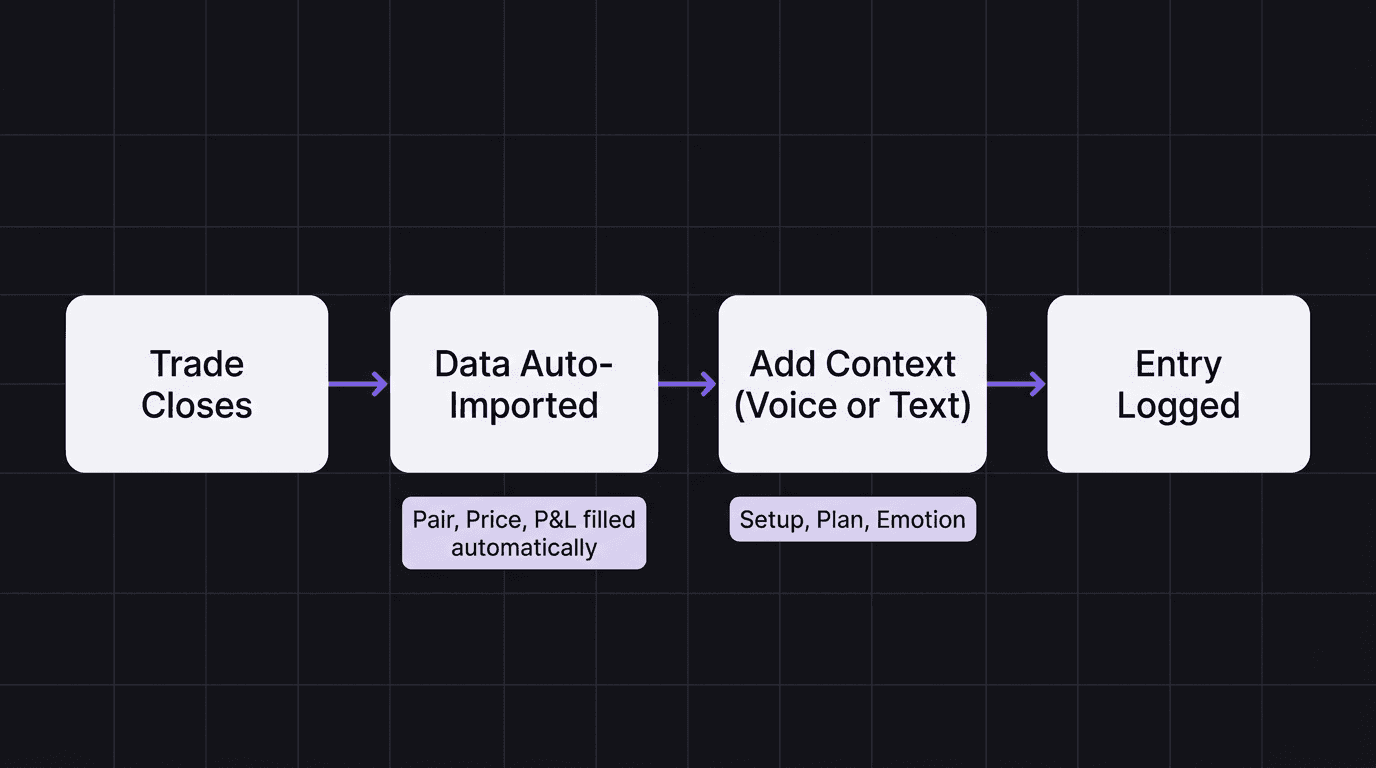
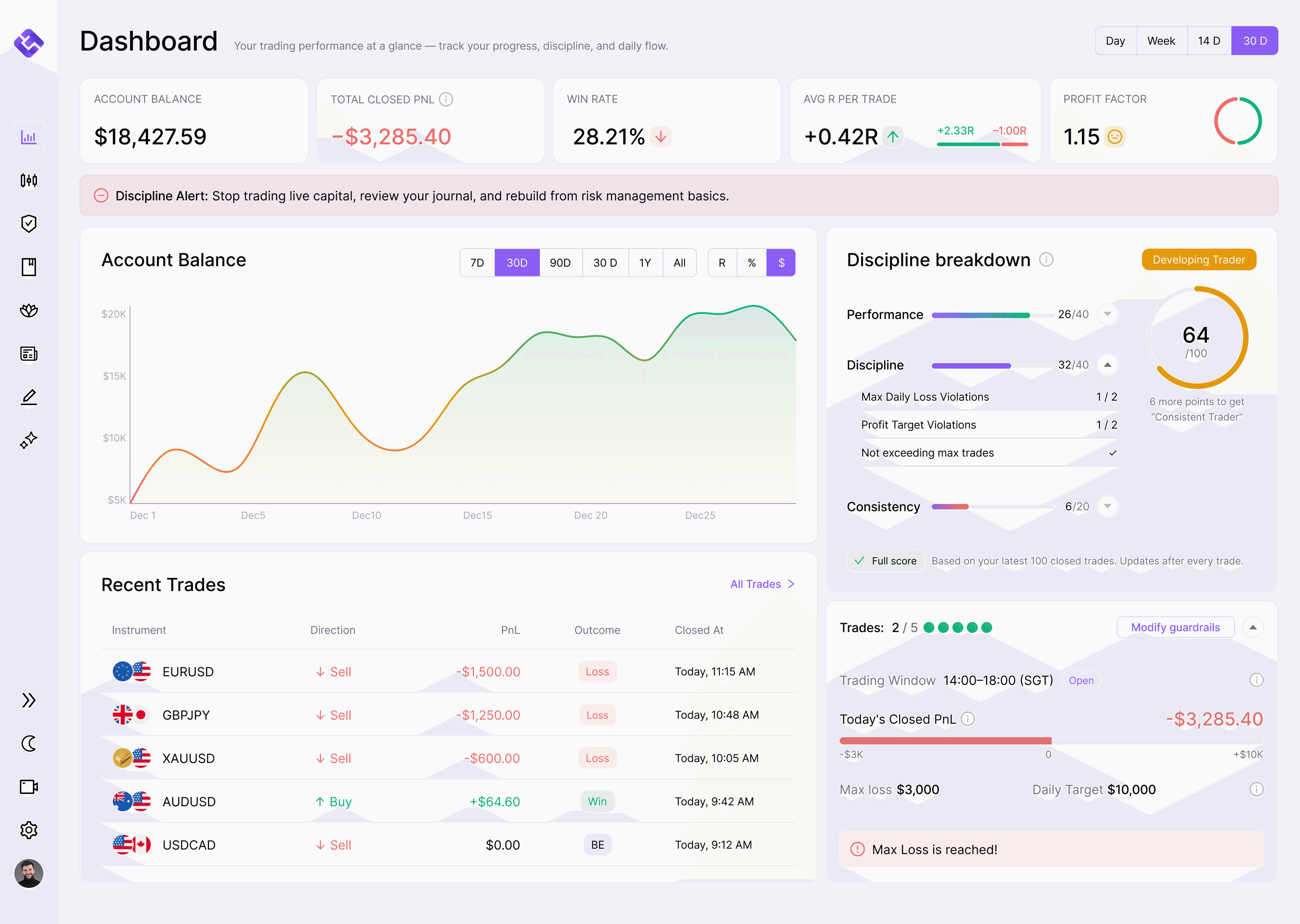
EdgeFlo auto-imports your trades directly into your journal. No manual entry for the mechanical data: pair, direction, entry price, exit price, time, and P&L are already there when you open the entry. Your only job is adding the context that matters: setup name, plan adherence, and how you felt.
That drops the two-minute entry to about 30 seconds.
For traders who do not want to type at all, EdgeFlo supports voice-to-text journaling. Close a trade, tap the mic, say "supply zone rejection, followed the plan, felt calm." Done. The note attaches to the trade automatically.
The journal lives inside the same platform where you trade, review, and plan. No separate app. No spreadsheet. No friction. It is on you to show up, but the environment makes showing up easy.
The Edge Brief
Receive Insights on trading psychology, discipline, and the behavioral patterns that create consistent traders from our Founder and the EdgeFlo team, delivered to your inbox.
Think different. Trade different.
How long should a trading journal entry take?
What should I write in my trading journal?
Is a spreadsheet or notebook better for trade journaling?
How many trades before journal patterns become useful?

Turn discipline on.
Every session.
EdgeFlo is the environment serious traders operate inside.
Start 7-Day Free Trial
Cancel anytime.
No long-term commitment.

Think Different, Trade Different.