

Trading Around a 9 to 5 Job: The Style That Actually Works
Scalping with a day job is a losing setup. Swing trading on the 4H chart fits around work hours with 15 minutes of daily chart review.
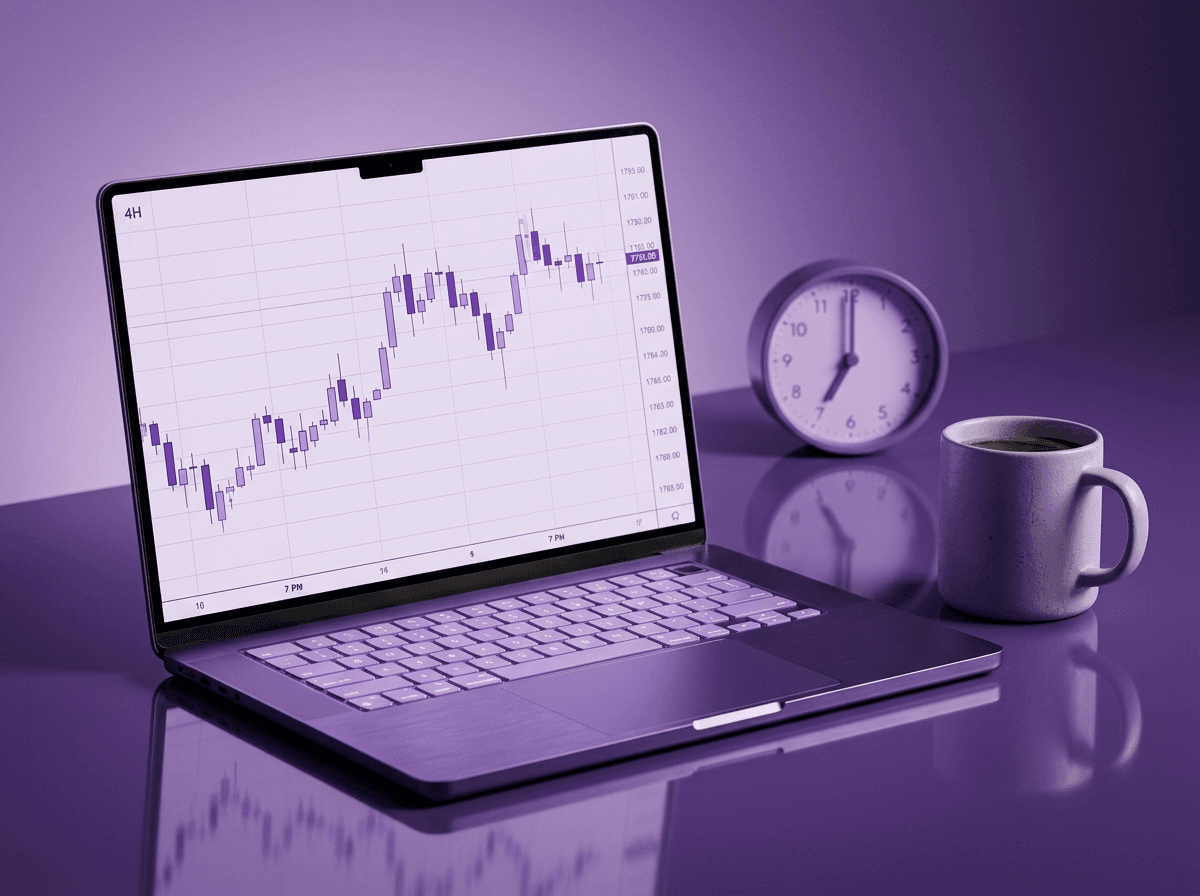
If you work a 9-to-5 job, scalping and intraday trading are nearly impossible to sustain. You cannot stare at a 1-minute chart during a team meeting. You cannot manage a day trade from your phone while your boss is talking. The style that actually works for full-time employees is swing trading on the 4-hour or daily chart. Set alerts, review charts in the evening, and stop fighting your schedule.
TL;DR
Scalping and day trading require uninterrupted screen time that a 9-to-5 job does not allow.
Swing trading on the 4H or daily chart needs only 15 to 30 minutes per evening.
Your evening routine replaces the need for all-day chart monitoring.
Price alerts handle the "what if something happens while I am at work" anxiety.
Trade around your life, not against it.
Why Scalping With a Day Job Is a Losing Setup
You have probably tried it. Open your phone during a meeting, glance at the 5-minute chart, rush into a trade, then get pulled back to work. Ten minutes later, you check again and the trade moved 15 pips against you. You cannot manage it properly because your boss just asked you a question.
Scalping demands continuous attention during the most liquid market hours. London open. New York open. The overlap. These happen during work hours for most people in Western time zones. Even if you catch 30 minutes of overlap during lunch, that is not enough time to build a proper read on intraday price action.
The result of trying to scalp around a day job: rushed entries, missed exits, and the constant anxiety of having open positions you cannot monitor. That anxiety follows you into meetings, into conversations, and eventually into your sleep.
It is not a discipline problem. It is a scheduling mismatch between your style and your life. The fix is not "try harder." The fix is choosing a different style.
Swing Trading Fits Around Work Hours
Swing trading on the 4-hour chart is built for people with jobs. Here is why it works:
A new 4-hour candle forms at fixed intervals (typically midnight, 4 AM, 8 AM, noon, 4 PM, 8 PM depending on your broker). You do not need to watch it form. You review completed candles once per day, usually in the evening after work.
Your hold time is days to weeks. That means there is no urgency to check charts every 10 minutes. The trade either develops or it does not, and a few hours of not watching changes nothing about the outcome.
Your targets are larger (100 to 300 pips), which means normal market noise does not threaten your position. A 20-pip pullback on a 200-pip target is nothing. On a 10-pip scalp target, that same pullback is a catastrophe.
The daily time investment: 15 to 30 minutes. That is enough to scan your watchlist, check whether any setups formed during the day, manage existing positions, and move on with your evening. No rushing. No multitasking.
Understanding which trading session you are reviewing helps you make better decisions during that 15-minute window. If you review at 7 PM Eastern, you are looking at the aftermath of the London and New York sessions. That context helps you read the 4-hour candles.
The Evening Routine That Replaces All-Day Screen Time
Here is a concrete evening routine for a trader with a 9-to-5 job:
6:30 PM: Open charts (5 minutes). Pull up your 2 to 3 watchlist pairs on the daily and 4-hour timeframes. Scan for new setups that formed during the day.
6:35 PM: Check open trades (5 minutes). If you have positions running, check price relative to your stop and target. Decide whether to trail your stop or leave it alone. Do not touch a trade that is still within your plan parameters.
6:40 PM: Set alerts (5 minutes). If a pair is approaching a level where you might want to enter, set a price alert. Your phone buzzes when price gets there. No need to check charts before then.
6:45 PM: Journal (5 to 10 minutes). If you closed a trade today, log it. Note the setup, the outcome, and how you felt during the hold. If nothing happened today, move on.
6:55 PM: Done. Close your charts. Go have dinner.
That is the entire trading workflow for someone with a full-time job. Less than 30 minutes, done before dinner. Compare that to the 4 to 8 hours a scalper needs, and the choice is obvious for anyone with a day job.
A solid pre-market routine for swing traders can happen in the morning or evening. The point is consistency, not timing. If evenings work better for your schedule, make that your anchor.
Walkthrough: The Part-Time Swing Trader
Maria works from 8 AM to 5 PM. She chose EUR/USD and GBP/USD as her two swing pairs. On Monday evening at 7 PM, she spots a pullback to a demand zone on EUR/USD 4H. She places a limit order at 1.0850 with a stop at 1.0780 (70-pip stop) and a target at 1.1000 (150-pip target). She uses 0.14 lots to keep risk at 1% of her $10,000 account. Tuesday through Thursday, she checks once each evening. Price fills her order on Tuesday, pulls back 20 pips on Wednesday (she does nothing), then trends upward. On Friday evening, price hits her target. Result: 150 pips at $1.40/pip = $210 profit. Total screen time for the week: roughly 2 hours across five 20-minute sessions.
Walkthrough: What Not to Do
James also works 8 to 5. He picks scalping because "more trades = more money." He tries to scalp during his lunch break from 12:00 to 12:30 PM (New York session). In 30 minutes, he enters 3 trades on EUR/USD 1-minute chart. Trade 1: he enters but gets pulled back to his desk for a call. The trade hits his stop while he is away: 8 pips lost. Trade 2: he enters, price moves 4 pips in his favor, but he cannot watch it. He checks 20 minutes later and it reversed for a 6-pip loss. Trade 3: he panic-enters to recover the two losses, no setup, just frustration. Loss: 10 pips. Total: 24 pips lost in 30 minutes because his schedule does not support his style.
Using Alerts Instead of Watching Charts
The biggest anxiety part-time traders feel is "what if a setup forms while I am at work?" Price alerts solve this completely.
Set alerts at the levels that matter to your plan. If you want to buy EUR/USD at a demand zone near 1.0850, set an alert at 1.0860. Your phone buzzes. You glance at it during a break. If it looks right on the 4-hour chart, you have time to place a limit order because swing trade entries are not urgent. The zone will likely be tested over hours, not seconds.
Alerts free you from chart-watching without missing opportunities. They are the tool that makes one-session trading and swing trading practical for anyone with a job.
Write your alert levels into your trading rules so they become part of the system, not an afterthought.
How EdgeFlo Pre-Market Checklist Keeps Part-Timers on Track
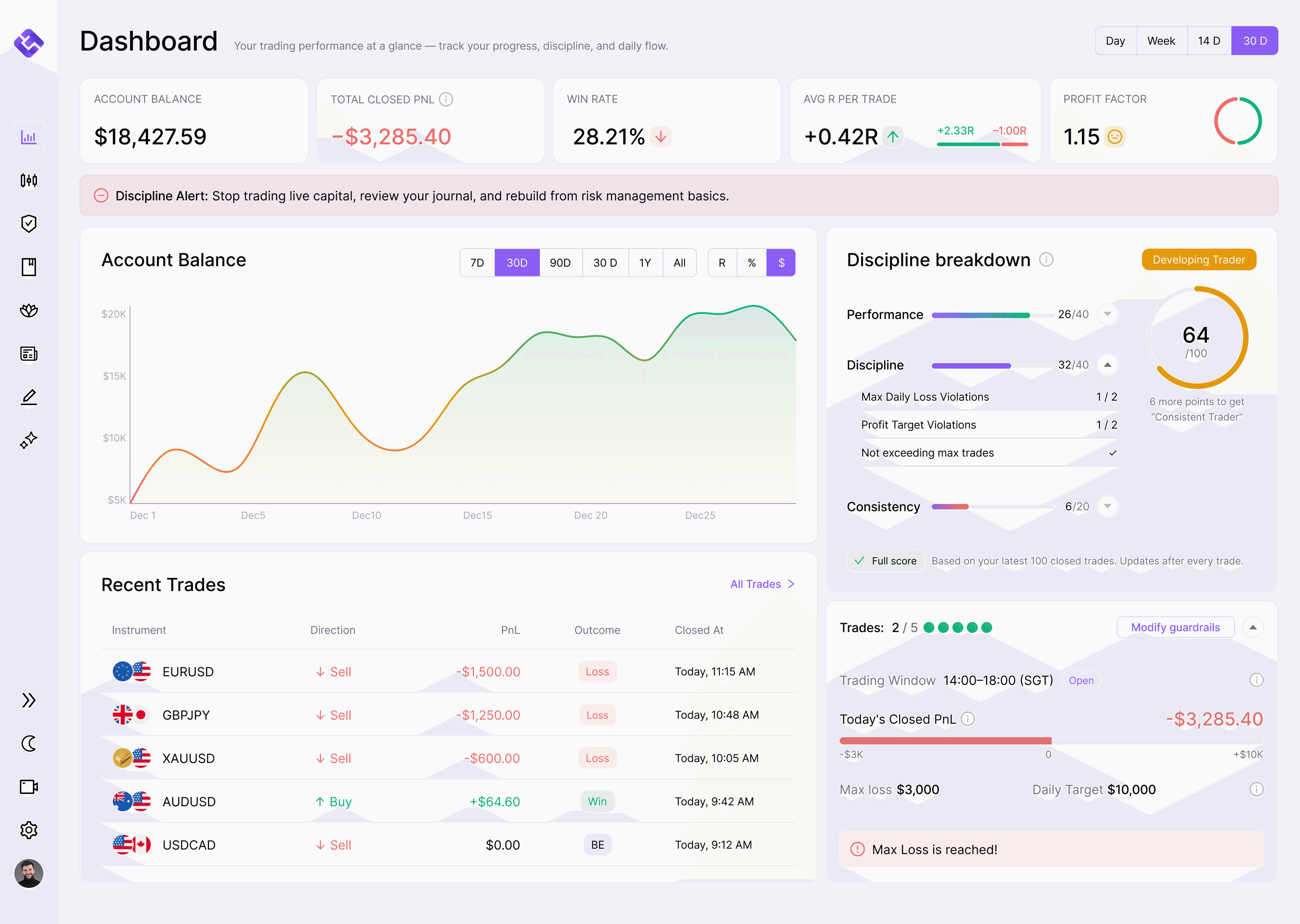
EdgeFlo's pre-market checklist prompts you through a preparation routine before you start reviewing charts. For a part-time swing trader, this means your evening session starts with structure, not randomness.
The checklist surfaces your active plan, your current open positions, and any watchlist-level news events for the next session. You complete it in under 2 minutes. Then you review charts knowing exactly what you are looking for and what conditions your plan requires.
That structure prevents the common part-timer mistake of opening charts, seeing a random move, and impulse-trading it because "it looked good." Your checklist keeps you honest. Your trading rules stay visible. Your evening routine stays focused.
The Edge Brief
Receive Insights on trading psychology, discipline, and the behavioral patterns that create consistent traders from our Founder and the EdgeFlo team, delivered to your inbox.
Think different. Trade different.
Can I trade forex with a full-time job?
What is the best timeframe for part-time traders?
Should I scalp during my lunch break?
How many trades per week should a part-time trader take?

Turn discipline on.
Every session.
EdgeFlo is the environment serious traders operate inside.
Start 7-Day Free Trial
Cancel anytime.
No long-term commitment.

Think Different, Trade Different.