

Stop Hopping Between Timeframes: Pick One and Commit
Timeframe hopping is strategy hopping in disguise. Commit to one timeframe for 50 trades, then let journal data decide if a change is warranted.
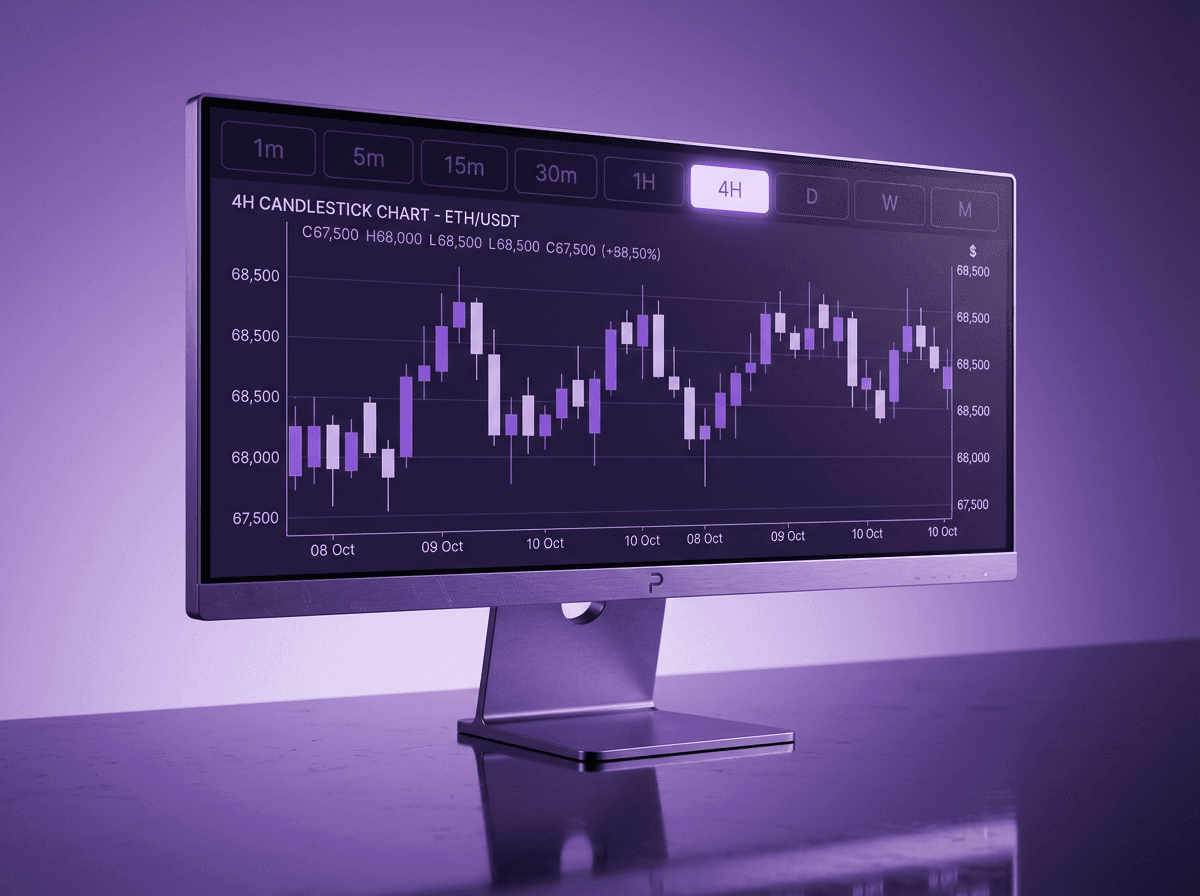
Dropping to the 5-minute chart after a swing trade loss is not adaptation. It is an emotional reaction dressed as a strategy change. Timeframe hopping is strategy hopping in disguise, and it resets your learning curve every time you switch. Commit to your timeframe for 50 trades minimum. Then let your journal data, not your frustration, decide if a change is warranted.
TL;DR
Timeframe hopping resets your learning curve every time you switch.
Dropping to a lower timeframe after a loss is usually an emotional reaction, not a strategic decision.
Multi-timeframe analysis (context from higher TFs) is different from abandoning your execution timeframe.
Commit to 50 trades on one timeframe before evaluating results.
The 50-trade commitment separates real data from noise and prevents emotional switching.
Timeframe Hopping Is Strategy Hopping in Disguise
You took two losses on the 4-hour chart this week. So you think: "Maybe I should try the 15-minute chart for more opportunities." You switch. The 15-minute chart feels foreign. The setups look different. The pace is different. You take three more losses learning the new timeframe.
Now you have five losses across two timeframes and mastery of neither.
Each timeframe is essentially a different market. The 1-minute chart is dominated by noise, spread impact, and rapid sentiment shifts. The 4-hour chart shows clean structure with wider stops and bigger targets. Switching between them is not "adjusting." It is starting over.
The pullback that looks like a buying opportunity on the 4-hour chart is a full-blown downtrend on the 5-minute. The multi-timeframe analysis approach uses higher timeframes for directional context while executing trades on one consistent lower timeframe. That is structured. Hopping between execution timeframes based on recent results is chaotic.
The Emotional Trigger Behind Dropping Timeframes
When do traders switch timeframes? Almost always after losses. Not after wins.
Nobody takes three winning swing trades and thinks, "I should really try scalping." But three losing swing trades and suddenly the 5-minute chart looks appealing. "More trades means more chances to recover."
That is not logic. That is emotion. Specifically, it is the same impulse behind overtrading: the need to do something after a loss instead of accepting that some losses are just variance.
The emotional sequence looks like this:
Lose two trades on your primary timeframe.
Feel frustrated. Feel like the style is "not working."
Drop to a lower timeframe for "more opportunities."
Oversize positions to "recover faster."
Lose more because the lower timeframe is unfamiliar.
End the week worse than if you had simply taken the two losses and waited.
Sound familiar? Most intermediate traders have lived this cycle at least once. The fix is not discipline in the moment (though that helps). The fix is a commitment that removes the option to switch mid-session.
The 50-Trade Commitment Before Any Change
Here is the rule: no timeframe changes until you have 50 tracked trades on your current timeframe.
Why 50? Because anything less is statistically meaningless. You can flip a coin 10 times and get 8 tails. That does not mean the coin is broken. Short-term results on a small sample tell you nothing about your actual edge.
Fifty trades give you enough data to calculate meaningful win rate, average R, and expectancy. They show patterns that 10 trades hide. And they force you to endure the losing streaks that every strategy produces, which is the exact experience that builds real skill.
Write your timeframe commitment into your trading rules. "My execution timeframe is the 4-hour chart. I will not change this until I have 50 tracked trades." Make it a hard rule, not a guideline.
During those 50 trades, track everything. Setup, entry, exit, R-multiple, emotional state. This data powers the evaluation that happens at trade 50. Without it, you are back to making emotional decisions.
Walkthrough: The Timeframe Hopper
A trader starts the month on the 4-hour chart. After 8 trades (3 winners, 5 losers), he decides the 4-hour "does not suit him." He moves to the 15-minute chart. After 6 trades (2 winners, 4 losers), he decides "the noise is too much." He moves to the daily chart. After 3 trades (1 winner, 2 losers), the month ends. Total trades: 17 across three timeframes. Wins: 6. Losses: 11. Win rate: 35%. He concludes "none of these timeframes work for me."
The reality: 8 trades on the 4-hour is not a meaningful sample. His 4H win rate of 37.5% (3 out of 8) could easily be 55% over 50 trades. He never gave any timeframe enough time to prove itself. The problem is not the timeframe. The problem is the sample size.
Walkthrough: The Committed Trader
Another trader starts the same month on the 4-hour chart. After 8 trades (3 winners, 5 losers), she feels frustrated but sticks with her 50-trade commitment. By trade 25, she is at 12 winners and 13 losers (48% win rate) with an average winner of 1.6R. By trade 50, she is at 28 winners and 22 losers (56% win rate) with an average winner of 1.7R and positive expectancy. The early losing streak was variance. The true edge was hiding behind a small sample. She only found it because she refused to switch.
When a Timeframe Switch Is Actually Justified
A timeframe change is warranted when:
You have 50+ trades on your current timeframe.
Win rate, average R, and expectancy are all consistently poor.
Your post-trade reviews show the trades were plan-compliant (the losses are from the strategy, not from emotional mistakes).
A lifestyle change (new job, new time zone, new obligations) makes your current timeframe impractical.
A timeframe change is NOT warranted when:
You had a bad week.
You saw someone on social media succeed on a different timeframe.
You are bored with the current pace.
You want "more opportunities" to recover from a drawdown.
The distinction is simple: data-driven changes are adjustments. Emotion-driven changes are damage.
Document any timeframe change in your trading playbook with the data that justified it. If you cannot write a paragraph explaining the data-backed reason for the switch, you should not be switching.
How EdgeFlo Plan Builder Locks Your Timeframe Into Your System
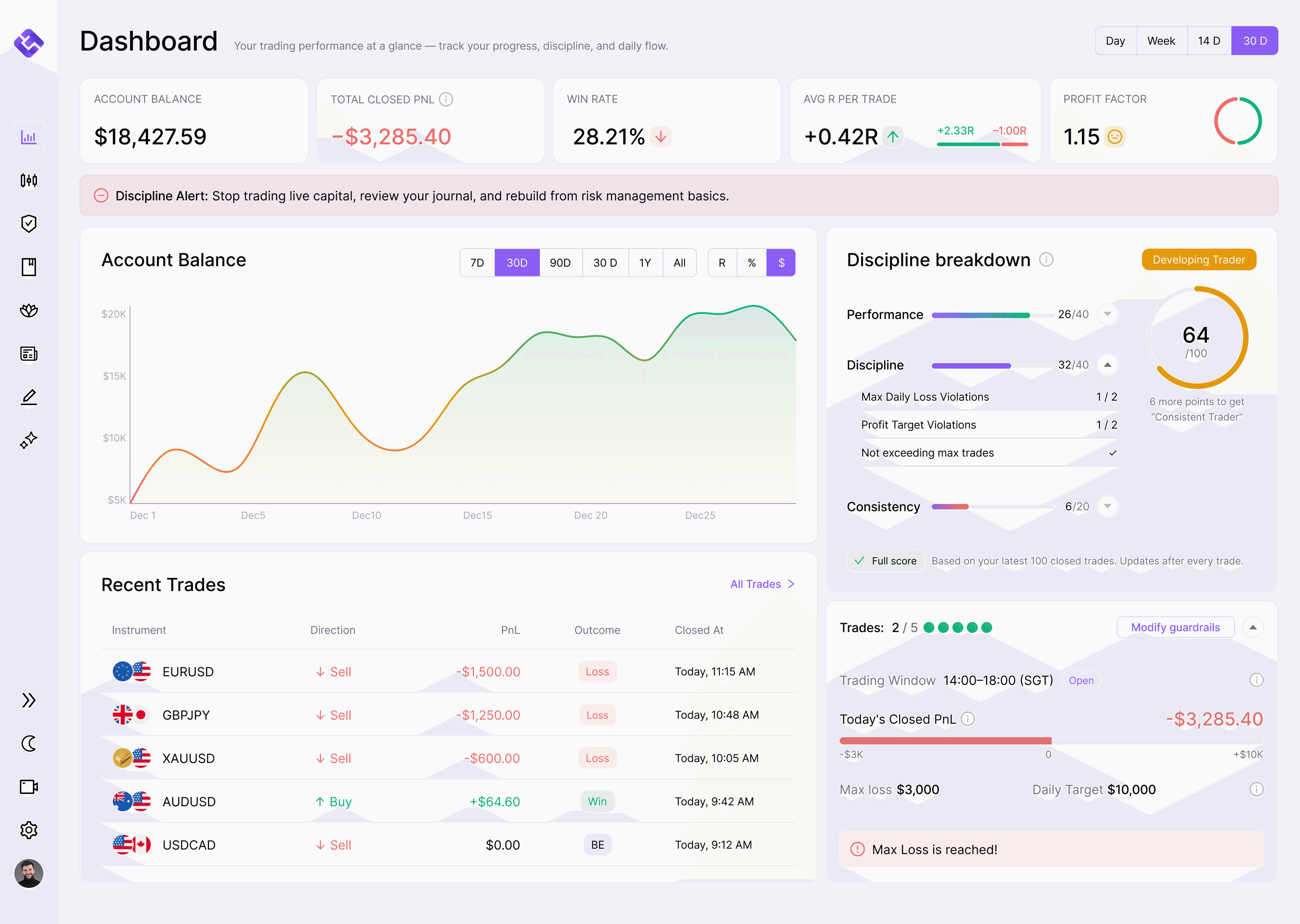
EdgeFlo's Edge plan builder lets you define your execution timeframe as part of your documented plan. When you open your plan during a session, your chosen timeframe is right there. It serves as a constant reminder: this is the timeframe you committed to.
Post-trade self-reporting then asks whether you followed your plan, including the timeframe commitment. If you took a trade on the 5-minute chart when your plan says 4-hour, that shows up as an off-plan trade in your stats.
Over time, the plan stats reveal a clear pattern: plan-compliant trades (correct timeframe, correct setup) versus off-plan trades (wrong timeframe, emotional entry). That split is the evidence you need to see the cost of hopping. Once you see that off-plan trades consistently underperform, the urge to switch timeframes loses its power.
The Edge Brief
Receive Insights on trading psychology, discipline, and the behavioral patterns that create consistent traders from our Founder and the EdgeFlo team, delivered to your inbox.
Think different. Trade different.
Why do traders keep switching timeframes?
Is multi-timeframe analysis the same as timeframe hopping?
How many trades should I take before switching timeframes?
What if I genuinely perform better on a different timeframe?

Turn discipline on.
Every session.
EdgeFlo is the environment serious traders operate inside.
Start 7-Day Free Trial
Cancel anytime.
No long-term commitment.

Think Different, Trade Different.