

Stop Hunts: Place Stops Where They Already Swept
Stop hunts are not random. Institutions sweep resting orders at predictable levels. Place your stop loss behind already-swept liquidity to avoid the trap.
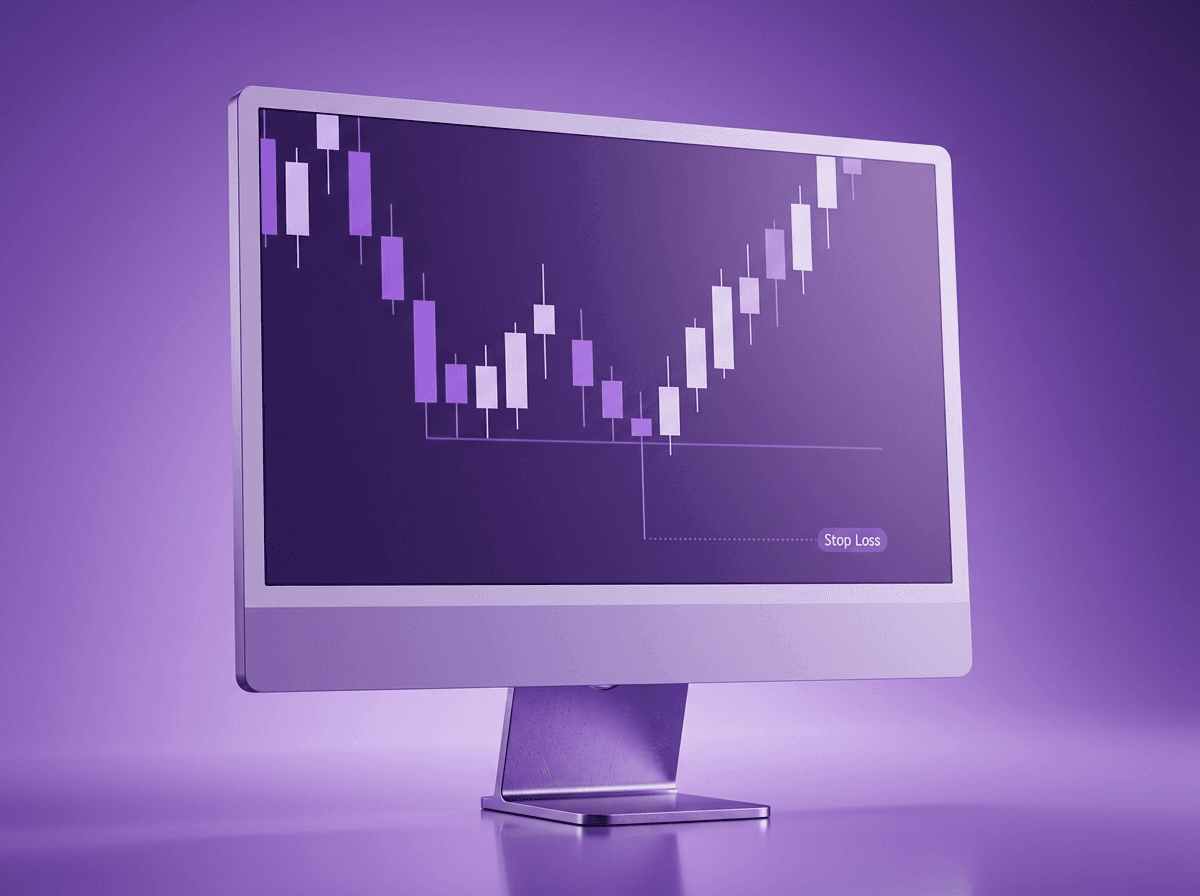
You check the chart. The setup looks perfect. Trend is bearish, supply zone is respected, and you enter short with your stop loss just above the most recent swing high. Thirty minutes later, price spikes up, takes your stop, and drops 80 pips without you.
That is not random. That is a stop hunt, and it happens because your stop was sitting exactly where institutions needed to grab fuel.
TL;DR
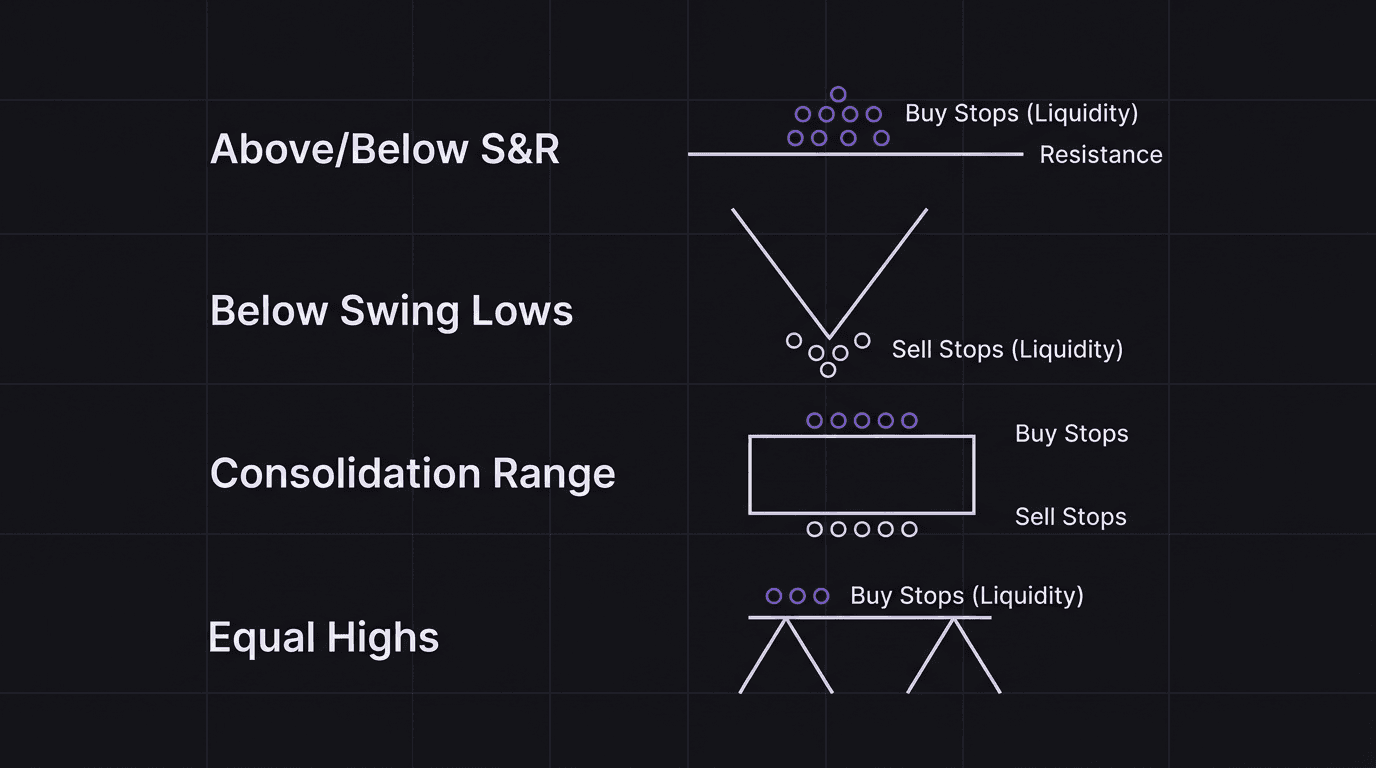
Stop hunts target resting orders at predictable levels: above swing highs, below swing lows, around consolidation, and at equal highs or equal lows.
Institutions sweep those orders because they need liquidity to fill large positions, not because the market is out to get you personally.
The fix is simple: place your stop behind a level that has already been swept, because price rarely returns to an empty liquidity pool.
Combine swept-liquidity stop placement with proper position sizing so that even a wide stop does not blow your risk budget.
Timing matters: most sweeps happen at the London or New York open, so expect the hunt before entering.
Why Stop Hunts Exist (It Is Not Personal)
Imagine you need to sell a billion dollars worth of short orders right now. You cannot just dump that into the market. You need someone willing to take the other side of the trade at the exact price you want.
That someone is retail traders, and their resting orders (stop losses and pending entries) are the fuel. Institutions do not sweep stops because they hate you. They sweep them because those resting orders are the liquidity they need to execute massive positions and push price in their desired direction.
When a large player wants price to move down significantly, they first need to push price up to grab buy stops above obvious highs. Those buy stops become the counterparty to their sell orders. Once filled, they release price in the direction they actually wanted.
This is the core mechanism. Liquidity is fuel. The liquidity sweep is the ignition.
Where Stops Get Hunted
Stop losses cluster at predictable spots. If you can see where the crowd parks their stops, you can see where institutions will reach.
Above and below support/resistance. Every retail trader who bought the bounce at support placed a stop below it. Every seller at resistance placed a stop above it. Those stops create dense liquidity pools.
Below swing lows and above swing highs. A swing low forms, and traders who bought the reversal set stops just beneath it. A swing high forms, and sellers set stops just above. These are textbook hunting grounds.
Around consolidation ranges. When price chops sideways, stops pile up on both sides. Breakout traders place sell stops below the range. Buyers place stops below the range too. That double layer of orders is irresistible for institutions looking to fuel the next move.
At equal highs and equal lows. Two swing highs that rest at nearly the same price create a magnet. Retail traders see double resistance and pile in short with stops above. Same logic works with equal lows. The more obvious the level, the thicker the liquidity.
The Mistake: Placing Stops Where Liquidity Is Thickest
Here is the pattern that gets traders stopped out repeatedly. You see a bearish setup. Price is trending down. There is a clear swing high. You enter short and place your stop loss just above that swing high.
The problem? Every other retail trader did the same thing. Now there is a pool of buy stops sitting right above that high, and institutions know it.
Walkthrough: The Classic Stop Hunt
Pair: EUR/USD. The 1-hour chart shows a bearish trend. Price creates a lower high at 1.0920, then breaks structure to the downside, making a new low at 1.0860. A trader sees the pullback beginning and enters short at 1.0890, placing a stop at 1.0925 (5 pips above the swing high).
During the London open, price pushes up to 1.0930, sweeps all the buy stops above 1.0920, and immediately reverses. The trader is stopped out for a 35-pip loss. Price then drops 90 pips to 1.0840 over the next two hours.
The entry was right. The direction was right. The stop was wrong. It sat in the thickest liquidity zone on the chart.
Now consider a different approach. Same setup, same entry at 1.0890. But this time the trader waits for the London open sweep first. Price pushes to 1.0930, grabs the liquidity above 1.0920, and starts dropping with a V-shape reaction. The trader enters short at 1.0915 after the sweep, placing the stop at 1.0935 (above the already-swept high).
That stop is sitting behind an empty liquidity pool. Institutions already took what they needed. There is no reason for price to return there. The trade runs to target.
The Fix: Stop Behind Already-Swept Liquidity
The principle is straightforward. Institutions grab liquidity once, use it to fuel their move, and move on. They do not come back to sweep the same pool twice in the same directional move.
So your stop loss belongs behind a level that has already been swept. Not above the obvious high. Above the high that price already violated and then rejected.
Step 1: Identify where liquidity sits. Mark swing highs and swing lows. Note consolidation ranges and equal highs or lows.
Step 2: Wait for the sweep. Do not enter before liquidity gets grabbed. Wait for price to push into the pool and show a V-shape reaction (a sharp reversal candle).
Step 3: Place your stop behind the sweep candle. Your stop goes above the wick that swept the high (for shorts) or below the wick that swept the low (for longs). That candle is proof that the pool has been drained.
This approach does sometimes create a wider stop distance. That is where risk per trade management becomes essential. If the stop is wider, reduce your lot size so the dollar risk stays the same.
Walkthrough: Stop Placement Behind a Swept Level
Pair: GBP/USD. The 15-minute chart during the London open. Price is bullish on the higher timeframe, making higher highs and higher lows. During the Asian session, price consolidates between 1.2640 and 1.2670, creating obvious sell stops below 1.2640.
At 3:00 AM EST (London open), price drops to 1.2632, sweeping the stops below the consolidation range. A large bullish candle forms immediately, creating a V-shape reaction. Price closes back above 1.2645.
The entry is long at 1.2648, with the stop at 1.2628 (below the sweep wick at 1.2632). That is a 20-pip stop. At 1% risk on a $10,000 account ($100 risk), the lot size is 0.5 lots (0.5 lots times $10 per pip times 20 pips equals $100). The target is the swing high at 1.2710, giving a distance of 62 pips. That is a 3.1R trade.
Price rallied to 1.2710 within two hours. The stop was never threatened because the liquidity below 1.2640 had already been consumed.
Math check: 0.5 lots times $10/pip times 20 pips = $100 risk. 0.5 lots times $10/pip times 62 pips = $310 profit. $310 / $100 = 3.1R. All verified.
Session Timing and Stop Hunts
Stop hunts do not happen randomly throughout the day. They cluster around the London open (3:00 AM to 6:00 AM EST) and the New York open (8:00 AM to 11:00 AM EST). These are the windows when institutional volume floods the market.
During the Asian session, price often consolidates. That consolidation builds liquidity on both sides of the range. When London opens, the first move is frequently a sweep of one side of that Asian range before the real directional move begins.
Knowing this timing changes everything. If you enter a trade at 2:00 AM EST (before London), your stop is sitting in the kill zone. If you wait for London to sweep, then enter, your stop is behind the sweep.
This is why trading without a stop loss is never the answer. The solution is not removing your stop. The solution is placing it where it will not get hunted.
Common Stop Placement Mistakes
Placing stops at round numbers. Stops at 1.0900 or 1.2500 are visible from space. Everyone uses them, and they get swept constantly.
Placing stops 5 pips above a swing high. This is the default recommendation in most trading courses. It is also where the densest liquidity sits.
Moving stops closer to reduce risk. Tightening your stop to lower the dollar risk sounds logical but puts the stop inside the liquidity zone. Use position sizing to control risk through lot size, not stop distance.
Moving your stop loss to breakeven too early. If you move to breakeven before the market has cleared the nearby liquidity, your breakeven stop becomes the liquidity pool. Wait for at least one more sweep before adjusting.
A Simple Pre-Trade Stop Filter
Before placing any trade, ask these three questions:
Where is the nearest unswept liquidity relative to my stop?
Has the liquidity at my stop level been swept already in this session?
If not, am I willing to wait for the sweep before entering?
If your stop sits next to a thick, unswept liquidity pool, you are the fuel. Either wait for the sweep, or move your stop behind a level that has already been cleared.
This filter takes 30 seconds. It prevents the most common reason traders get stopped out on otherwise correct trade ideas.
How EdgeFlo Helps You Size Around Wider Stops
Placing stops behind swept liquidity sometimes means a wider stop distance. That creates a temptation: keep the same lot size and accept more dollar risk. That temptation destroys accounts.
EdgeFlo's auto risk calculator solves this mechanically. Set your risk per trade (say 1%), place your stop loss at the correct level behind the sweep, and EdgeFlo automatically calculates the lot size based on the stop distance. Wider stop, smaller lots, same dollar risk.
The guardrails restrict you from exceeding your risk limit per trade, though you can override if you choose to. The point is that the calculation happens automatically so you never have to do the math under pressure or round up because you "feel good" about the trade.
When stop placement and position sizing work together, stop hunts stop being a problem. You are not sitting in the liquidity pool, and even if you are wrong, the loss stays within your plan.
The Edge Brief
Receive Insights on trading psychology, discipline, and the behavioral patterns that create consistent traders from our Founder and the EdgeFlo team, delivered to your inbox.
Think different. Trade different.
What is a stop hunt in forex?
Where do institutions find liquidity to sweep?
How do you place a stop loss to avoid stop hunts?
Can stop hunts happen in any trading session?

Turn discipline on.
Every session.
EdgeFlo is the environment serious traders operate inside.
Start 7-Day Free Trial
Cancel anytime.
No long-term commitment.

Think Different, Trade Different.