

Set and Forget in Funded Challenges: Trust the Exit
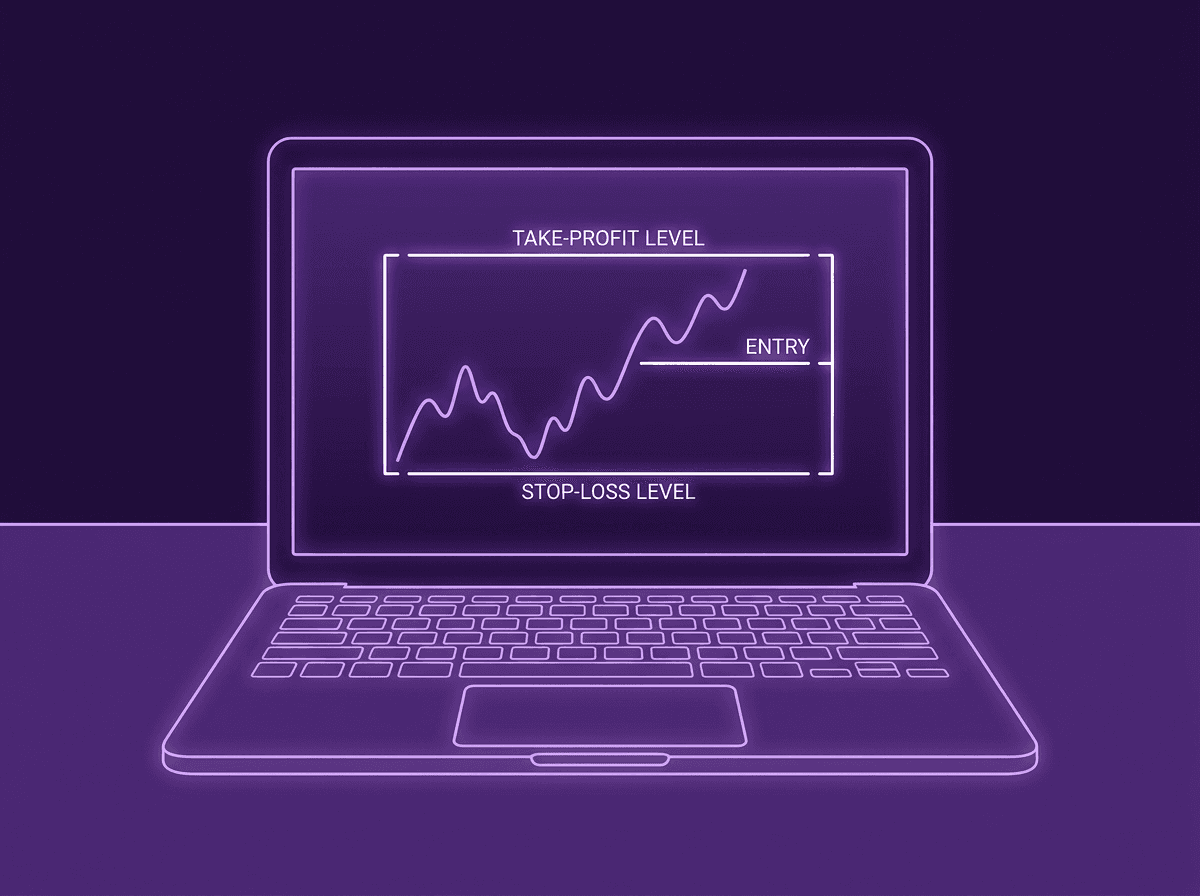
Set and forget is the only trade management method that protects funded challenge accounts. Place your stop-loss, place your take-profit, walk away.
You passed your analysis. You found the setup. You placed the trade.
And then you started touching it.
You moved the stop-loss wider because price got close. You closed early because the profit "felt like enough." You checked the chart every three minutes, looking for a reason to exit. By the time the trade was over, you had turned a clean 3R winner into a breakeven scratch, or worse, a full loss you did not need to take.
If you are in a funded challenge, this habit will end your account. Not bad analysis. Not a bad strategy. Interference.
Set and forget is the only trade management method that reliably protects funded challenge accounts. Place your stop-loss, place your take-profit, and walk away. The trade does not need you after entry.
TL;DR
Set and forget means placing your stop-loss and take-profit at entry, then not touching the trade until one level gets hit.
A 1:3 risk-reward ratio with set and forget keeps you profitable even at a 30% to 40% win rate.
Trade interference (moving stops, taking early profits) is the primary reason traders fail funded challenges.
The emotional cascade after interference spirals faster than the original loss ever would.
If you cannot trust your exit levels, the problem is your analysis, not your trade management.
Why Set and Forget Wins Challenges
Funded challenges have one job: prove you can follow rules under pressure. The profit target is straightforward. On a $100,000 account, Phase 1 typically asks for 10%. Phase 2 asks for 5%. The math is not the hard part.
At 1% risk per trade with a 1:3 risk-reward ratio, one winning trade returns 3%. That means four wins at 3R each would reach 12%, clearing Phase 1 with room to spare. Even with losses mixed in, a 40% win rate keeps the account growing.
The hard part is not touching the trade after you place it.
Set and forget works in funded challenges because it eliminates the most dangerous variable: you. Once the stop-loss and take-profit are set, there is no decision to make. Price either hits your target or hits your stop. Both outcomes are pre-planned. Both are survivable.
Every other trade management style introduces a decision point while the trade is live. And that decision point is where challenge accounts die.
The Interference Problem
Here is what interference actually looks like during a funded challenge.
You risk 1% on a trade with a 1:3 target. Price moves against you, gets within 5 pips of your stop-loss, and you panic. You widen the stop by 20 pips. Now your risk is no longer 1%. It is closer to 1.5% or 2%, depending on how far you moved it. If price hits that wider stop, you just took a loss 50% to 100% larger than planned.
Or the opposite happens. Price moves in your favor, hits 1.5R, and you close early because you are scared of giving back profit. You pocket 1.5% instead of 3%. That sounds fine until you realize your next loss still costs 1%. Your effective risk-reward ratio just dropped from 1:3 to 1:1.5, and now you need a 40% win rate just to break even instead of growing the account.
Sound familiar?
The worst version is the combo. You widen the stop on a losing trade (bigger loss), then close a winning trade early (smaller win). In two trades, you have destroyed the math that was supposed to carry you through the challenge.
The Walkthrough: How Interference Kills a $100,000 Challenge
You start a $100,000 Phase 1 challenge risking 1% per trade ($1,000 risk) with a 1:3 target.
Trade 1: EUR/USD long. Stop-loss 30 pips below entry, take-profit 90 pips above. Price drops 25 pips toward your stop. You panic and move the stop-loss 20 pips wider, making it 50 pips total. Price reverses and hits the original target area, but you already closed at +40 pips because you were rattled. Result: +$400 instead of +$3,000.
Trade 2: GBP/USD short. Same setup, 1% risk. Price spikes against you and hits your widened stop from a similar panic move. You lose 1.5% ($1,500) instead of 1% ($1,000).
Trade 3: You are frustrated. Account is at $98,900. You take a revenge trade with a wider stop to "make it back." You lose another 1.5%. Account: $97,400.
Three trades in, and interference has cost you $2,600. With pure set and forget at 1:3, the same sequence (one win, two losses) would have left you at $101,000.
That is the interference tax. Not a strategy problem. A hands-on-the-trade problem.
Place It and Leave It: The Mechanic
Set and forget in a funded challenge is mechanical. There are exactly three steps, and none of them happen after the trade is open.
Step 1: Calculate risk before entry. Know your dollar risk per trade. On a $100,000 account at 1% risk, that is $1,000. This determines your position size based on stop distance.
Step 2: Place the trade with stop-loss and take-profit attached. Your stop goes at the level where your analysis is invalid. Your take-profit goes at 3R minimum. Both orders are live the moment you enter.
Step 3: Close the chart. Not minimize. Close. If you cannot see the chart, you cannot interfere. Set a price alert at your take-profit if you want to know when you won. Otherwise, check back in a few hours or the next day.
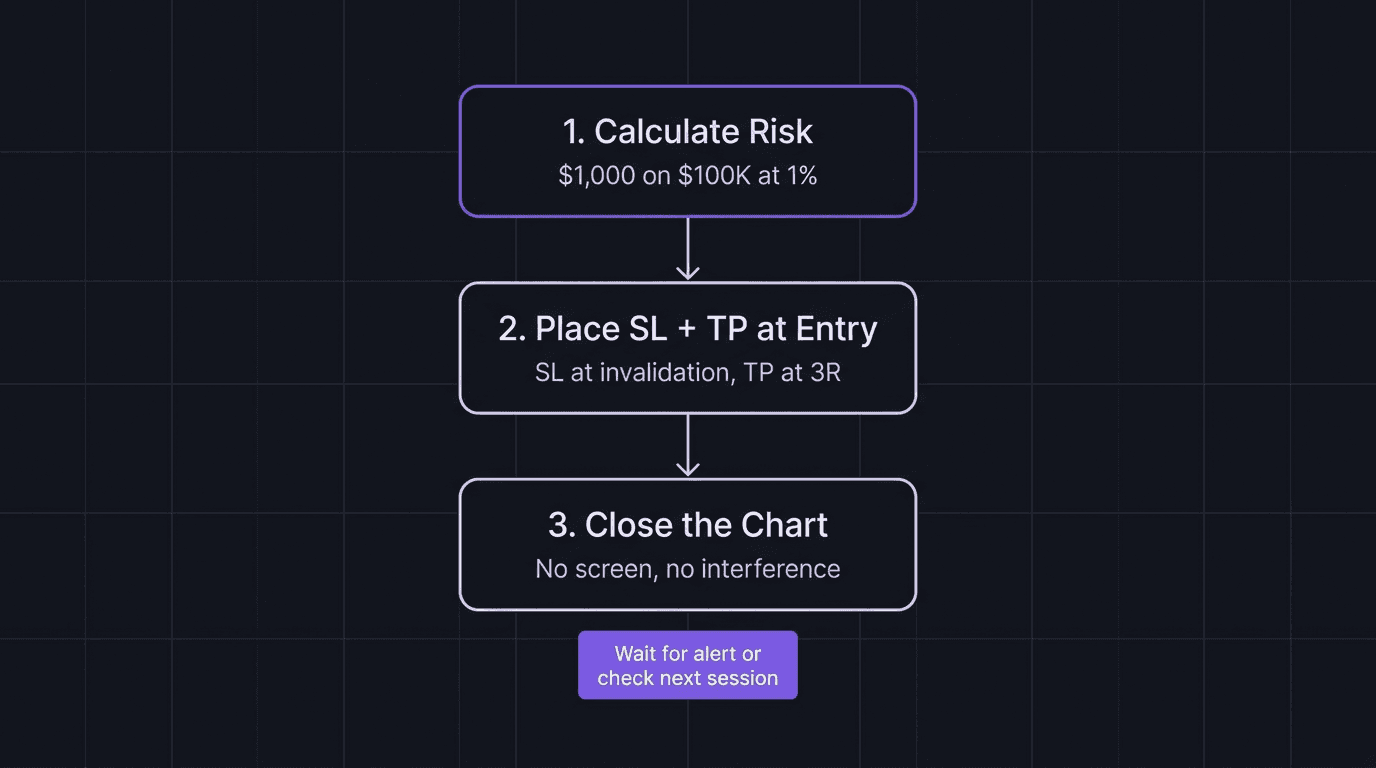
That is the entire system. No trailing stops. No partial profits. No checking the trade "just to see." The set and forget approach strips trade management down to its only job: protecting the plan you made when you were calm.
Why Closing the Chart Matters
This is the part most traders skip. They set the stop and target, then leave the chart open on a second monitor. That is not set and forget. That is set and stare.
Every time you look at a live trade, your brain recalculates. Price moves 10 pips against you, and you start weighing whether to close. Price moves 15 pips in your favor, and you start calculating what you would make if you took profit now. Those micro-decisions add up. By the time price reaches your actual target or stop, you have already overridden one of them.
Close the chart. Walk away. If your analysis was sound at entry, it does not need you micromanaging it 20 minutes later.
What Happens When You Touch the Trade
The interference spiral follows the same pattern almost every time. One modification leads to a worse outcome, which leads to an emotional reaction, which leads to another bad trade.
Here is the chain:
You move the stop-loss wider because price got close.
Price hits the wider stop. You lose more than planned.
You feel angry. You take the next trade too quickly to recover.
The revenge trade has a sloppy entry. You lose again.
You are now down 3% to 4% instead of the 1% you originally risked.
You overtrade to recover. Every trade gets worse.
This is how a 1% planned loss turns into a 5% max daily loss violation. Not from the market. From your hands.
The pattern is consistent: emotions come from losses, and losses spiral when you deviate from your plan. One bad decision does not end your challenge. The cascade of emotional decisions after it does.
The Walkthrough: What "Not Touching" Looks Like
You are on Day 4 of a $100,000 Phase 2 verification. Account balance: $102,000 after one win and one loss. You need 5% total to pass.
Trade 4: You go long EUR/USD at 1.0850. Stop-loss at 1.0820 (30 pips). Take-profit at 1.0940 (90 pips). Risk: 1% ($1,020).
Price drops to 1.0830. You are down 20 pips. Your hands want to close. You do not. You are not even watching. The chart is closed.
Price reverses. It climbs through 1.0870, 1.0900, 1.0920. You check your phone three hours later and see the alert: take-profit hit at 1.0940.
Result: +3R. That is +$3,060. Account balance: $105,060.
You did nothing. Price did the work. That is the entire point.
If you had been watching, you might have closed at +20 pips when price stalled near 1.0870. That would have been +$680 instead of +$3,060. One moment of interference would have cost you $2,380 and left you still needing 2.6% more to pass.
How EdgeFlo Locks Your Parameters
The hardest part of set and forget is not the concept. It is the execution. Knowing you should leave the trade alone and actually leaving it alone are two different problems.
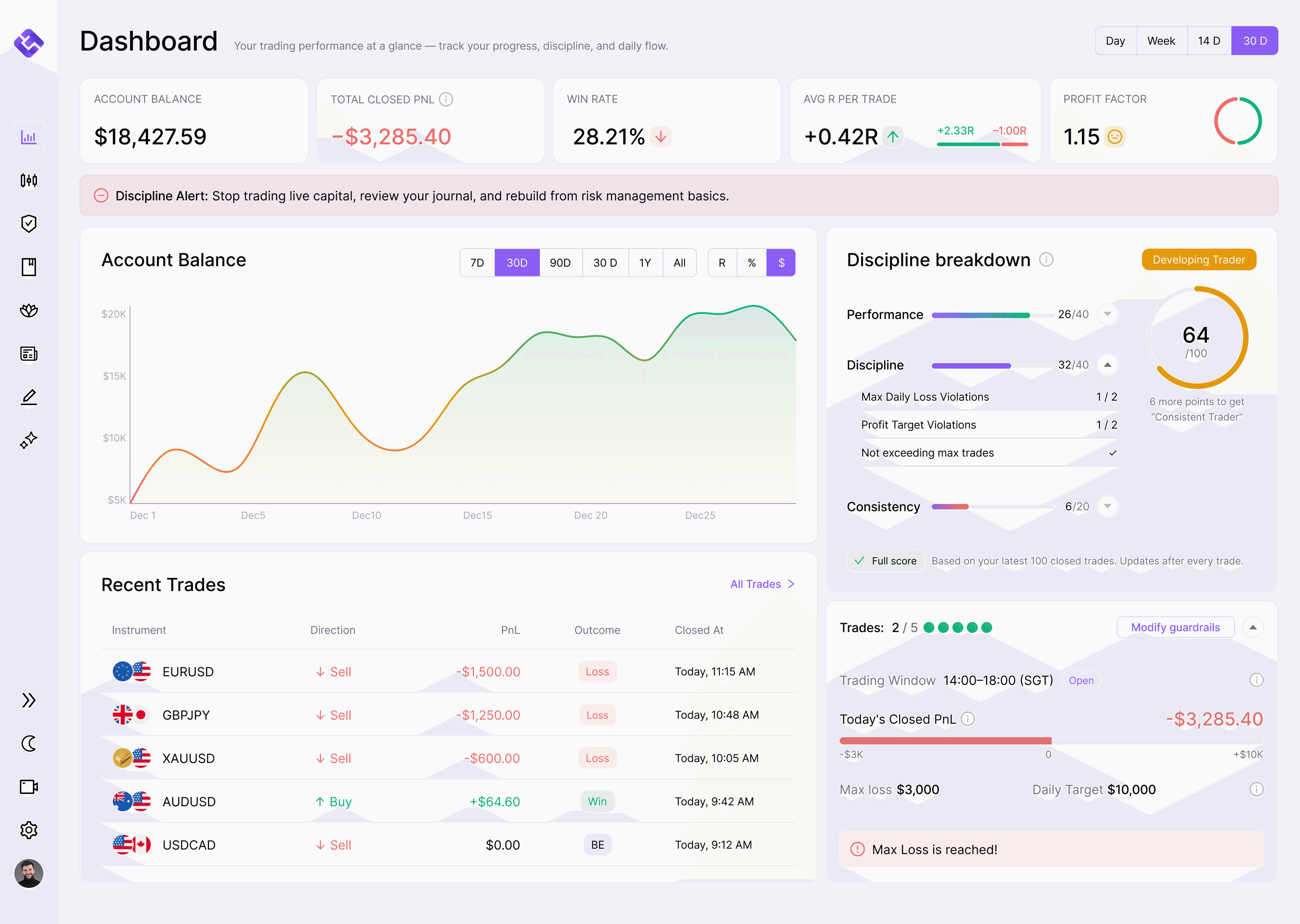
EdgeFlo's guardrails can restrict order modifications with an override option, which means you can configure it to flag or block changes to your stop-loss and take-profit after entry. If you try to move your stop wider at 2 AM because you are nervous, the guardrail catches it. You can still override if you genuinely need to (legitimate reasons exist, like a news event), but the override forces a conscious choice instead of an impulsive one.
That friction matters. The difference between blowing a challenge and passing it is often one moment of hesitation. One second where your hand pauses before moving the stop. EdgeFlo puts that pause in front of you automatically.
Combined with the trading journal, every modification gets logged. You can review after the session and see exactly how many times interference would have changed your results. Most traders who do this review are shocked at how much money their hands cost them.
The Edge Brief
Receive Insights on trading psychology, discipline, and the behavioral patterns that create consistent traders from our Founder and the EdgeFlo team, delivered to your inbox.
Think different. Trade different.
What does set and forget mean in a funded challenge?
Can I move my stop-loss during a funded challenge?
What risk-reward ratio works best for set and forget?
How does set and forget prevent emotional trading?

Turn discipline on.
Every session.
EdgeFlo is the environment serious traders operate inside.
Start 7-Day Free Trial
Cancel anytime.
No long-term commitment.

Think Different, Trade Different.