

Stop Micromanaging Trades: Trust Your Analysis
You did the analysis and placed the trade. Now let it work. Learn why watching every tick destroys good setups and how to set rules that prevent interference.
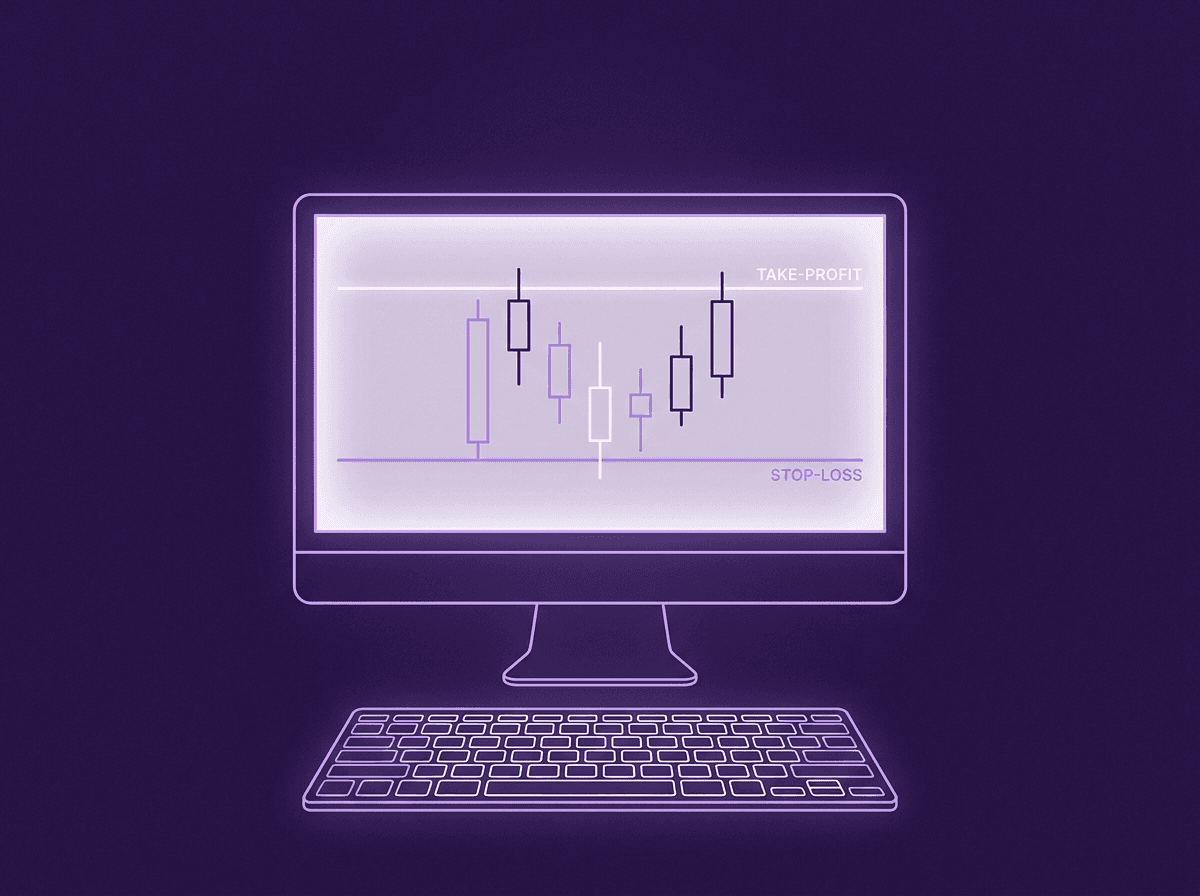
You enter the trade. Good setup. Clean entry. Stop and target placed exactly where your plan says they should go.
Then you sit there. Watching. Every green candle feels like confirmation. Every red candle feels like a threat. Thirty minutes in, price pulls back 12 pips against you and your finger is hovering over the close button.
You have already done the work. The analysis was sound. But now you are undoing it, one anxious tick at a time.
TL;DR
Micromanaging trades means interfering with valid setups after entry, usually driven by anxiety, not new information.
Traders who adjust positions mid-trade consistently underperform their own backtested results.
The fix is structural: set alerts, walk away, and define in advance the only conditions under which you will touch a live trade.
If your plan does not include a reason to adjust, do not adjust.
Set-and-forget execution outperforms active management for most retail traders.
What Micromanaging Actually Looks Like
Micromanaging is not the same as active trade management. Active management has rules. "Trail my stop to the last swing low after price breaks a new high." That is a plan.
Micromanaging has no rules. It is reactive. It looks like this:
Staring at the 1-minute chart on a 4-hour trade.
Moving your stop tighter every time price pulls back, even though it has not broken any structure.
Closing a winning trade at 1.5R because "it feels like it is going to reverse" when your target is 3R.
Reopening the trade after closing it early because price continued in your direction.
Checking your phone every 5 minutes to see if the trade is still alive.
Sound familiar? Every one of these behaviors turns a structurally valid trade into an emotional decision. And emotional decisions have a negative expected value.
The Measurable Cost of Interference
Here is the part that stings. You can actually measure how much micromanaging costs you.
Take your last 20 trades. For each one, note what the trade would have done if you had just left your stop and target alone versus what actually happened after you intervened.
Most traders who do this exercise discover something uncomfortable: their interventions reduced their total profit. They closed winners too early, moved stops too tight, or exited positions that eventually hit their original target.
Walkthrough: The Cost of One Intervention
You short GBP/USD at 1.2640. Stop at 1.2660 (20 pips). Target at 1.2580 (60 pips). You are trading 0.5 lots, so $5 per pip.
Price drops 30 pips to 1.2610. You are up $150. Then price pulls back to 1.2625. You are now up only $75. The pullback feels threatening, so you tighten your stop.
Your stop loss on a short is a buy order placed above your entry. You move it down from 1.2660 to 1.2645, just 5 pips above your entry. Price pulls back up to 1.2646 and hits your tightened stop.
Result: a $25 loss. You watch from the sideline as price drops back down, breaks through 1.2610, and eventually reaches your original target at 1.2580 two hours later.
If you had done nothing, you would have made $300 on a 3R trade. Instead, you lost $25. The total cost of that one intervention: $325.
Multiply that by every time you have done this in a month. That is the price of micromanaging.
Why You Do It (And Why Knowing Does Not Fix It)
The urge to micromanage comes from a simple place: you cannot tolerate uncertainty. You placed the trade, and now you want to control the outcome. But the outcome is not yours to control. The market decides.
Understanding this intellectually does not stop the behavior. Knowing that you should not move your stop loss without a structural reason does not prevent your hand from reaching for the mouse when price pulls back against you.
What does work is structure. Rules that make micromanaging harder to do, not just harder to justify.
The Anti-Micromanagement Protocol
Rule 1: Set Price Alerts, Not Screen Time
After placing your trade, set alerts at three levels: your stop, your target, and one midpoint level where you might want to assess. Then close the chart. Not minimize it. Close it.
Check back only when an alert fires or at your next scheduled chart review time. For a swing trade, that might be every 4 hours. For a day trade, maybe every 30 minutes.
The chart will still be there when you come back. The trade does not need you to watch it.
Rule 2: Define Your Adjustment Triggers in Advance
Before entering, write down the only conditions under which you will adjust the trade. "I will trail my stop to the last 15-minute swing low after price breaks a new structural high." "I will take partials at 2R if price is approaching a major supply zone."
If a situation arises that is not on your list, you do not touch the trade. Period. No exceptions. No "but this time is different."
Rule 3: Grade Yourself on Non-Interference
In your journal, add a field: "Did I follow my plan without interfering?" Score yourself. Over time, you will see a clear correlation between non-interference and better results. That data builds the patience that willpower alone cannot.
Rule 4: Use a Timer
After entering a trade, set a timer for your minimum review interval. If the timer has not gone off, you do not look at the chart. This sounds absurdly simple. It works because the problem is not complex. You just need a hard boundary between you and the chart.
The Exception: Planned Adjustments
Not all trade management is micromanaging. Trailing stops based on structural breaks, taking partial profits at predefined levels, and closing before scheduled news events are all legitimate actions, as long as they were part of your plan before you entered.
The difference is whether the adjustment was planned or reactive. Planned: "My rules say to trail after a structural break." Reactive: "Price pulled back and I got scared." One is trade management. The other is fear.
How EdgeFlo Prevents Micromanagement
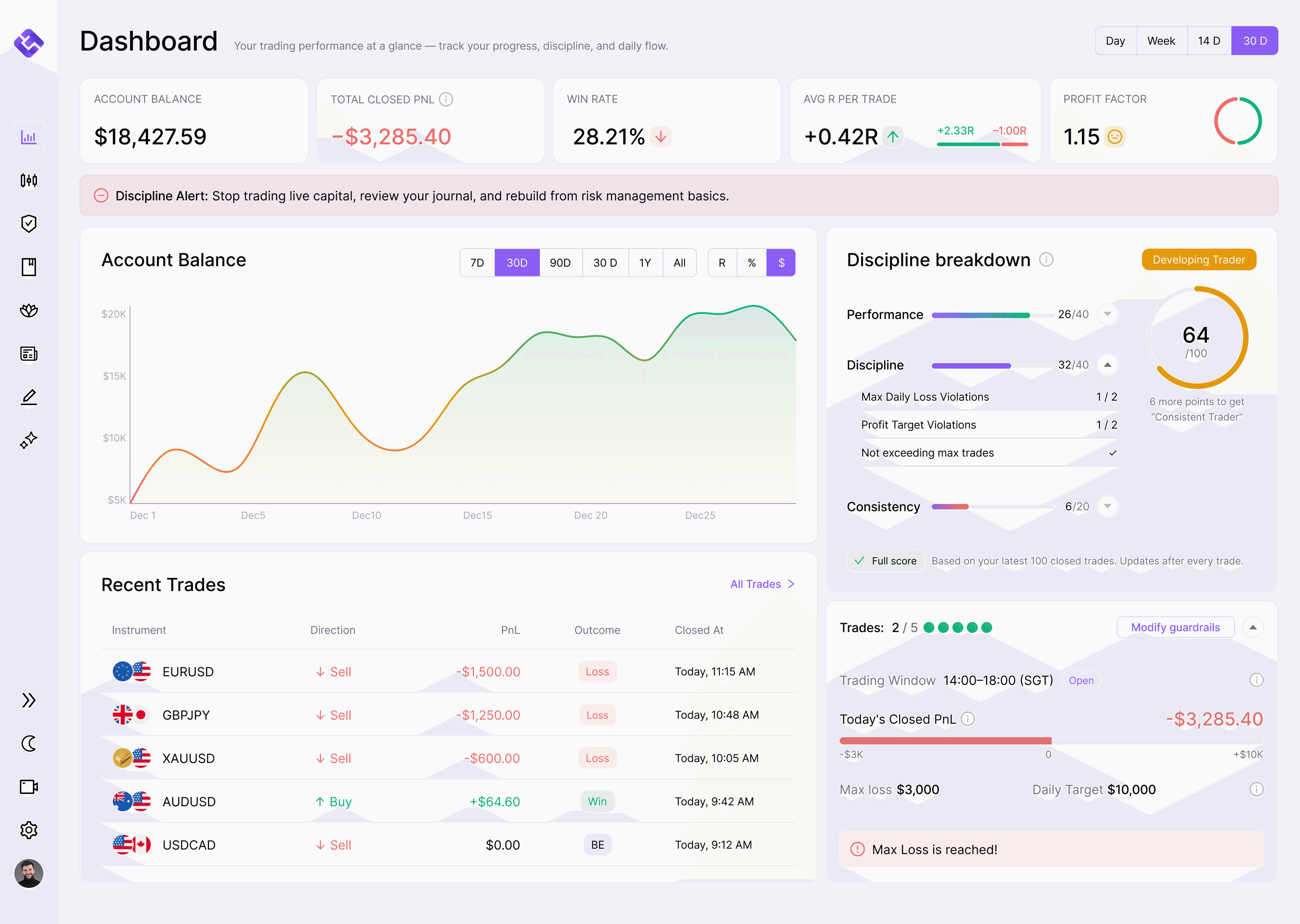
EdgeFlo's guardrails can restrict order modifications, making it harder to change your stop or target on impulse. You can still override (the choice is always yours), but the extra step forces a conscious decision instead of a reflexive click.
Your Edge plan stays visible during execution, reminding you of the rules you set before the trade was live. When you are tempted to intervene, your own plan is right there telling you not to. The combination of guardrails and visible rules turns micromanagement from a default behavior into a deliberate override that you have to justify.
The Edge Brief
Receive Insights on trading psychology, discipline, and the behavioral patterns that create consistent traders from our Founder and the EdgeFlo team, delivered to your inbox.
Think different. Trade different.
What is micromanaging a trade?
How do I stop watching my trades constantly?
Does micromanaging trades reduce profits?
When is it okay to adjust a live trade?

Turn discipline on.
Every session.
EdgeFlo is the environment serious traders operate inside.
Start 7-Day Free Trial
Cancel anytime.
No long-term commitment.

Think Different, Trade Different.