

The Regret Test: How to Make Trading Decisions You Will Not Regret
Apply the regret minimization framework to trading. Learn why minimizing future regret beats chasing present comfort and stops impulsive trading decisions.
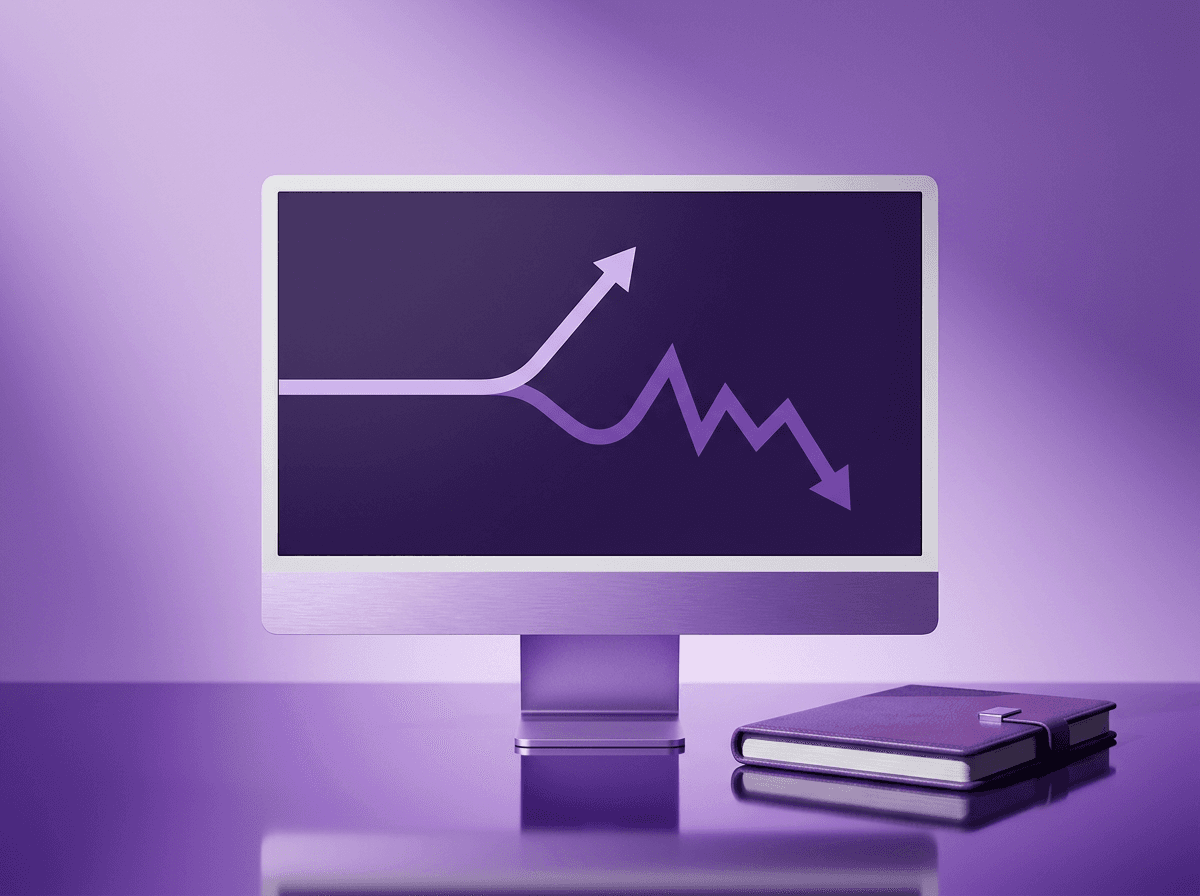
Every bad trading decision feels good in the moment. Revenge trading feels like taking control. Skipping your stop feels like giving the trade room to breathe. Sizing up after a win streak feels like capitalizing on momentum.
And every one of those decisions creates regret 24 hours later.
The regret minimization framework flips this dynamic. Instead of asking "What feels right now?" you ask "Which choice will I regret less when I look back tomorrow, next week, next month?" Almost every time, the answer is the same: follow your rules, even when it hurts.
TL;DR
Most trading mistakes feel good in the moment and create regret afterward.
The regret test asks: which action will my future self regret more?
Breaking your rules always creates more lasting regret than missing a trade.
Short-term pain (missing a move, taking a loss) prevents the long-term regret of blown accounts and broken confidence.
Applying this framework consistently eliminates most impulsive trading decisions.
What Is the Regret Minimization Framework
The concept is borrowed from long-term decision-making. When faced with a choice, project yourself into the future. Ask: "When I am 80 years old, which option will I regret not choosing?"
In trading, the timeframe is shorter but the principle is identical. When you are staring at a chart and your finger is hovering over the buy button, ask: "Tomorrow morning, which decision will I regret?"
Option A: Take the off-plan trade, maybe catch a 20-pip move, maybe get stopped out and lose $200.
Option B: Sit out, watch the move happen without you, feel the sting of missing it, and protect your account.
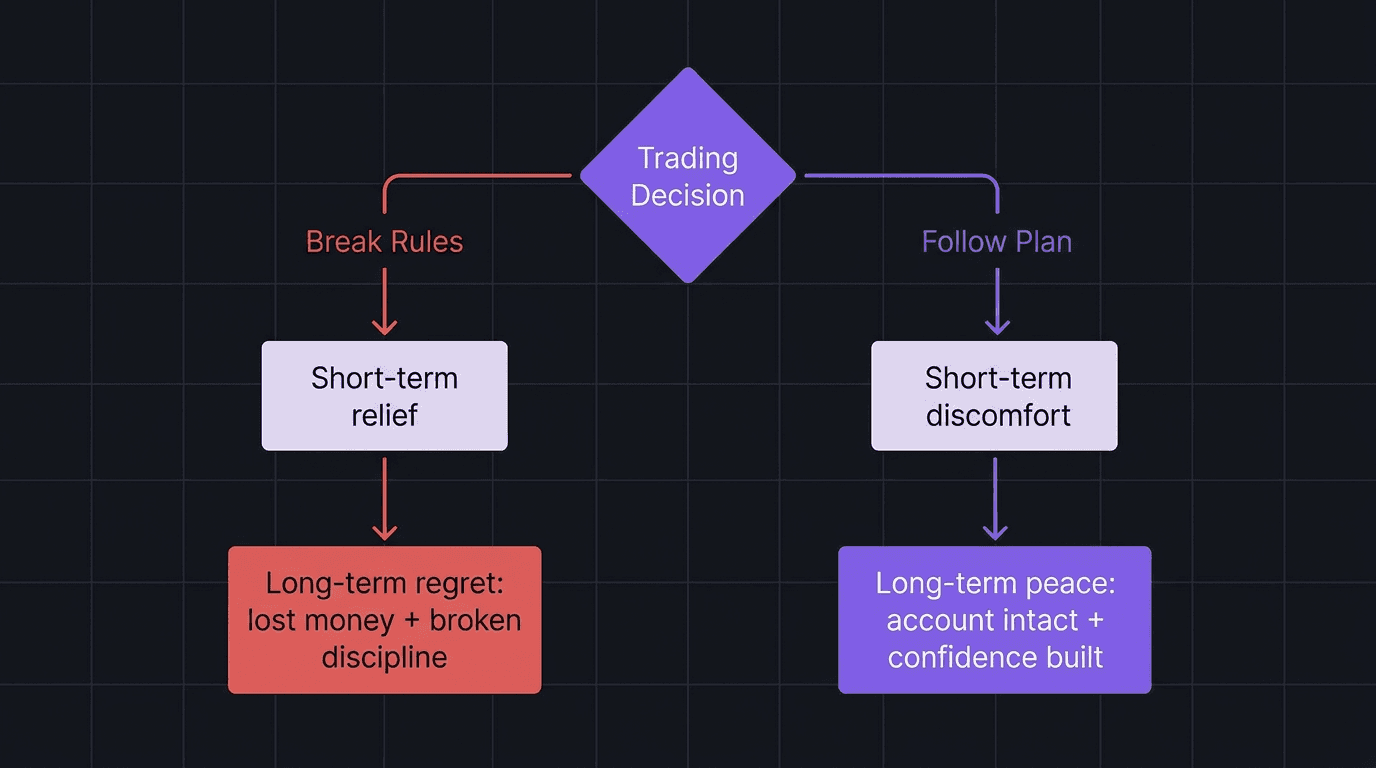
If you take Option A and it works, you feel good for an hour. But you have reinforced a behavior (breaking rules) that will cost you far more than 20 pips over the next 100 trades.
If you take Option A and it fails, you lose money AND regret the decision. Double pain.
If you take Option B, you feel uncomfortable for about 30 minutes. By the next session, the missed trade is forgotten. Your account is intact. Your discipline is intact.
The math is clear. The regret of breaking rules compounds. The regret of missing trades fades.
Applying the Regret Test to Every Trade Decision
The framework works at every decision point during your session. Here is how to apply it in real time.
Entry decisions. Your plan says to wait for a demand zone at 1.0870 on EUR/USD. Price is at 1.0890 and dropping. You want to enter now because "it might not reach the zone."
Regret test: Will you regret more if you (a) enter early and get stopped out, or (b) miss the move because price never touched your zone?
If price reaches your zone and you entered early, you got a worse entry and a wider stop. If price never reaches your zone, you missed a trade, but your account is the same as it was. Option (b) carries less regret in every scenario.
Exit decisions. You are in a long trade. Price pulls back 12 pips. Your stop is 20 pips away. Your target is 50 pips away. You want to close now to "lock in something."
Regret test: Will you regret more if you (a) close now at a small profit and price hits your target without you, or (b) hold and get stopped out for a small loss?
If you close and price continues, you regret cutting a winning trade short. If you hold and get stopped, you took a planned loss, which is the cost of doing business. Option (b) carries less regret because it is the decision your plan already made for you.
Sizing decisions. You just won 3 trades in a row. You want to double your lot size on the next trade because you are "on fire."
Regret test: Will you regret more if you (a) size up and the trade loses, giving back two of your three wins, or (b) keep normal size and the trade wins, making a regular profit instead of a huge one?
Option (a) creates both financial and psychological damage. Option (b) leaves money on the table but protects your streak and your confidence. Less regret with (b) every time.
Walkthrough: The Revenge Trade That Felt Justified
A trader takes a clean GBP/USD short at 1.2710 with a 15-pip stop at 1.2725. Target at 1.2650.
Price spikes to 1.2726. Stopped out for a $150 loss.
The trader watches price immediately reverse and drop to 1.2680. Frustration hits. The setup was right. The stop was 1 pip too tight. "If I re-enter now, I can recover the loss and make the profit I deserved."
Re-enters short at 1.2680 with a 15-pip stop at 1.2695. Price consolidates, then spikes to 1.2698. Stopped out again. Another $150 loss.
Now the trader is down $300 instead of $150. The regret is not just financial. It is the knowledge that the second trade was not in the plan. It was emotion dressed up as analysis.
Had the trader applied the regret test after the first stop-out: "Will I regret re-entering more than I regret walking away?"
Walking away means accepting a $150 loss. That stings for an afternoon. Re-entering and losing means $300 gone plus the psychological damage of knowing you broke your trading rules. That regret lingers for days and often triggers more impulsive behavior the following session.
The Regret of Breaking Rules vs Missing Trades
These two types of regret are not equal. Understanding why is the key to using this framework consistently.
Regret from missing a trade is sharp but short-lived. You see a move happen without you. It hurts. You think about the profit you could have made. And then the next session starts, new setups appear, and the missed trade fades into irrelevance.
No trading mistake was ever caused by missing a single trade.
Regret from breaking rules is dull but long-lasting. It does not just cost you money on one trade. It erodes your confidence in your system. If you broke your rules today, what stops you from breaking them tomorrow? The trust you built through weeks of disciplined execution cracks, and rebuilding it takes far longer than recovering a financial loss.
This is why the regret test almost always points toward rule-following. The downside of following rules is occasionally missing a move. The downside of breaking rules is the slow destruction of the discipline that makes you profitable over time.
Think about your last five worst trading days. How many of them started with a plan-adherent trade that lost? Probably zero. They started with an impulse trade, a revenge entry, or a rule override that felt justified in the moment.
Why Short-Term Pain Prevents Long-Term Regret
Every good trading decision hurts a little in the present. Taking a loss hurts. Missing a move hurts. Keeping your lot size normal after a winning streak hurts.
But these small pains are the price of avoiding the big regret: blowing your account, failing a funded challenge, or spending months rebuilding after a spiral.
Think of it as insurance. Each time you follow your plan despite discomfort, you are paying a small premium that protects you from catastrophic outcomes. The premium is the missed opportunity or the accepted loss. The payout is a smooth equity curve, steady confidence, and long-term profitability.
The traders who struggle most are the ones who cannot tolerate any short-term pain. They close trades early to avoid the discomfort of a pullback. They skip their stop to avoid the discomfort of a loss. They overtrade to avoid the discomfort of boredom. Each avoidance creates a larger future problem.
The regret test reframes this. "Which pain do I prefer? The 15-minute sting of sitting out, or the 3-day hangover of a revenge trade?"
When you frame it that way, the answer is obvious. The challenge is remembering to ask the question before you act, not after.
How EdgeFlo Helps You Follow Rules You Set for Yourself
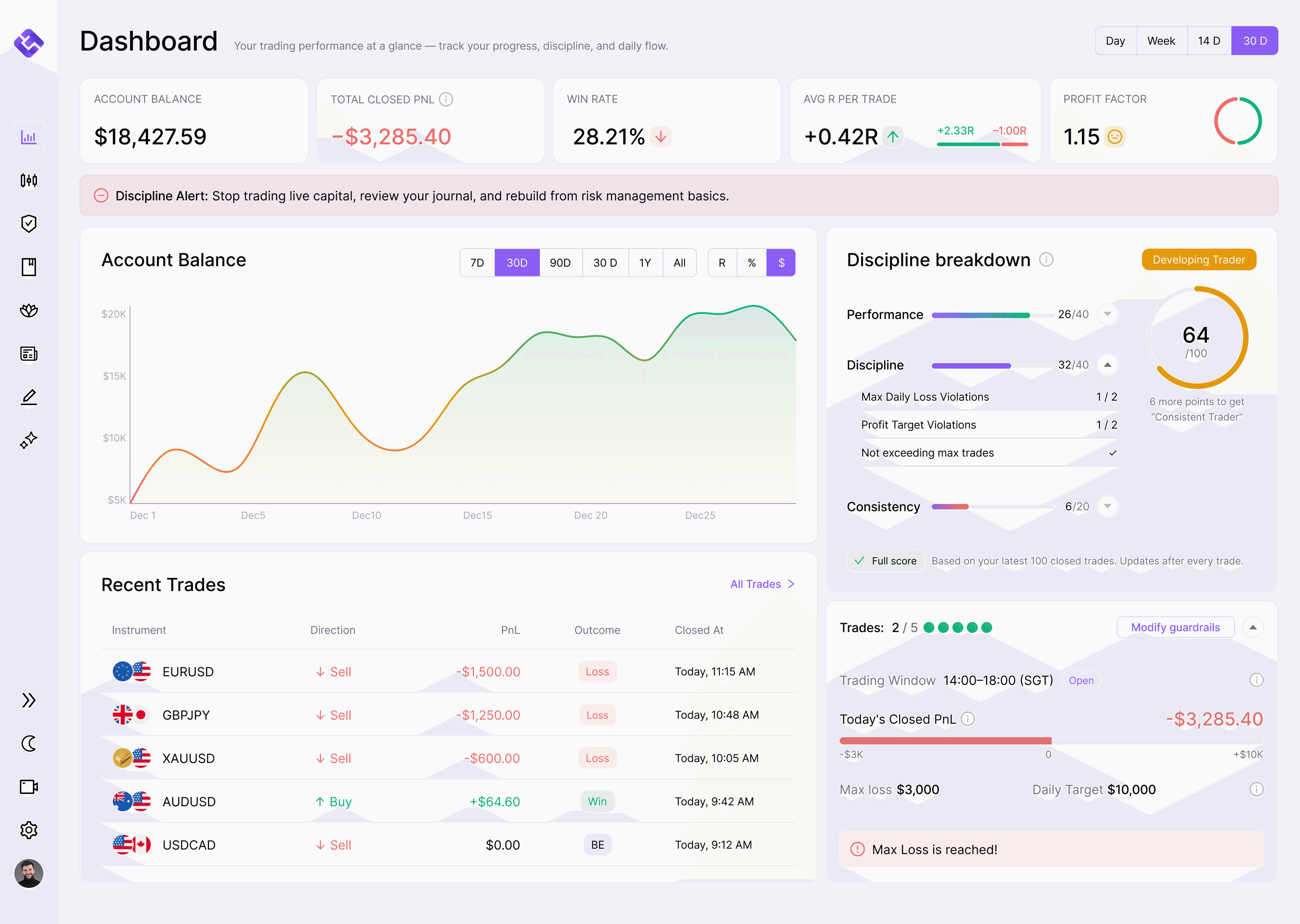
EdgeFlo makes rule-breaking a conscious act rather than an unconscious default. When you set your daily loss limit, max trades per day, or risk per trade, EdgeFlo restricts the interface once those limits are hit. The buy and sell buttons gray out. You can override them, but you have to actively choose to break your own rules.
That moment of awareness is the regret test built into the platform. When you see the grayed-out button and your hand reaches for the override, the question surfaces naturally: "Will I regret this override tomorrow?"
Trading consistency is not about willpower. It is about designing an environment where the easy path is also the disciplined path. The regret test gives you the mental framework. EdgeFlo gives you the structural support. Together, they make it harder to do the thing you will regret and easier to do the thing your future self will thank you for.
The Edge Brief
Receive Insights on trading psychology, discipline, and the behavioral patterns that create consistent traders from our Founder and the EdgeFlo team, delivered to your inbox.
Think different. Trade different.
What is the regret minimization framework in trading?
How does regret minimization stop impulsive trades?
Is it normal to regret missed trades?
Can I use the regret test for every trading decision?

Turn discipline on.
Every session.
EdgeFlo is the environment serious traders operate inside.
Start 7-Day Free Trial
Cancel anytime.
No long-term commitment.

Think Different, Trade Different.