

Your P&L Does Not Define Your Worth as a Trader
Your equity curve measures execution consistency, not intelligence. Separating self-worth from daily P&L is the psychological shift that sustains trading careers.
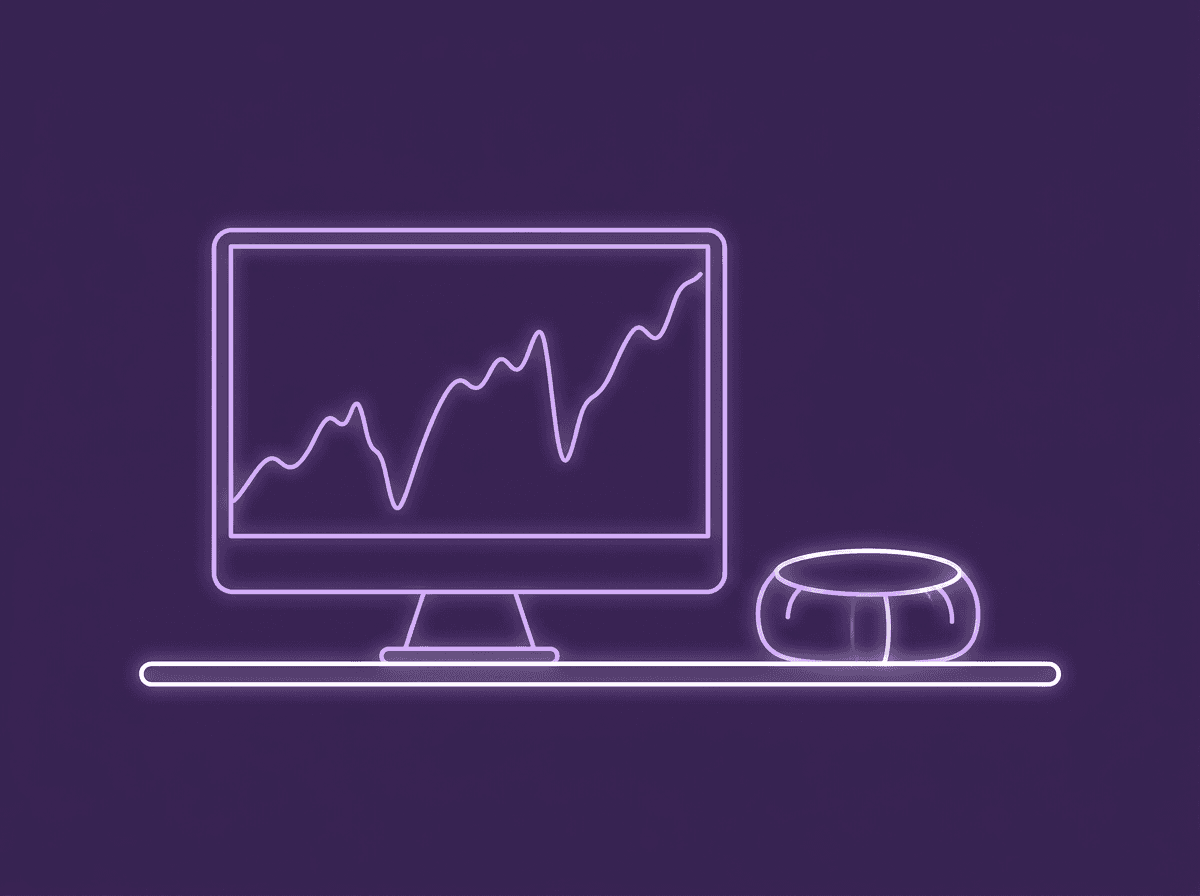
Smart traders lose money. Consistently. The best traders in the world have losing days, losing weeks, and sometimes losing months. A red P&L does not mean you are a bad trader. It means you are a trader.
The problem is not the losing. The problem is what happens inside your head when losses pile up. If your self-worth rises and falls with your daily P&L, every drawdown becomes a personal crisis. And personal crises produce terrible trading decisions.
TL;DR
Losing money does not mean you are incompetent. Every profitable trader has extended losing periods.
Attaching self-worth to daily results creates an emotional rollercoaster that wrecks execution.
Your equity curve measures how consistently you follow your rules, not how intelligent you are.
Separating the person from the performance is the psychological shift that sustains long-term careers.
Judge a trade by its process, not its outcome. A well-executed loss is better than a sloppy win.
Why Smart Traders Still Lose Money
A trader with a 45% win rate and a 3:1 reward-to-risk ratio is solidly profitable over time. But that 45% win rate means losing more often than winning. Five consecutive losers at that win rate is not unusual. It is statistically expected roughly every 50 trades.
That is the paradox. You can have a genuinely profitable system and still lose five trades in a row multiple times per year. If you interpret each of those losing streaks as evidence that you are failing, you will either abandon the system, revenge trade to make it back, or freeze up and stop taking valid entries.
All three responses destroy the edge that would have recovered the drawdown if you had just kept executing.
The root cause is the same every time: the trader confused a losing streak with a personal failure. They made the P&L about identity instead of about statistics.
The Identity Trap: Tying Self-Worth to Daily Results
When trading becomes tangled with identity, every trade carries emotional weight it was never designed to bear. A winning day means "I am good at this." A losing day means "maybe I am not cut out for this." That oscillation is exhausting and unsustainable.
The identity trap shows up in specific behaviors. You check your P&L obsessively during the session. You feel physically sick after a losing trade. You celebrate wins with too much emotion, setting yourself up for a harder crash on the next loss. You avoid taking trades that match your plan because the last three setups lost and your confidence is gone.
Sound familiar? Most traders have lived this cycle. The question is whether you stay in it or find a way out.
The way out is outcome independence: judging your trading by the quality of your process, not by the result of any single trade. A perfectly executed loss, where you followed your plan, sized correctly, and managed the trade according to your rules, is a professional result. A sloppy win, where you broke three rules and got lucky, is a warning sign.
Walkthrough: The Trader Who Could Not Take a Loss
A trader with a $10,000 account has a mechanical system with a 40% win rate and average 2.5R winner. Mathematically, this system has positive expectancy.
On Monday, the trader takes a 1% risk trade on GBP/USD. It loses. Down $100. Uncomfortable but manageable.
Tuesday: another 1% loss. Down $200 total. The trader starts questioning the system. "Maybe the market has changed."
Wednesday: a third loss. Down $300. Now the trader freezes. A valid setup appears on Thursday morning, but the trader hesitates and does not take it. That trade would have been a 3R winner ($300). By skipping it, the trader turned a normal drawdown into a net negative week when it should have ended at breakeven.
The emotional cost of tying identity to P&L was not just the bad feeling. It was a $300 opportunity cost that turned a recoverable drawdown into an actual loss. That is how self-sabotage works in practice: not a dramatic blowup, but a quiet erosion of edge through hesitation and avoidance.
What Your Equity Curve Actually Measures
An equity curve does not measure intelligence, talent, or worth. It measures one thing: how consistently you execute your process over time.
A smooth upward-sloping equity curve means the trader follows their plan with minimal deviation, trade after trade, regardless of recent results. A choppy, volatile equity curve (even one that trends upward) means the trader's execution is inconsistent, probably influenced by emotion.
The equity curve of a trader who ties self-worth to P&L looks predictable: small steady gains during winning streaks, then sharp drops during losing streaks as the trader revenge trades or abandons their system. The emotional pattern creates the financial pattern.
Walkthrough: Same System, Different Equity Curves
Two traders use identical systems: 45% win rate, 2.5R average winner, 1% risk per trade on a $5,000 account.
Trader A follows the system mechanically for 100 trades. Result: approximately +35R, or $1,750 profit. The equity curve has normal drawdowns but trends upward smoothly.
Trader B follows the system for 60 trades, then revenge trades 20 times after a losing streak (doubling risk, abandoning the plan), then returns to the system for 20 more trades. Result: approximately +10R, or $500 profit. The equity curve spikes up and crashes down.
Same system. Same starting capital. Dramatically different results. The only variable is emotional execution. The trader who separated self-worth from P&L kept executing. The one who did not sabotaged their own edge.
Separating the Person From the Performance
This separation is a skill, not a personality trait. You build it the same way you build any skill: through deliberate practice.
After each trade, ask one question: "Did I follow my process?" Not "did I make money" but "did I execute correctly." If the answer is yes, the trade was a success regardless of the outcome. If the answer is no, the trade was a failure even if it made money.
Keep a process scorecard. Rate each trade on plan adherence, risk management, and emotional state. Over time, this scorecard becomes the metric you care about most, which naturally shifts your emotional investment from P&L to process.
Accept losses in advance. Before every trade, acknowledge that the loss scenario is a real and acceptable possibility. If you cannot emotionally accept the loss before entering, the position is too large or the trade does not fit your plan.
Stop checking P&L during the session. It adds nothing useful and amplifies every emotional swing. Check it at the end of the day during your review, not while trades are running.
Overcoming trading fear starts with accepting that losses are built into the game, not aberrations to be avoided at all costs. When you welcome losses as data points rather than personal failures, the emotional weight drops and your execution improves.
How EdgeFlo Sanctuary Helps You Reset After a Drawdown
The separation between person and performance is easiest to maintain when things are going well. The real test comes during drawdowns, when three days of losses make the emotional pull almost irresistible.
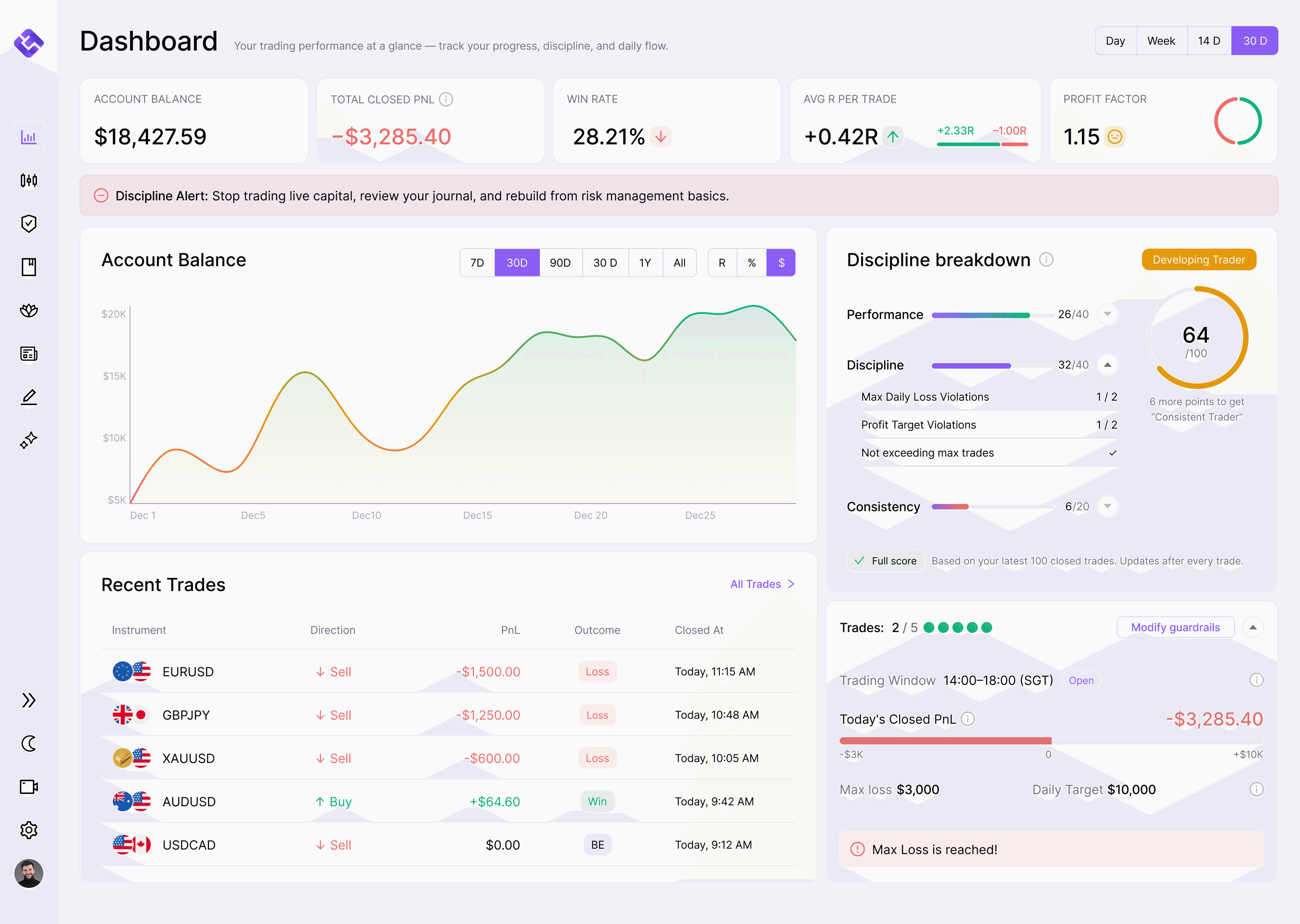
EdgeFlo Sanctuary provides guided meditation and recovery tools designed specifically for those moments. When you notice the emotional charge building (heart rate up, frustration rising, urge to revenge trade), Sanctuary guides you through a structured reset before you make a decision you will regret.
This is not about becoming emotionless. That is not possible or desirable. It is about creating a pause between the emotion and the action, so that the emotion informs you instead of controlling you.
The meditation and reset tools help you return to a neutral state where you can evaluate the next setup on its own merits, without the baggage of yesterday's losses. That neutral state is where good trading happens. Not in excitement, not in despair, but in the calm space where you can see the chart clearly and execute your plan without attachment to the outcome.
Your P&L is a number. It changes every day. Your worth as a trader, and as a person, does not fluctuate with it.
The Edge Brief
Receive Insights on trading psychology, discipline, and the behavioral patterns that create consistent traders from our Founder and the EdgeFlo team, delivered to your inbox.
Think different. Trade different.
Why do traders tie their self-worth to P&L?
How do I stop feeling bad after a losing day?
Is it normal for profitable traders to have losing weeks?
How does detaching from P&L improve trading performance?

Turn discipline on.
Every session.
EdgeFlo is the environment serious traders operate inside.
Start 7-Day Free Trial
Cancel anytime.
No long-term commitment.

Think Different, Trade Different.