

Your Personality Type Predicts Your Best Trading Timeframe
Calm and patient? Swing trade. Aggressive and fast? Scalp. Emotional? Less screen time protects you. Match your personality to a timeframe.
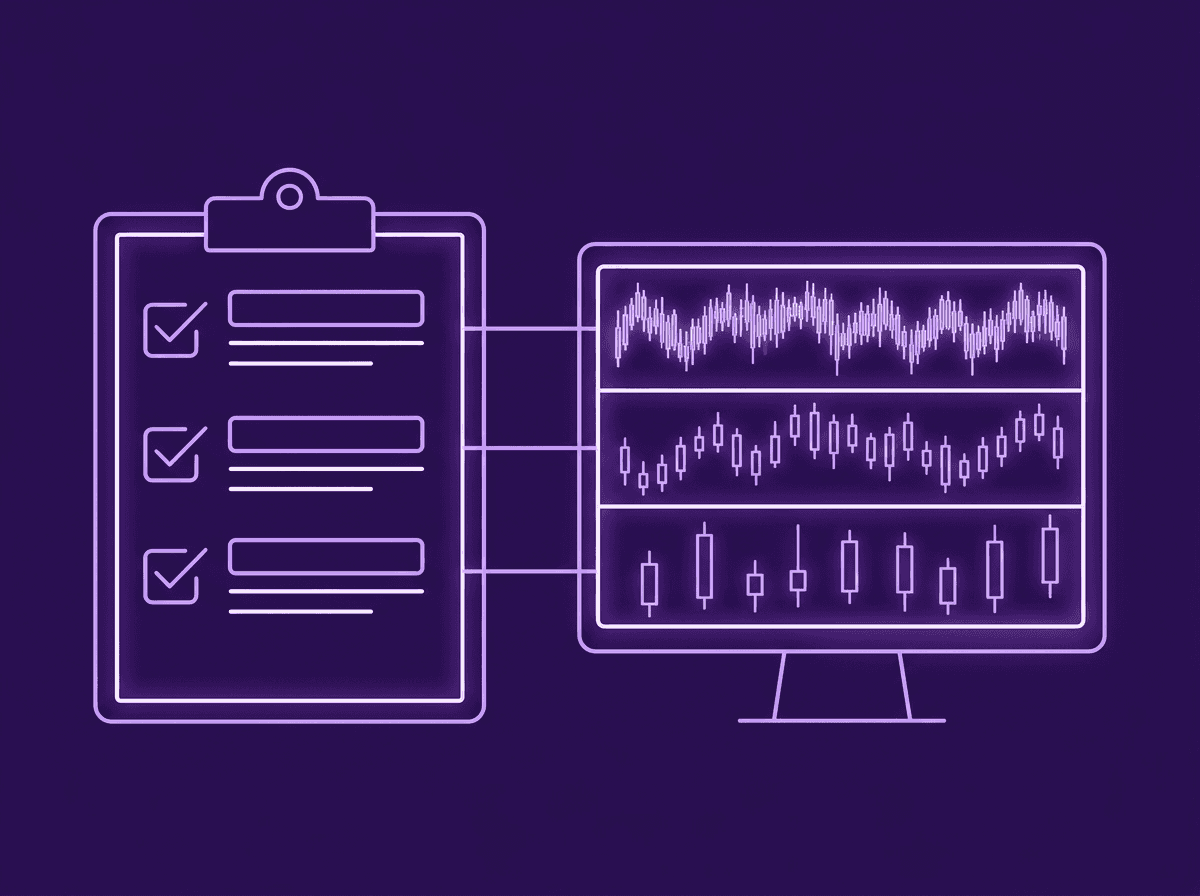
Your personality type is the strongest predictor of which trading timeframe you will sustain long term. Calm and patient traders thrive on the 4-hour and daily chart. Aggressive, fast-reacting traders can handle the 1-minute and 5-minute chart. Emotional and reactive traders need less screen time, not more. Map your temperament to a timeframe before you waste years forcing the wrong one.
TL;DR
Patient traders fit swing and position trading, where decisions happen over hours and days.
Fast-reacting traders can handle scalping and day trading, but only if they process losses quickly.
Emotional traders need less chart exposure, not more, to protect themselves from impulsive decisions.
Self-assessment beats guessing: look at how you feel after trading, not just what you earned.
Your journal reveals your true personality profile under pressure, which is often different from how you see yourself.
Why Personality Matters More Than Strategy
You can have the best strategy in the world. If it does not match your wiring, you will not follow it.
A patient, analytical person forced into scalping will hesitate on entries, hold losers too long hoping they recover, and feel drained after 30 minutes of rapid decisions. The strategy might be profitable in theory. They will never execute it properly.
A hyperactive, action-oriented person forced into position trading will close winners too early, add to positions out of boredom, and check charts 40 times a day when they only need to check once. The strategy is fine. The person cannot sit still long enough to let it work.
This is not a willpower problem. You cannot force yourself to enjoy something that conflicts with your core wiring. The better approach: find the timeframe that works with your personality instead of against it.
The Patient Analyst: Swing and Position Trading
If you would describe yourself as calm under pressure, comfortable with delayed gratification, and able to hold a decision without second-guessing it for days, swing or position trading matches your wiring.
Swing traders enter on the 4-hour or daily chart and hold for days to weeks. The pace is slow. Decisions happen once per day, sometimes less. You set your trade and walk away, trusting your analysis.
This style rewards patience. A swing trade might sit at breakeven for three days before moving. If that does not bother you, you are built for this. If that drives you crazy, you are not.
Position traders hold even longer, weeks to months, targeting major moves. This takes the patience requirement to the extreme. You need to sit through multiple pullbacks, overnight gaps, and news events without flinching.
The trading confidence required for long holds comes from conviction in your analysis. If you tend to research thoroughly before making decisions in other areas of life (buying a car, choosing a job, planning a trip), that same careful nature translates well to swing and position trading.
The Fast Reactor: Scalping and Intraday Trading
If you thrive under time pressure, make quick decisions without overthinking, and process wins and losses without lingering emotion, scalping or day trading might fit.
But "I like action" is not enough. Scalping demands a specific emotional profile:
Quick loss processing. You took a 7-pip stop loss. Can you move to the next trade in 30 seconds without residual frustration? If losses linger emotionally, scalping will compound that into a spiral.
Decision speed without panic. You see a setup forming. You have 3 seconds to decide. Can you execute without freezing or without entering impulsively?
No revenge instinct. Three consecutive losses happen regularly in scalping. If your natural response is to double size or abandon your plan, this style will eat you alive.
The fast reactor who also handles losses cleanly is rare. Be honest about whether that describes you. Most people who think they are fast reactors are actually impulsive traders who mistake adrenaline for an edge.
Day trading sits in the middle. The pace is slower than scalping but faster than swing trading. Decisions happen over minutes to hours on the 15-minute or 1-hour chart. This can suit someone who wants action but cannot sustain the intensity of the 1-minute chart.
The Emotional Trader: Why Less Screen Time Protects You
This is the personality type nobody wants to admit they have. But if you have ever closed a profitable trade too early because of anxiety, revenge-traded after a loss, or added to a losing position to "average down" out of hope, you already know.
Emotional traders do not have a strategy problem. They have an exposure problem. The more time they spend watching live charts, the more triggers they encounter. Each trigger is an opportunity to make an impulsive decision.
Revenge trading happens when emotional energy from a loss converts into action before it dissipates. On the 1-minute chart, the next opportunity arrives in 30 seconds. There is no cooling-off period. On the 4-hour chart, the next opportunity might be 8 hours away. That gap is protective.
Overtrading follows the same pattern. Emotional traders in front of charts for 6 hours will find reasons to take trades that do not exist. Reduce the exposure to 20 minutes per evening, and most of those phantom setups never reach their attention.
If you recognize self-sabotage patterns in your trading history, the single best intervention is moving to a higher timeframe with less screen time. It removes the fuel from the fire.
Walkthrough: Personality Mismatch Costing Real Money
A trader identifies as "calm and analytical" but his journal tells a different story. After reviewing 40 trades on the 5-minute chart, he finds that 12 were revenge trades taken within 5 minutes of a loss. His plan-compliant trades win 52% of the time with an average 1.3R. His revenge trades win 18% of the time with an average 0.4R. The revenge trades account for 30% of his total trades and nearly all of his losses. His personality under live market pressure is emotional and reactive, not calm. Moving to the 4-hour chart eliminates the rapid trigger cycle. After 30 trades on the 4H, his revenge trade count drops to 1 out of 30 (3.3%), and his overall win rate jumps to 50%.
Walkthrough: The Right Match
A trader knows she is impatient. Instead of fighting it, she leans into day trading on the 15-minute chart during a single session (London open, 3 hours). She takes 2 to 3 setups per session, closes everything by noon, and walks away. Her impatience is channeled into a fast but structured environment. She does not hold overnight (which would drive her crazy). She does not scalp (which would overwhelm her). The 15-minute chart gives her enough action to stay engaged without the sensory overload of the 1-minute chart.
How EdgeFlo Emotion Tagging Reveals Your True Pattern
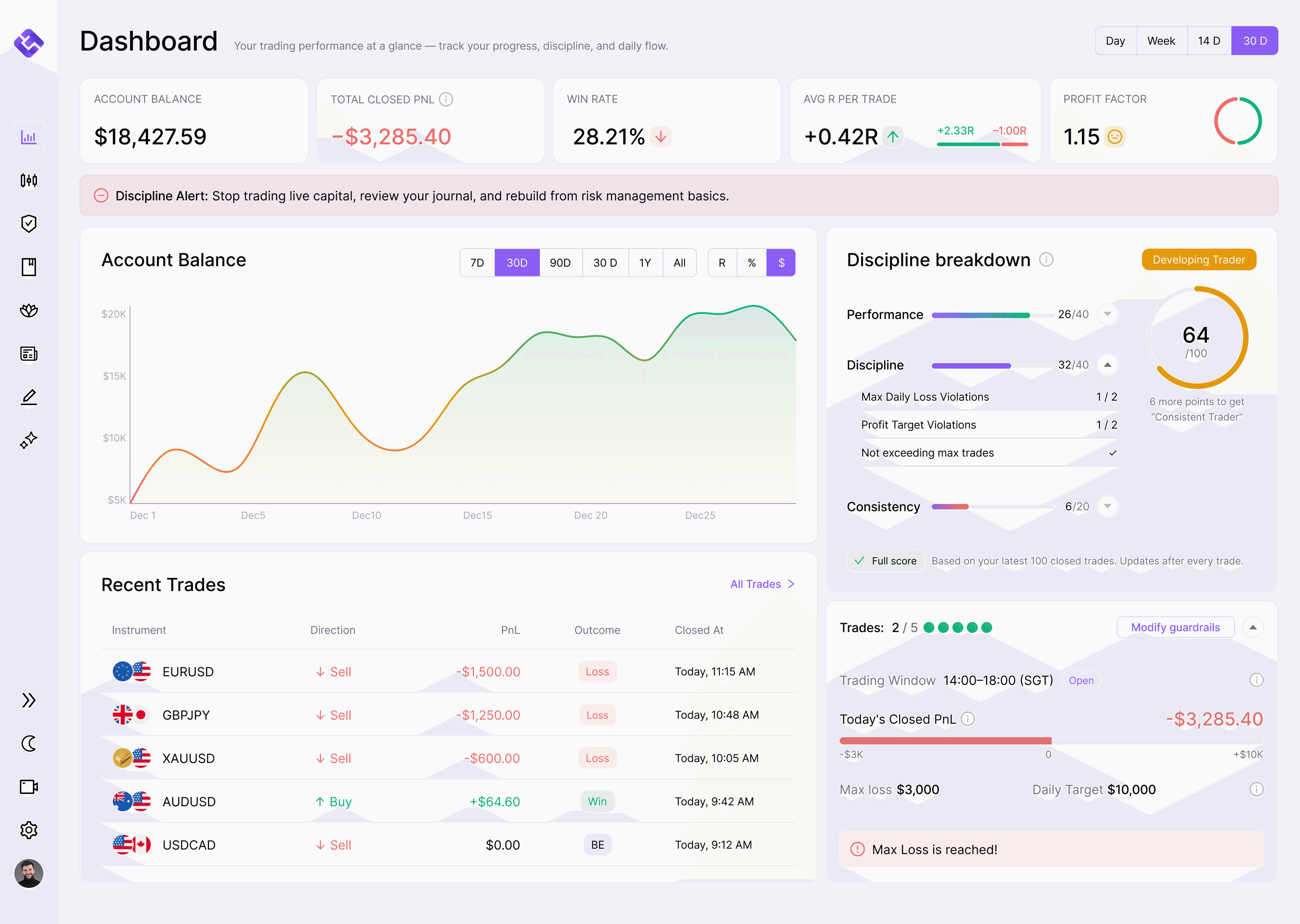
You think you know your personality. Your data might disagree. EdgeFlo's journal includes emotion tagging that captures how you felt before, during, and after each trade. Over 30 or more entries, patterns emerge.
If your emotion tags consistently say "anxious" or "frustrated" on intraday trades but "calm" or "neutral" on swing trades, the data is telling you where your personality fits. No personality test needed. Your own trading history is the most accurate assessment.
That identity shift from "I am a scalper who struggles" to "I am a swing trader who thrives" might be the most valuable insight your journal ever delivers. EdgeFlo surfaces it through data, not guesswork.
The Edge Brief
Receive Insights on trading psychology, discipline, and the behavioral patterns that create consistent traders from our Founder and the EdgeFlo team, delivered to your inbox.
Think different. Trade different.
Does personality affect trading success?
What trading style is best for impatient traders?
Can emotional traders be profitable?
Should I take a personality test for trading?

Turn discipline on.
Every session.
EdgeFlo is the environment serious traders operate inside.
Start 7-Day Free Trial
Cancel anytime.
No long-term commitment.

Think Different, Trade Different.