

Major, Minor, and Exotic Currency Pairs: Which Ones to Trade
Major pairs include USD and have the highest liquidity. Minor pairs combine two majors without USD. Exotic pairs are risky. Learn which ones to trade.
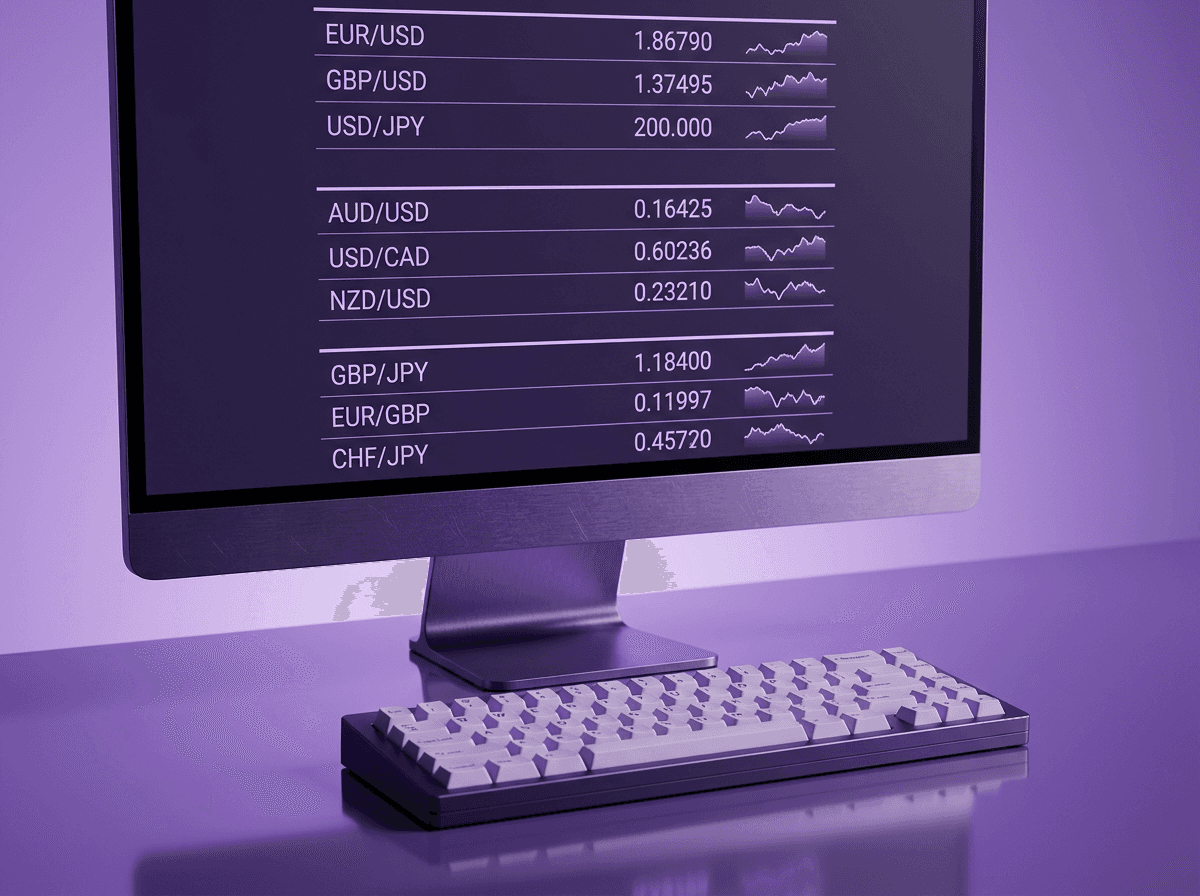
Currency pairs fall into three categories: majors (include USD and carry the highest volume), minors (two major currencies without USD), and exotics (one major currency paired with an emerging market currency). If you are a beginner, stick to major pairs. They offer the tightest spreads, the most liquidity, and the cleanest price action. Start with one to four pairs maximum, and resist the urge to add more until you have consistent results.
TL;DR
Major pairs always include USD: EUR/USD, GBP/USD, USD/JPY, AUD/USD, USD/CHF, USD/CAD, NZD/USD.
Minor (cross) pairs combine two major currencies without USD: EUR/JPY, GBP/AUD, EUR/CHF.
Exotic pairs are low-liquidity, high-spread, and unpredictable. Stay away as a beginner.
Begin with one to four major pairs so you can study their behavior deeply before expanding.
More pairs does not mean more opportunity. It means more noise and more confusion.
Major Currency Pairs and Why They Matter
A major currency pair includes the US dollar on one side. Since the USD is the world's reserve currency and is involved in the majority of global transactions, these pairs carry the highest daily trading volume in the forex market.
The seven major pairs are:
Pair | Name |
|---|---|
EUR/USD | Euro vs US Dollar |
GBP/USD | British Pound vs US Dollar |
USD/JPY | US Dollar vs Japanese Yen |
AUD/USD | Australian Dollar vs US Dollar |
USD/CHF | US Dollar vs Swiss Franc |
USD/CAD | US Dollar vs Canadian Dollar |
NZD/USD | New Zealand Dollar vs US Dollar |
Why do majors matter for beginners? Three reasons.
Tight spreads. High volume means your broker can offer a smaller gap between the bid and ask price. On EUR/USD, spreads are often 0.5 to 1.5 pips. On an exotic pair, that same spread could be 10 pips or more. Every pip of spread is a cost you pay before your trade can even become profitable.
Clean price action. More participants trading a pair means the price tends to move in more predictable, structured patterns. Market structure (higher highs and higher lows in an uptrend, lower highs and lower lows in a downtrend) reads cleaner on major pairs. You will find it much easier to identify entry zones and manage risk.
Consistent opportunities. Major pairs are active during all three main trading sessions: London, New York, and Tokyo. You are never short on setups if you know which sessions to focus on.
Which Majors to Start With
If you forced me to pick two pairs for a complete beginner, they would be EUR/USD and GBP/USD. Both are heavily traded during the London and New York sessions (where you will likely be trading), both have excellent liquidity, and both respond well to supply and demand based strategies.
Add USD/JPY if you want exposure to the Asian session. Add AUD/USD if you prefer a pair that moves cleanly during the Sydney and early London overlap.
Do not start with all seven. Pick two. Watch them every day for at least a month. You will start noticing how each pair behaves during different sessions, how they react to news, and which one fits your style. That familiarity is an edge in itself.
Minor Pairs: Majors Without USD
Minor pairs (also called cross pairs) are combinations of two major currencies that exclude the US dollar. Think of them as cousins of the major pairs. They have decent volume and workable spreads, but less than the majors.
Common minor pairs include:
Pair | Name |
|---|---|
EUR/JPY | Euro vs Japanese Yen |
EUR/CHF | Euro vs Swiss Franc |
GBP/AUD | British Pound vs Australian Dollar |
GBP/JPY | British Pound vs Japanese Yen |
AUD/CAD | Australian Dollar vs Canadian Dollar |
AUD/CHF | Australian Dollar vs Swiss Franc |
Minors are not off-limits for beginners, but they come with tradeoffs. Spreads are wider (2 to 5 pips on average), and the price can be choppier because fewer participants are actively trading them.
GBP/JPY is a popular cross pair because it moves aggressively. A 100-pip daily range is normal for GBP/JPY, compared to 60 to 80 pips on EUR/USD. That volatility can be profitable if you have a solid risk management plan and know your pip value. But for a beginner, wide swings also mean wider stops and a higher chance of getting caught in noise.
Walkthrough: Why GBP/JPY Catches Beginners Off Guard
You see GBP/JPY at 194.50 and enter a buy at 0.1 lots. You place a 30-pip stop loss at 194.20. On a JPY pair at 0.1 lots, each pip is roughly $0.65 (0.01 / 194.50 x 10,000 = $0.51, but using the common approximation of $0.65 per pip per mini lot for quick math). Your planned risk: 30 x $0.65 = about $19.50. The trade goes against you, and a sudden news spike pushes GBP/JPY 80 pips against your position. Your 30-pip stop fills at 194.20, but slippage adds 3 extra pips. Your actual loss: 33 x $0.65 = $21.45. On a standard lot, that same scenario costs roughly $214. The lesson: yen crosses move fast, and slippage is real. Know your pip value before you click.
Exotic Pairs and Why to Avoid Them
Exotic pairs combine one major currency with a currency from an emerging or smaller economy. Examples include USD/SGD (US Dollar vs Singapore Dollar), USD/THB (US Dollar vs Thai Baht), EUR/HUF (Euro vs Hungarian Forint), and AUD/MXN (Australian Dollar vs Mexican Peso).
Here is the honest truth about exotics: nobody trades them in large volume, and that creates three problems for you.
Massive spreads. While EUR/USD might have a 1-pip spread, an exotic pair can have a 15 to 50-pip spread. You are starting every trade deep in the red before the market even moves.
Thin liquidity. Low volume means price can gap violently on a single news release or central bank statement from the smaller economy. Your stop loss might not fill at the price you set because there is nobody on the other side of the trade at that level.
Unpredictable behavior. Exotic pairs do not follow the same market structure patterns that work on major and minor pairs. The strategies you learn and test on EUR/USD may not translate at all to USD/TRY.
The advice is simple: avoid exotic pairs entirely until you are a consistently profitable trader on majors. Even then, most experienced traders never touch exotics because the risk-to-reward math rarely works in your favor.
Walkthrough: The Exotic Pair Trap
A beginner sees USD/ZAR (US Dollar vs South African Rand) trending and enters a buy. The spread is 30 pips. On a mini lot where each pip is approximately $0.60, the spread alone costs $18 before the trade even starts. The South African Reserve Bank releases an unexpected rate decision. USD/ZAR drops 200 pips in minutes. The beginner's 50-pip stop loss fills with 40 pips of slippage, producing a 90-pip loss instead of 50. Total damage: 90 x $0.60 = $54 on a mini lot. On a standard lot, that same slippage event costs $540. The pair looked like it had a clear trend. But thin liquidity turned a manageable loss into a painful one.
How Many Pairs Should You Trade
One to four. That is the rule.
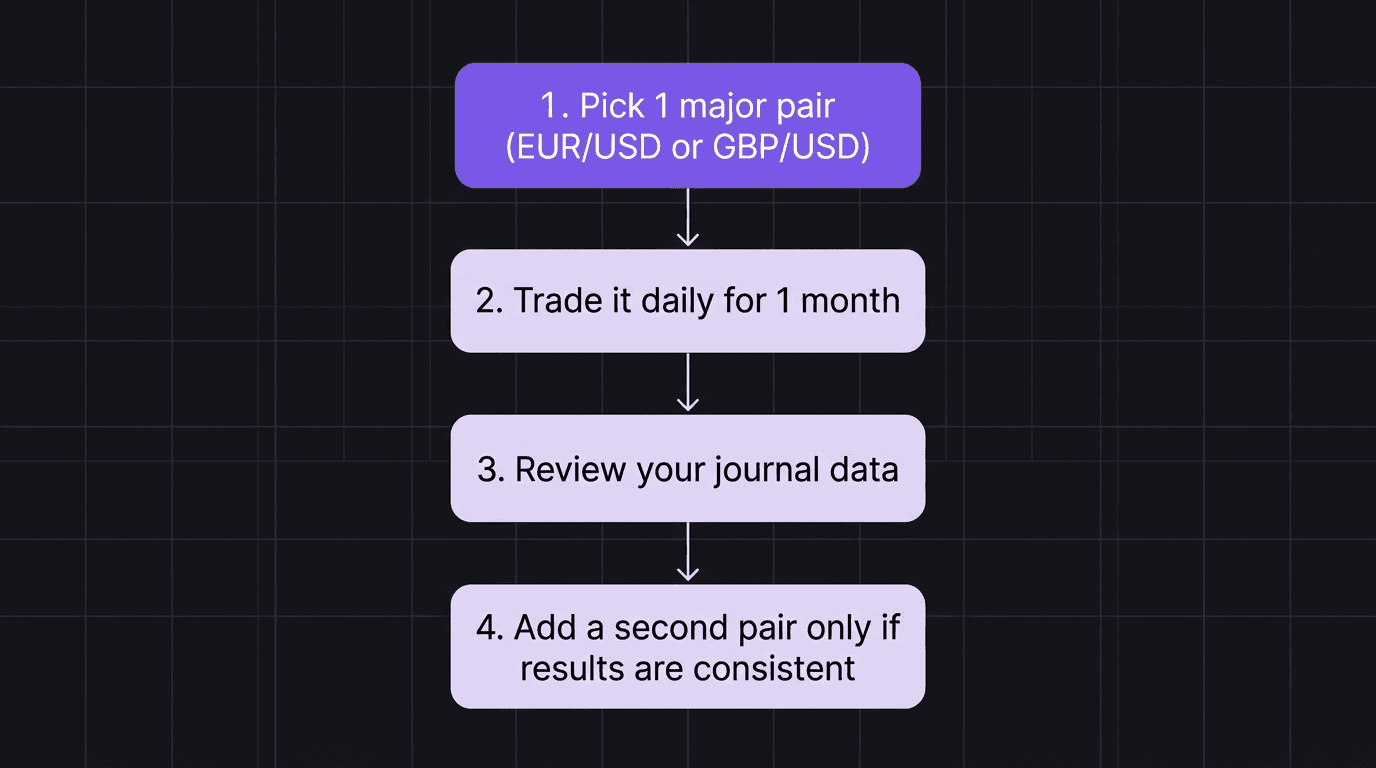
If you are brand new, start with one. Trade EUR/USD for a month. Mark up the chart every day. Track your setups, wins, and losses. After a month, you will understand how that pair behaves during London open, during New York overlap, and during low-volume Asian hours. That knowledge is worth more than scanning seven pairs with surface-level analysis.
Why four maximum? Because your attention is limited. Every pair you add requires you to:
Mark up the daily and 4-hour chart before the session
Track active setups
Monitor open trades
Journal each outcome
Multiply that by seven or ten pairs and you are spreading yourself thin. You will miss clean entries because you were distracted by a mediocre setup on a different pair. You will misread structure because you did not give that chart enough study time.
The traders who build a real trading edge do it by going deep on a small number of pairs, not by going wide. Master one, then add a second when the first becomes second nature. That is how you build skill without adding chaos.
Ever noticed how you can glance at a familiar pair and immediately sense whether it is trending or ranging? That only happens after hundreds of hours watching the same chart. You cannot shortcut that process by adding more pairs. You can only slow it down.
How EdgeFlo Keeps Your Watchlist Focused
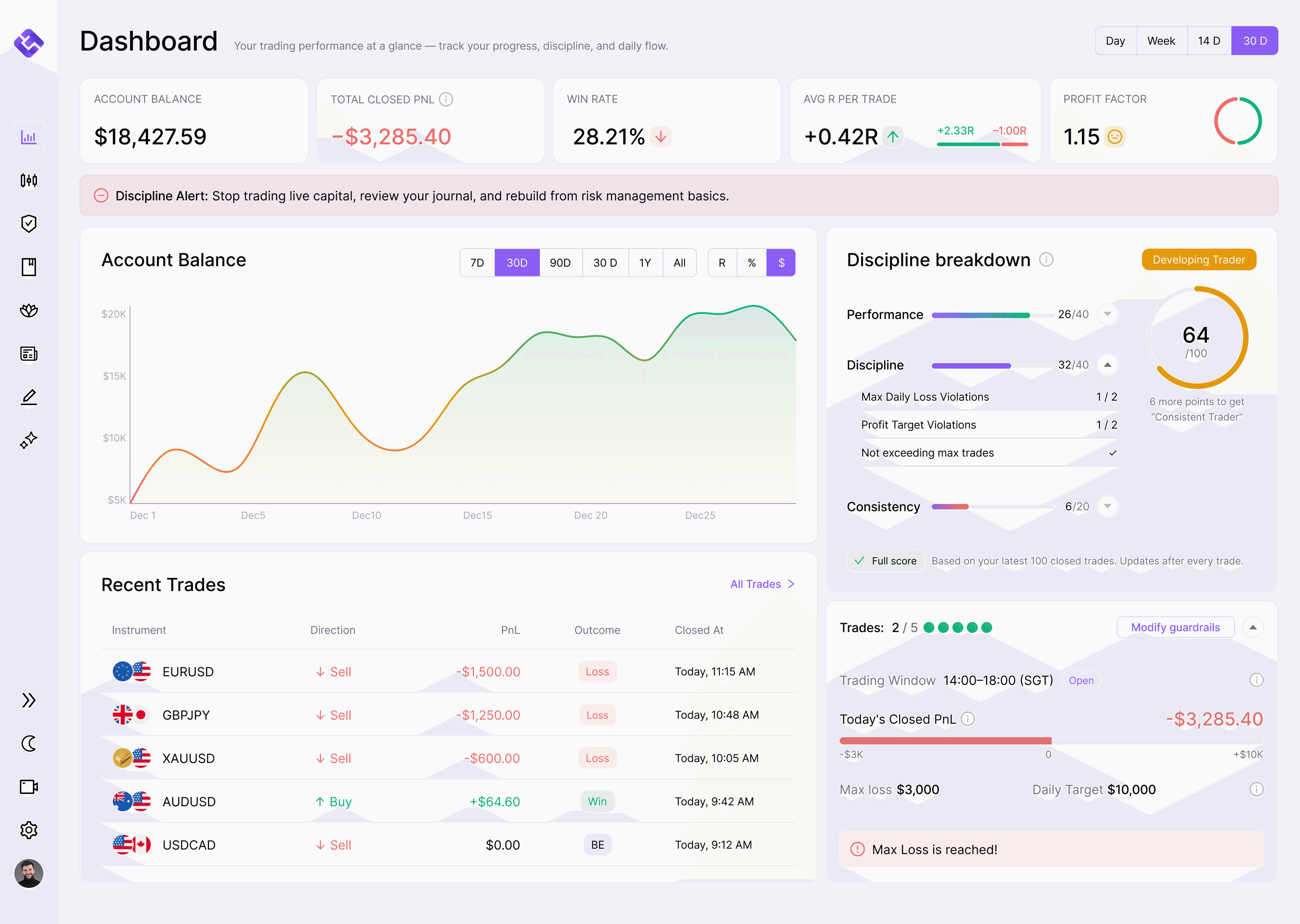
EdgeFlo does not overwhelm you with a hundred instruments. You build your watchlist inside the app, and your trading plan locks to those pairs. If you set your plan for EUR/USD and GBP/USD, your journal tracks only those. Your performance metrics show you exactly how each pair performs in your hands: win rate, average R, and best session for each one.
The built-in lot size calculator adjusts automatically based on the pair you select. Yen pairs get the right pip value calculation. EUR/USD gets the standard formula. You do not have to remember which formula to apply. That one feature alone removes a common source of errors that catch beginners on unfamiliar pairs.
Starting with the right pairs, in the right quantity, with the right data tracking from day one is the fastest path from confused beginner to process-driven trader.
The Edge Brief
Receive Insights on trading psychology, discipline, and the behavioral patterns that create consistent traders from our Founder and the EdgeFlo team, delivered to your inbox.
Think different. Trade different.
What is the most traded currency pair?
Are minor pairs harder to trade than majors?
Why should beginners avoid exotic pairs?
How many currency pairs should a beginner trade?

Turn discipline on.
Every session.
EdgeFlo is the environment serious traders operate inside.
Start 7-Day Free Trial
Cancel anytime.
No long-term commitment.

Think Different, Trade Different.