

How Your Journal Reveals Your Real Trading Style
Your strengths hide in your trade data, not your feelings. Journal reviews expose which setups, sessions, and timeframes produce real results.
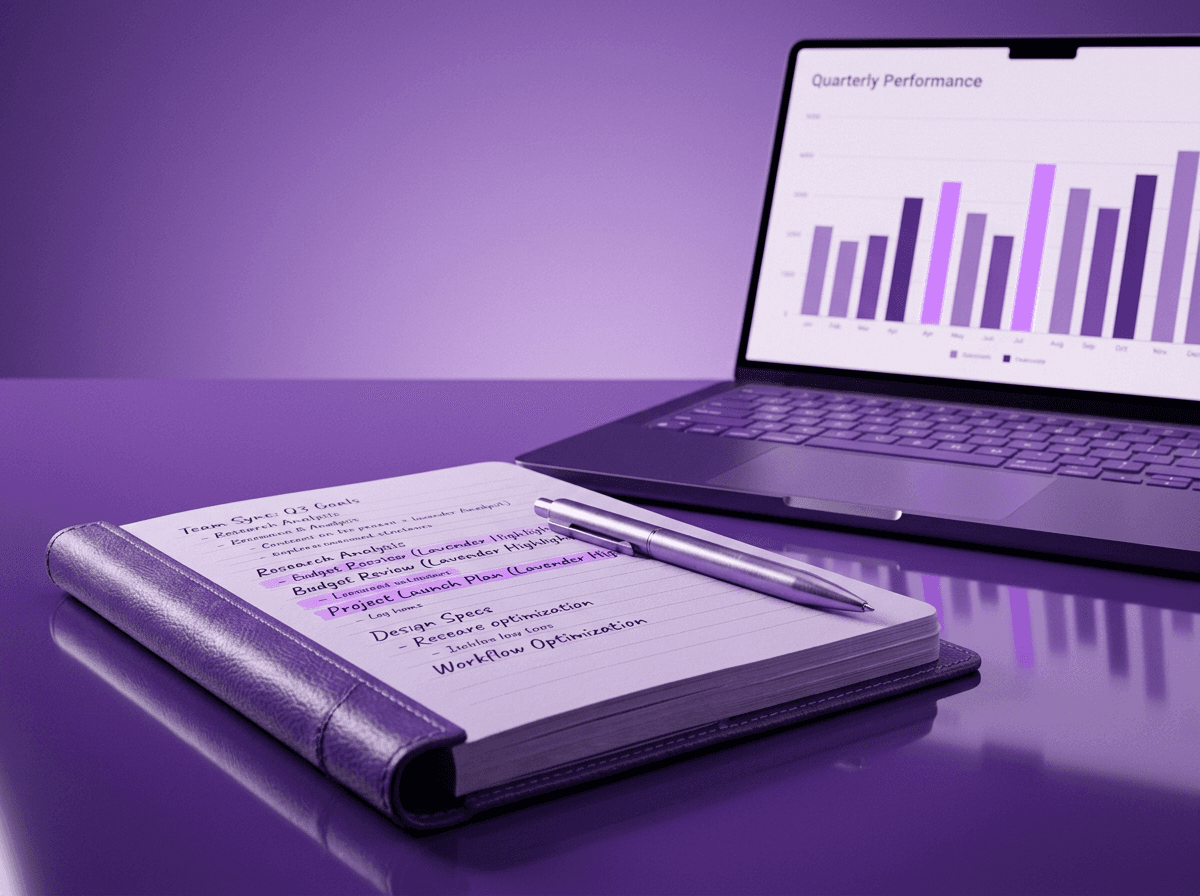
Your feelings about your trading style are unreliable. Your data is not. After 30 or more trades, your journal reveals which setups, sessions, and timeframes actually produce results. Most traders pick a style based on what sounds exciting or what a YouTube video recommended. The ones who last pick a style based on what their own numbers prove works for them.
TL;DR
Your assumptions about your best style are often wrong. Data corrects assumptions.
After 30 trades, patterns emerge: best session, best timeframe, best setup type.
Journal reviews expose hidden strengths you did not know you had.
When the data contradicts your preference, follow the data.
Regular weekly reviews compound into style clarity over months.
Your Feelings Lie, Your Data Does Not
You think you are a scalper because you like fast action. But your journal shows your 1-minute trades have a 28% win rate and your 4-hour trades hit 55%. Your feelings say scalping. Your data says swing trading.
This happens more often than you would expect. Traders self-identify with a style based on personality assumptions, social media exposure, or what worked once during a lucky streak. Then they spend months (sometimes years) forcing a style that their own numbers consistently reject.
The journal is the correction mechanism. It does not care about your ego, your identity, or what your favorite trader does. It shows you what happened, when it happened, and how it turned out.
If you are not journaling, you are operating without a mirror. You cannot see the patterns that are obvious from the outside. Starting with a solid trading journal template removes the "I do not know what to track" excuse.
What 30 Trades Tell You About Your Style
Thirty trades is the minimum sample where patterns start to separate from noise. Here is how to extract style insights from that data:
Step 1: Sort by timeframe. If you have taken trades across multiple timeframes, split them. How many were on the 1-minute? 15-minute? 4-hour? Daily? Calculate win rate and average R for each group.
Step 2: Sort by session. When did you take each trade? London? New York? Asian? Some traders perform dramatically better in one session without realizing it.
Step 3: Sort by setup type. Pullback entries, breakouts, reversals, trend continuations. Which type produces your highest R-multiple?
Step 4: Sort by outcome and emotion. Look at your emotional tags on winning versus losing trades. Are your best trades the calm ones? Are your worst trades the impulsive ones? That pattern points to the conditions where your execution is cleanest.
After running these four sorts, a picture emerges. Maybe 70% of your profit comes from 4-hour pullback trades during the London session, and the other 30% of your trades (scalps, New York revenge trades, random breakout attempts) are responsible for all of your losses.
That data just told you your style. Listen to it.
Spotting Your Best Setup, Session, and Timeframe
Let me make this concrete.
Walkthrough: The Data-Driven Style Discovery
A trader reviews 40 trades from the past two months. He has been mixing scalping and swing trading without a clear focus. He sorts his journal data:
Scalping (1-minute chart, New York session): 22 trades. 8 winners, 14 losers. Win rate: 36%. Average winner: 0.9R. Average loser: 1.0R. Expectancy: (0.36 x 0.9) minus (0.64 x 1.0) = 0.324 minus 0.640 = negative 0.316R per trade.
Swing (4-hour chart, London session): 18 trades. 11 winners, 7 losers. Win rate: 61%. Average winner: 1.8R. Average loser: 1.0R. Expectancy: (0.61 x 1.8) minus (0.39 x 1.0) = 1.098 minus 0.390 = positive 0.708R per trade.
The data is clear. His scalping has negative expectancy. His swing trading has strong positive expectancy. If he eliminates scalping entirely and takes only 4-hour swing trades during London, his expected return per trade more than doubles.
This kind of discovery is only possible if you track every trade with enough detail. The minimum fields: pair, timeframe, session, setup type, entry price, exit price, stop loss, R-multiple, and emotional state.
A proper post-trade review after each trade takes 2 to 3 minutes. That small investment of time produces the data that eventually reveals your edge.
When the Data Contradicts Your Preference
This is the hard part. You love scalping. It is exciting, fast, and makes you feel like a "real trader." But your journal says you lose money doing it and make money swing trading.
What do you do?
Follow the data. Every time.
Your enjoyment of a style does not pay for your losses in that style. Profitability sustains motivation better than excitement does. A swing trader who consistently adds 0.7R per trade is a happier person than a scalper who bleeds 0.3R per trade, even if the scalper finds the process more thrilling.
Process journaling helps bridge this gap. When you track not just the numbers but also your psychological state, you often find that the "exciting" style correlates with anxiety, frustration, and poor decision-making. The "boring" style correlates with calm, focused execution. Over time, you start to prefer the style that makes you feel competent rather than stimulated.
If trading expectancy is positive on one style and negative on another, the decision is mathematical. Feelings are real, but they are not data. And data is what keeps your account alive.
Walkthrough: Accepting the Uncomfortable Truth
A trader dreams of being a scalper. She watches scalping videos every morning. She has a scalping Discord community. Her identity is "scalper." But after 50 tracked trades, her scalping expectancy is negative 0.2R and her swing expectancy is positive 0.6R. She resists the data for two more months, losing another 4% of her account on scalping while her swing trades remain profitable. Eventually she accepts the numbers, fully commits to swing trading, and recaptures that 4% within six weeks. The "identity" cost of admitting scalping was not her style was real. The financial cost of ignoring the data was bigger.
How EdgeFlo AI Report Surfaces Your Hidden Patterns
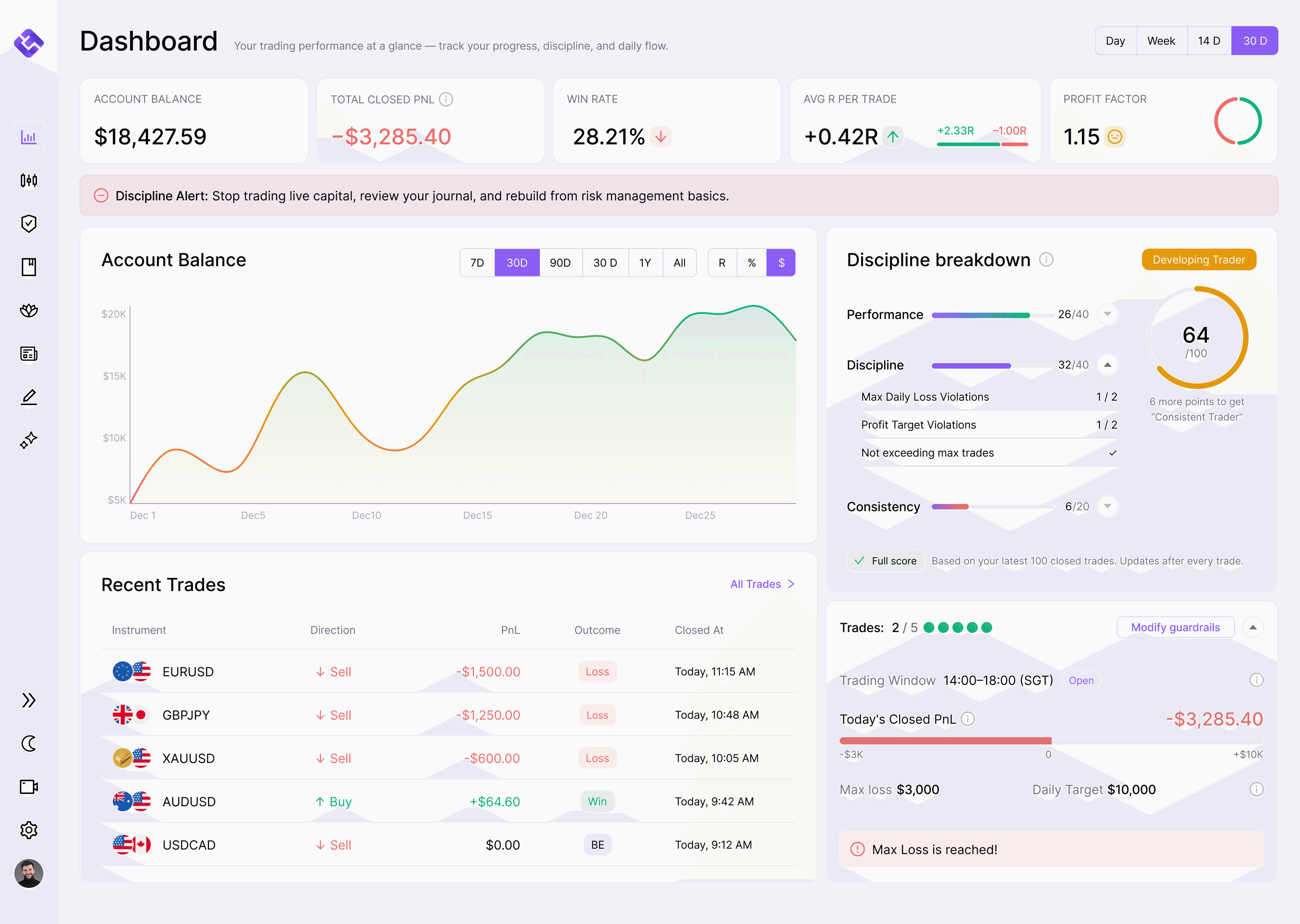
EdgeFlo's weekly AI report (available on Plus) analyzes your journal data and highlights patterns you might miss on your own. It surfaces your best and worst sessions, your most profitable setup types, and the trade journal analysis metrics that matter: win rate by timeframe, expectancy by session, and emotional correlations.
Instead of manually sorting 50 trades across four dimensions, the AI report does it for you. It flags the style mismatch ("Your 4H trades outperform your 1M trades by 0.9R per trade") and gives you the data you need to make a style decision based on evidence.
Your journal captures the raw data. The AI report translates that data into actionable style insights. Together, they replace guessing with proof.
The Edge Brief
Receive Insights on trading psychology, discipline, and the behavioral patterns that create consistent traders from our Founder and the EdgeFlo team, delivered to your inbox.
Think different. Trade different.
How does a trading journal help you find your style?
How many trades do I need in my journal before patterns appear?
What should I track in my trading journal?
What if my journal data contradicts what I enjoy?

Turn discipline on.
Every session.
EdgeFlo is the environment serious traders operate inside.
Start 7-Day Free Trial
Cancel anytime.
No long-term commitment.

Think Different, Trade Different.