

If-Then Trading Rules: Remove Emotions at Entry
Build an if-then trading plan that removes guesswork at entry. Learn the conditional framework, see real setup examples, and stop forcing trades.
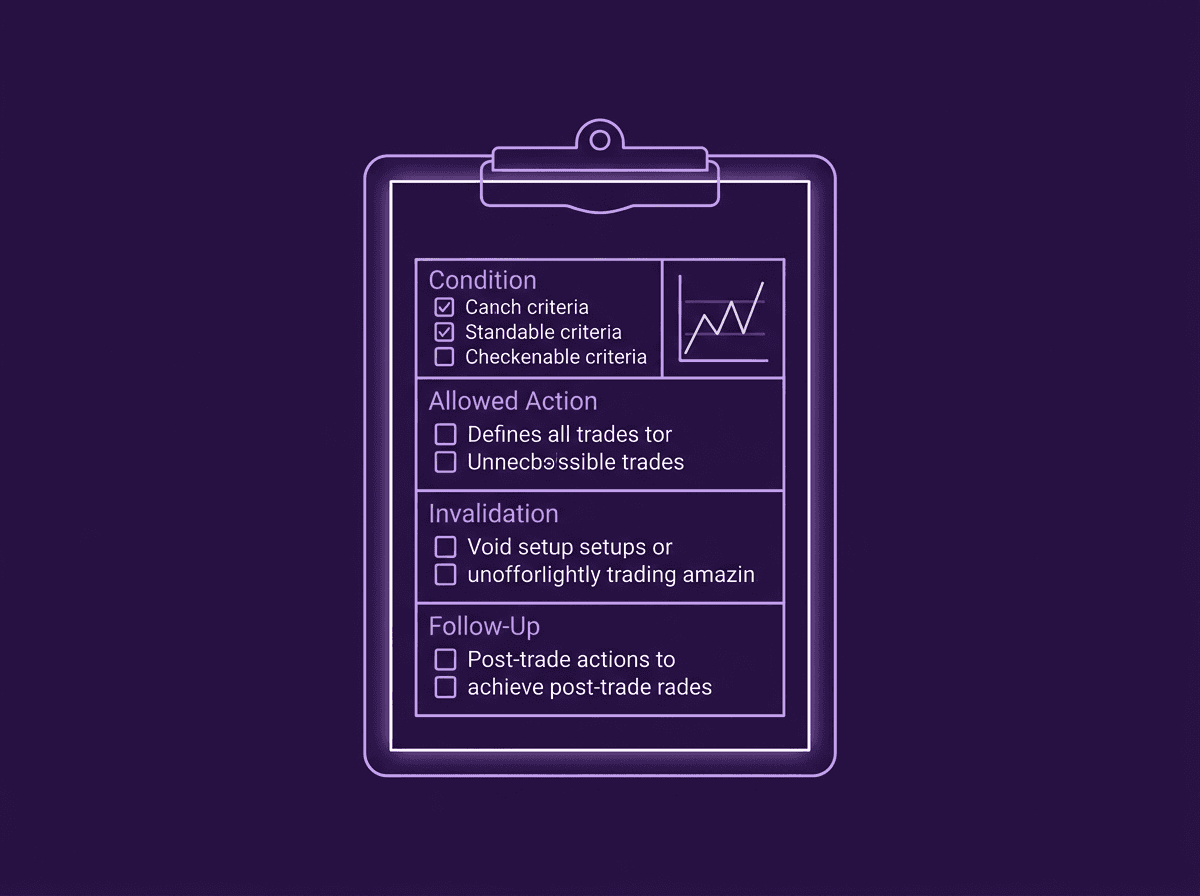
An if-then trading plan is a set of conditional rules that tell you exactly when to enter and when to stay flat. If price does X at your level, you take the trade. If it does not, you walk away. No feelings involved.
Most traders already know their setup. They can draw the zones, spot the structure, identify the trend. The problem is not analysis. The problem is the gap between finishing your analysis and pulling the trigger. That gap is where impatience, fear of missing out, and "gut feelings" creep in and override everything you planned.
An if-then framework closes that gap. You write the conditions before the session starts. When the market opens, you are not making decisions. You are reading a checklist.
TL;DR
An if-then plan replaces gut-feel entries with pre-written conditional rules.
The format is simple: IF price does [specific thing] at [specific level], THEN [specific action]. If not, no trade.
Most traders lose money in the gap between analysis and execution, not in the analysis itself.
Writing your conditions before the session starts removes the decision-making pressure during live price action.
Sitting out when nothing lines up is the plan working, not a failure.
Why "I Think It's Going Up" Loses Money
You have probably done this. You finish your morning analysis, mark your zones, identify a clean demand area on EUR/USD. Your plan is clear: wait for price to sweep the low, show bullish order flow, then enter long.
But price is already moving up before it reaches your level. It is 30 pips away from your zone and climbing. You start rationalizing. "The trend is bullish anyway." "It might not come back down." "I will just take a smaller position."
You enter early. No sweep. No confirmation. Price reverses hard and stops you out right before reaching the actual demand zone, bouncing perfectly without you on board.
Sound familiar?
This is the most common way traders sabotage themselves. The analysis was right. The trading rules were clear. But the execution ignored both. The trade was based on "I think it's going up" instead of "my conditions are met."
A feeling is not a condition. "I think" is not a trigger. And the market does not care about your opinion. It only cares about price at levels.
The gap between finishing analysis and executing the entry is where most trading mistakes happen. Traders get impatient. They see price moving and want to be in it. They convince themselves that close enough is good enough.
It never is.
The If-Then Framework Explained
The fix is embarrassingly simple. You write your entry logic as conditional statements before the session starts, and then you follow them. That is it.
The format:
IF [price does specific thing] at [specific level], THEN [I take specific action with specific parameters].
IF NOT, I do nothing.
Here is what makes it work: the "if not" part carries the same weight as the "if." Doing nothing is not a missed opportunity. It is the plan working exactly as designed.
Think of it like a lock and key. Your setup conditions are the lock. Price action is the key. If the key does not fit, you do not force it. You do not pick the lock. You do not kick the door down. You wait for the right key or you go home.
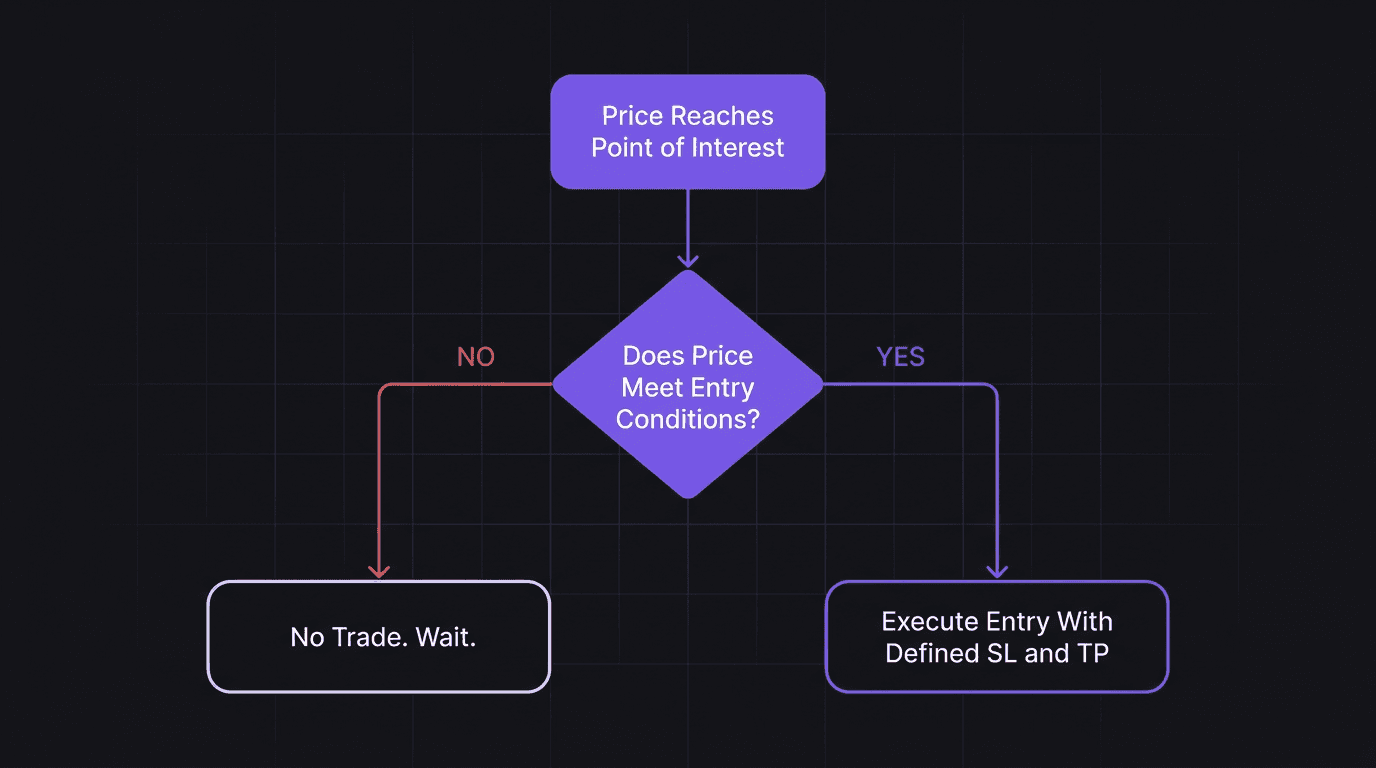
This is not a new idea. Every mechanical trading plan runs on conditional logic. But most traders write their plan in vague terms ("look for bullish setups at support") and then wonder why they cannot follow it under pressure.
The if-then format forces specificity. You cannot write "IF bullish" because that is not a condition. You have to define what bullish looks like: a higher low after a sweep, a break of structure with displacement, a rejection candle at a specific level. The format itself eliminates vagueness.
Three components make up every if-then rule:
Where - The specific price level or zone where your setup can form. This is your point of interest.
What - The specific price behavior you need to see at that level. This is your confirmation trigger.
Then - The exact action you take, including entry price, stop loss, and target.
If any piece is missing, the rule is incomplete and you do not take the trade.
Building Your Rules (Examples for Three Setups)
Abstract frameworks are useless without concrete examples. Here are three if-then rule sets for common setups. Adapt the levels and pairs to your own analysis.
Setup 1: Demand Zone Long (Supply and Demand)
Pair: EUR/USD, 15-minute chart Context: Daily trend is bullish. Price is pulling back.
IF price sweeps the liquidity below the 1.0835 demand zone AND prints a bullish engulfing candle on the 15-minute with the close back inside the zone, THEN enter long at the close of the engulfing candle. Stop loss 2 pips below the zone low at 1.0828. Target the next supply area at 1.0880.
IF price reaches 1.0835 but wicks through without any bullish reaction, THEN no trade. The zone is broken. Move on.
Notice the "if not" scenario is explicit. You already know what disqualifies the trade before it happens. No real-time decision required.
Setup 2: Break of Structure Short (Market Structure)
Pair: GBP/USD, 1-hour chart Context: Lower highs forming on the 4-hour.
IF price breaks below the 1.2640 swing low with a full candle body close below AND retraces to the 1.2660 area (the broken support now acting as resistance), THEN enter short on a bearish rejection at 1.2660. Stop loss above the retracement high. Target the next demand at 1.2590.
IF price breaks 1.2640 but never retraces to 1.2660, I miss the move. That is fine. I do not chase.
This is where most traders fall apart. They see the break, skip the retracement, and enter the chase. An if-then rule prevents that because the retracement IS the condition. No retracement, no entry.
Setup 3: Session Open Fade (Time-Based)
Pair: NAS100, 5-minute chart Context: London killed the Asia high. Now watching New York open.
IF NAS100 sweeps the pre-market high within the first 15 minutes of the New York session AND the sweep candle closes back below the high, THEN enter short on the close. Stop loss above the sweep wick. Target the pre-market low.
IF the first 15 minutes pass without sweeping the high, no trade on this setup. Wait for the next point of interest.
Time is a condition too. "Within the first 15 minutes" is specific and measurable. If it does not happen in that window, the setup is invalid.
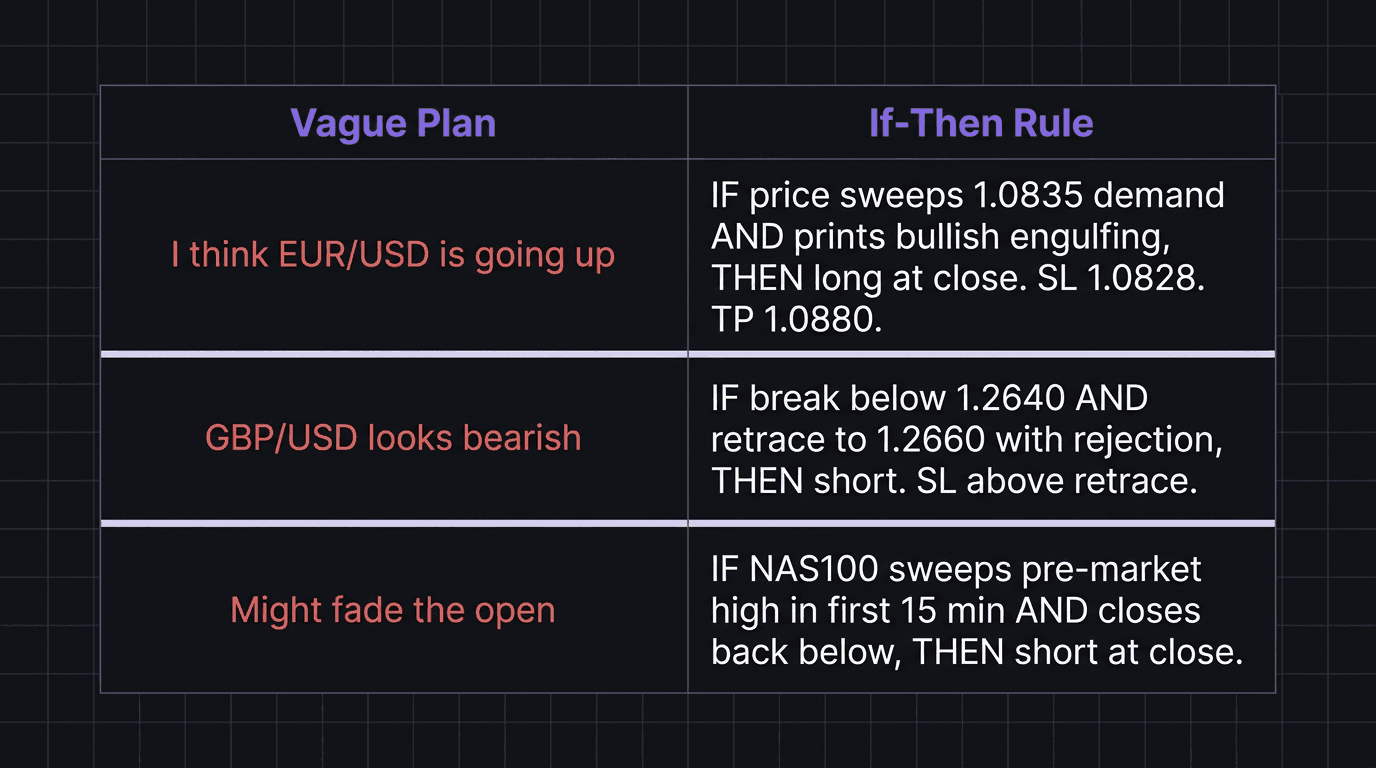
Write your rules in your trading playbook before the session starts. Not during. Not "in your head." On paper or in your plan builder. Written rules hold you accountable. Mental rules evaporate the moment price starts moving.
What to Do When Nothing Lines Up
This is the hardest part. Not the framework. Not the rules. The waiting.
You have done your analysis. You have written your if-then conditions. And then the market just... does nothing useful. Price chops sideways. It never reaches your zones. Or it reaches them and the confirmation never appears.
So you sit there. Watching candles form. Watching other pairs move. Watching traders on social media post their wins.
And the voice starts: "Maybe I should just take something. Anything. The day is not going to wait for me."
This is exactly the moment the if-then plan is built for.
Your rules say no. So the answer is no. Not "maybe on a smaller size." Not "just this once." No.
A high probability setup only presents itself when price gets to your desired point of interest and does what you need it to do. Meanwhile, the urge to make money does not care about probability. It just wants action.
Here is what helps: reframe the no-trade day. You did not fail. You did not miss anything. You followed the plan perfectly. The plan said wait and you waited. That is execution discipline, and it is the same skill that makes you profitable on the days when conditions do line up.
Run through your pre-trade checklist at every point of interest. If the checklist does not clear, close the chart. Walk away. Come back at the next session.
The traders who blow accounts are not the ones who sit out. They are the ones who trade out of boredom.
How EdgeFlo Structures Your If-Then Plan
Writing if-then rules on a sticky note works. Writing them inside your trading environment works better, because the rules are right there next to your chart when the pressure hits.
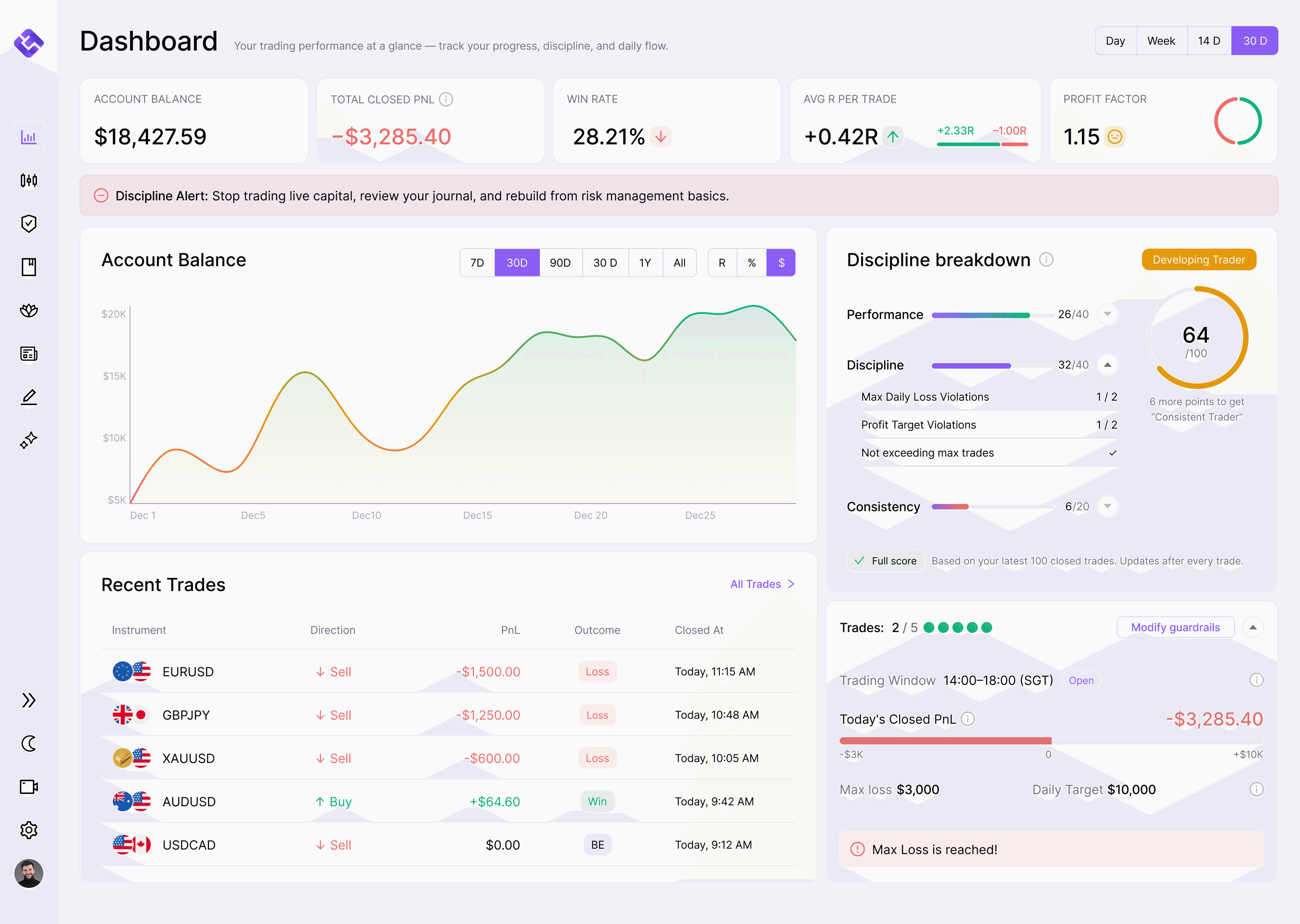
EdgeFlo's plan builder lets you document your strategy criteria in a structured format. You write your conditions, your invalidation levels, and your parameters once. Then when you open your session, the plan is already loaded. No scrambling through notebooks. No trying to remember what you decided at 6 AM.
After the session, EdgeFlo's post-trade self-reporting checks whether you followed your own plan. Did you wait for the conditions? Did you enter at the right level? Or did you override your rules and take a "gut feel" trade? That feedback loop is how you catch plan drift early, before it becomes a habit.
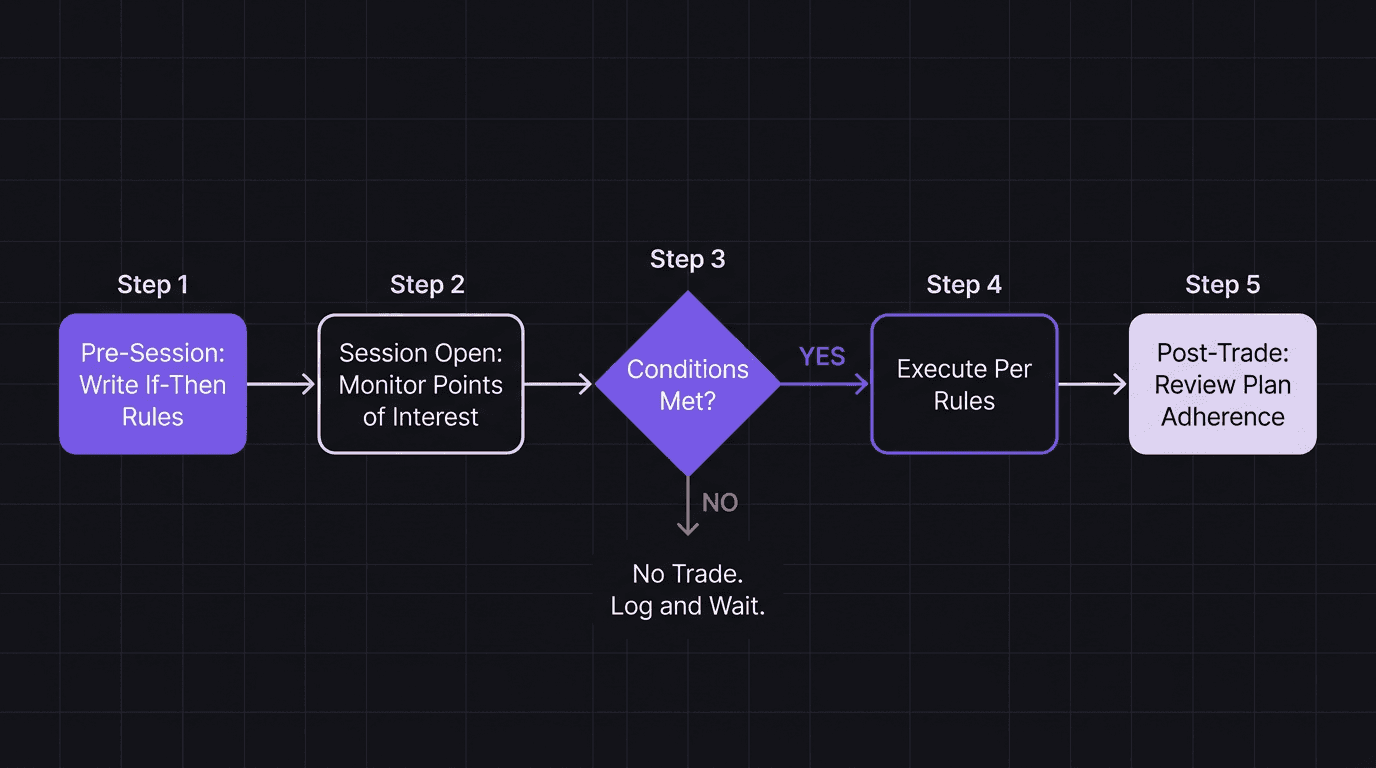
The point is not to make trading more complicated. The point is to make the decision before the pressure arrives. React and adapt to the market. Never predict what it will do. Write the conditions, follow the conditions, and review whether you followed them. That loop, repeated daily, is what turns an inconsistent trader into a structured one.
The Edge Brief
Receive Insights on trading psychology, discipline, and the behavioral patterns that create consistent traders from our Founder and the EdgeFlo team, delivered to your inbox.
Think different. Trade different.
What is an if-then trading plan?
How many if-then rules should I have per setup?
What do I do when no if-then conditions are met?
How is an if-then plan different from a full trading plan?

Turn discipline on.
Every session.
EdgeFlo is the environment serious traders operate inside.
Start 7-Day Free Trial
Cancel anytime.
No long-term commitment.

Think Different, Trade Different.