

Entry Timing: Right Setup, Wrong Time, Lost Trade
The right trade idea at the wrong time is still a losing trade. Learn why entry timing matters as much as direction and how to wait for institutional flow.
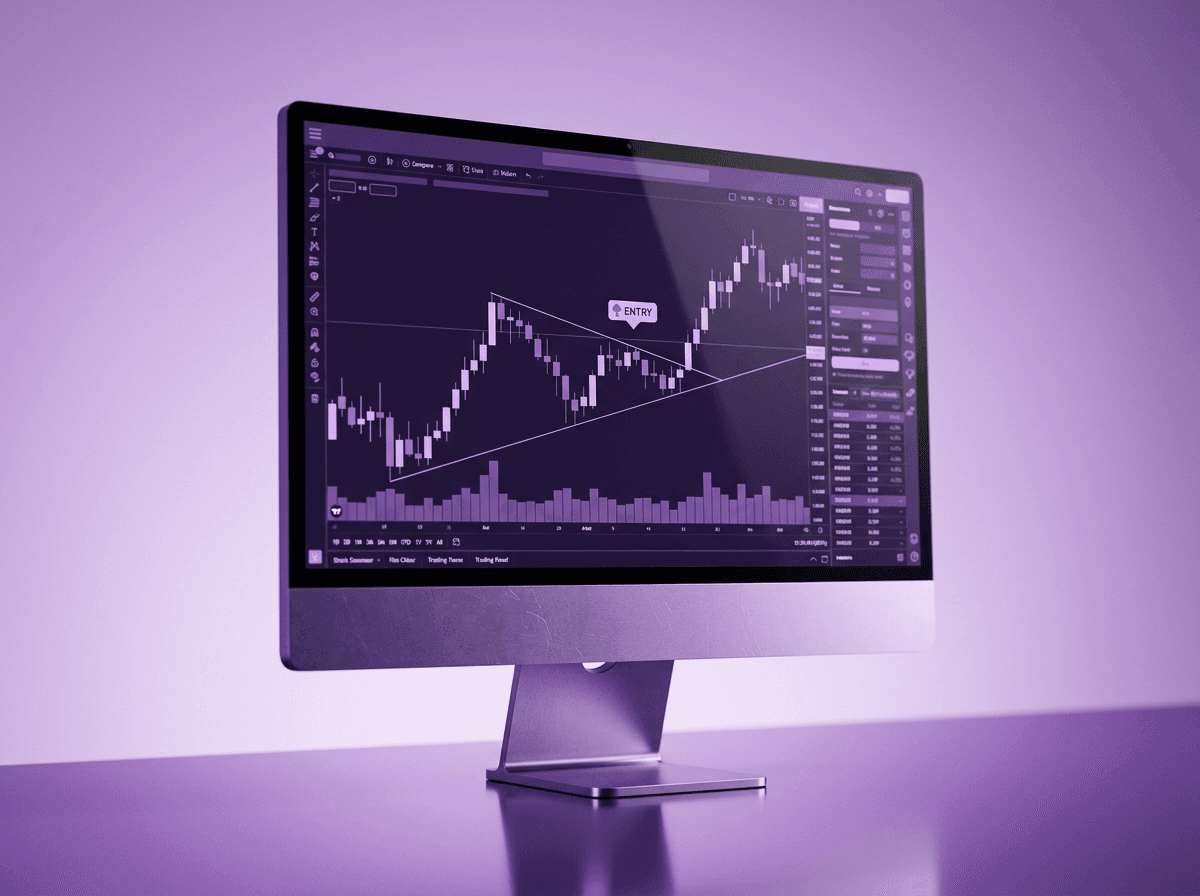
Being right about direction and still losing money is one of the most frustrating experiences in trading. You call the move, enter the trade, and watch price spike against you just enough to trigger your stop. Then it reverses and runs exactly where you predicted. The problem is not your analysis. It is your timing.
TL;DR
The right trade idea at the wrong time produces the same loss as a wrong trade idea.
Entry timing means waiting for institutional participation, not guessing when to click.
Most profitable moves happen during London open or the London/New York overlap, not during random hours.
An early entry absorbs a pullback that a well-timed entry avoids entirely.
Discipline to wait for timing is the skill that separates consistent traders from correct-but-broke ones.
Why Correct Direction Still Loses
There is an old saying on Wall Street: being early is just as bad as being wrong. Your account balance does not distinguish between the two.
Here is why. Price moves in waves, not straight lines. Between point A (where you expect the move to start) and point B (your target), price will pull back, sweep liquidity, and retest zones. If you enter before the pullback completes, your stop loss sits right in the path of that retrace.
You had the right read. You just entered at the wrong point in the wave. And the result, a hit stop loss, looks exactly the same as if you had no idea what you were doing.
This is a risk management problem disguised as a strategy problem. Most traders respond by changing their strategy. They should be changing when they enter.
The Two Windows That Matter
Not all trading hours are equal. Institutional money enters the market during specific windows, and those windows create the volume that drives directional moves.
London Open: 3:00 AM to 6:00 AM EST
This is when European banks open for business and begin executing orders. Before London, the Asian session typically produces tight consolidation with low volume. When London opens, that consolidation breaks.
The first thing that often happens at London open is a liquidity sweep. Price pokes above or below the Asian range, grabs the resting orders, and then moves in the real direction. If you entered during the Asian session, you are probably the liquidity that got swept.
London/New York Overlap: 8:00 AM to 11:00 AM EST
This is the highest-volume window of the day. London traders are still active, and US institutions join the market. The overlap can either extend the move that London started or reverse it entirely.
Whatever direction gets established during New York often determines the daily candle. This is the window where the largest directional moves occur.
Why Asian Session Entries Fail
Asian session (roughly 7:00 PM to 2:00 AM EST) has minimal institutional participation. Price chops sideways in tight ranges. Entering during this window means one of two things: you get chopped out by the range, or you hold through the noise and get stopped out when London opens and sweeps the session's liquidity.
There are exceptions. If you are specifically trading the Asian range breakout strategy, you are waiting for London to break the range, not trading inside it. But if you are entering directional trades during Asian hours, the data does not support it.
Walkthrough: The Early Entry Trap
GBP/USD on the 15-minute chart. The daily bias is bearish. Price has been making lower highs and lower lows. You identify a supply zone between 1.2650 and 1.2665 that caused the last break of structure.
It is 11:30 PM EST (Asian session). Price is slowly grinding up toward 1.2640. You think: "Price is getting close to my zone. I should enter now before I miss the move."
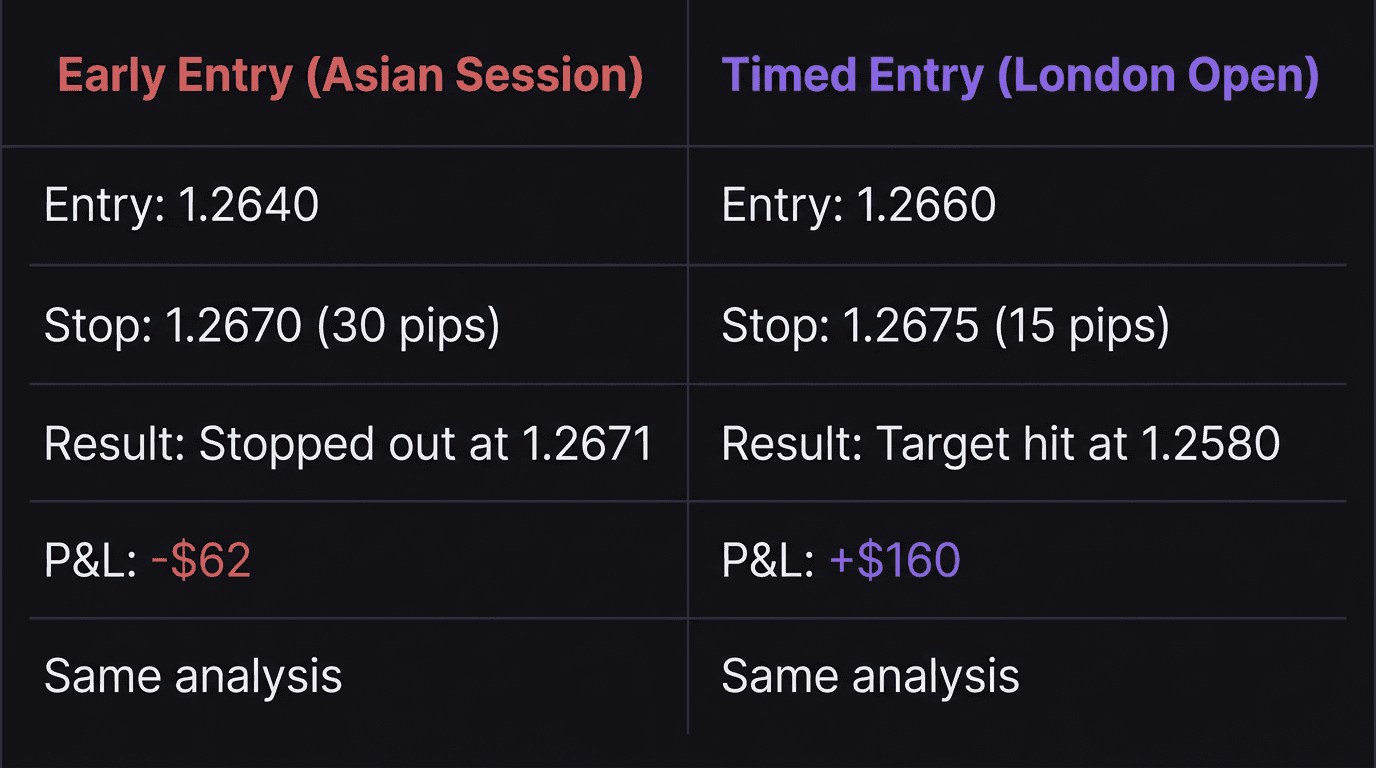
You sell at 1.2640 with a stop at 1.2670 (30 pips above your entry, above the supply zone). Target: 1.2580 (60 pips, a 2:1 reward-to-risk).
What happens next: Price continues grinding up during Asia. At 3:15 AM EST (London open), price spikes to 1.2668, sweeping liquidity above the supply zone. Your stop was at 1.2670, so you survive by 2 pips. But the spread widens during the spike, and your broker fills the stop at 1.2671.
You lose 31 pips. Price then drops to 1.2575 by 5:00 AM EST.
Math check: 31-pip loss on 0.2 lots at $2/pip = $62 loss. If you had waited for London open, entered the short at 1.2660 after the sweep and break of structure, with a stop at 1.2675 (15 pips), your target of 1.2580 would be 80 pips. 0.2 lots at $2/pip times 80 pips = $160 gain. Instead, you took a $62 loss on the same analysis.
The analysis was identical. The timing changed everything.
Walkthrough: Waiting for the Right Window
Same pair, same day, different trader. This trader has the same bearish bias and the same supply zone marked. But instead of entering during Asia, they set an alert at 1.2645 and go to sleep.
At 2:30 AM EST, they wake up and start preparing charts. They review the Asian range: price consolidated between 1.2620 and 1.2645. They note buy-side liquidity above 1.2645 and above the supply zone at 1.2665.
London opens at 3:00 AM. Price spikes up, sweeps the buy-side liquidity above 1.2665, and a sharp V-shaped reaction sends price back below 1.2650. Internal structure shifts bearish. The trader enters short at 1.2648 with a stop at 1.2668 (20 pips above the swept high).
Target: 1.2580. That is 68 pips of reward for 20 pips of risk. A 3.4R trade.
With 1% risk on a $10,000 account, that is $100 risk. Position size: 0.5 lots at $5/pip times 20-pip stop = $100 risk. Reward: 0.5 lots times $5/pip times 68 pips = $340.
Math check: 0.5 lots on GBP/USD at approximately $5/pip (mini lots). 20 pips times $5 = $100 risk. 68 pips times $5 = $340 reward. 340 / 100 = 3.4R. Confirmed.
Everything about the second trader's approach was the same except one variable: when they entered.
Timing Is Risk Management
Most traders file entry timing under "strategy." It actually belongs under risk management.
When you enter early, you are accepting wider stop losses (or stop losses in dangerous locations) because you are trying to account for the pullback that has not happened yet. That means larger risk per trade or a stop so tight that normal pre-session noise clips it.
When you time your entry to an active session, two things improve simultaneously:
Tighter stops. After a liquidity sweep and structural confirmation, your stop goes behind the swept level. That level has already been tested and rejected. The stop is structurally protected, not just a round number.
Faster resolution. Institutional volume means price moves with purpose. You are not sitting in a trade for six hours watching it chop sideways. The move either works within the session or it does not.
Both of these directly affect your risk per trade. Tighter stops mean you can size appropriately without exceeding your risk percentage. Faster resolution means less exposure time, which reduces the chance of adverse events (news spikes, spread widening) hitting your position.
The Patience Problem
Knowing that timing matters is easy. Actually waiting is the hard part.
You have done your analysis. You know the direction. You have the zone marked. And now you just have to sit there for three hours while the Asian session does nothing. Every small move looks like it could be the start of something. Your finger hovers over the sell button.
This is where most traders break. Not because they lack knowledge, but because they lack patience. The discomfort of waiting feels worse than the discomfort of losing. At least when you are in a trade, something is happening.
But "something is happening" is not a trading edge. Volume and institutional participation are the edge. And those show up on a schedule, not on a feeling.
Set a rule: no entries outside your designated session. Write it in your trading plan. Review it before every session. And if you break it, log it in your journal so you can see the pattern.
How to Confirm Your Entry Window
The five-step approach for combining timing with execution:
Identify trend direction. What is the higher timeframe doing? Bullish or bearish?
Mark liquidity pools. Where are the resting orders that price needs to sweep?
Wait for the active session. London open or London/New York overlap. Nothing before.
Wait for the sweep. Let price take out the liquidity pool you marked. Look for a V-shaped reaction.
Confirm the shift. Internal structure must break in your trade direction before you enter.
If any step is missing, you do not have a trade. You have a guess.
The biggest daily losses in most journals come from trades taken outside the plan's session window. Check yours. The data is probably already there.
How EdgeFlo Keeps You in Your Window
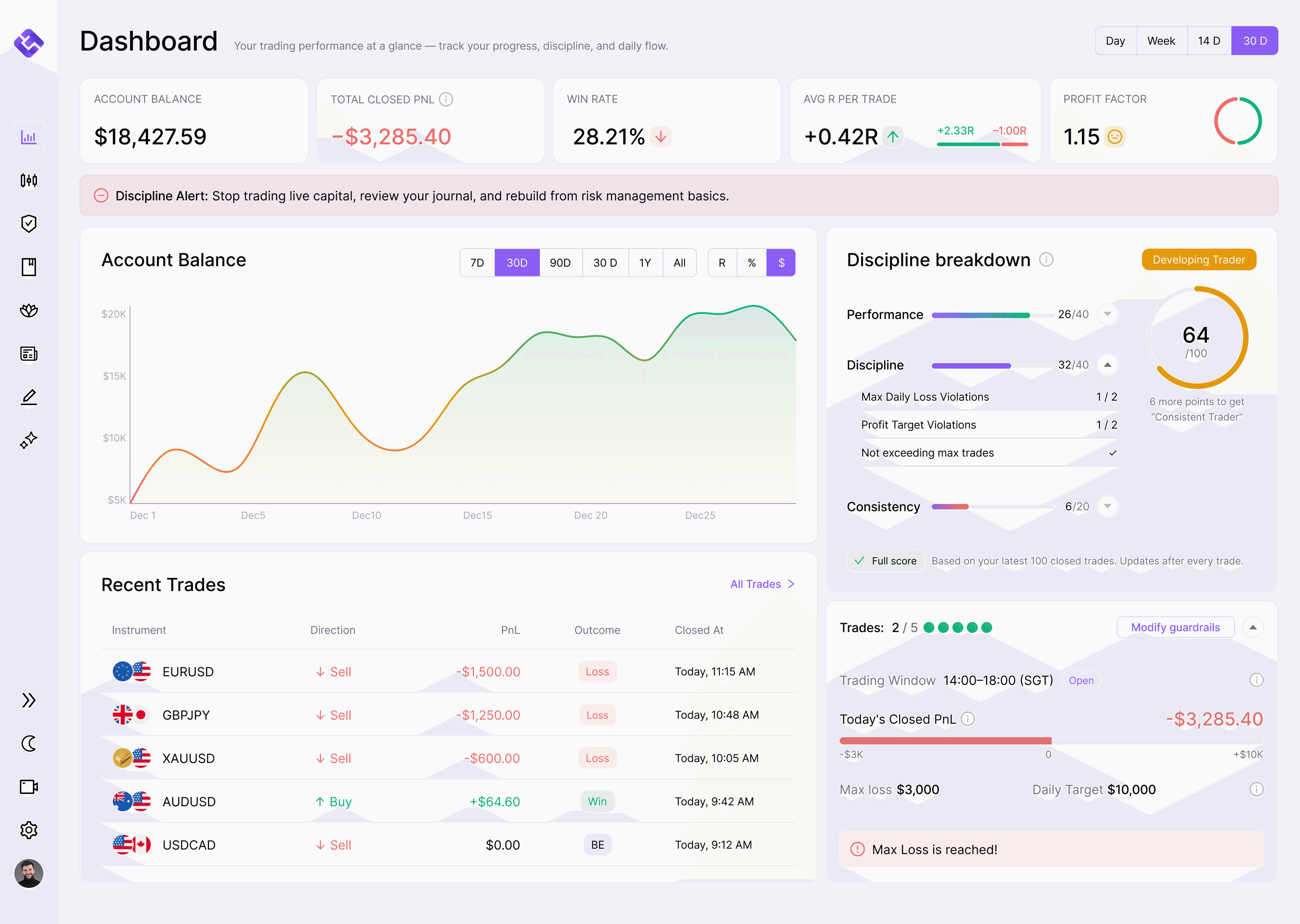
The gap between knowing your session and actually trading only that session is a discipline gap. EdgeFlo's trading window feature closes that gap mechanically.
Set your preferred session (say, 3:00 AM to 6:00 AM EST). Outside that window, the trade button is inactive. You can still chart, plan, and mark levels. But execution is locked until your window opens. If you need to override for a genuine reason, you can. The override is always available. But it requires a conscious choice, not a reflexive click.
This pairs with the risk limit feature. When your window opens and you see the setup, EdgeFlo calculates your lot size from your stop-loss distance and risk percentage. No scrambling with a calculator while the candle is closing. Your sizing is correct from the first click.
The Edge Brief
Receive Insights on trading psychology, discipline, and the behavioral patterns that create consistent traders from our Founder and the EdgeFlo team, delivered to your inbox.
Think different. Trade different.
Why does entry timing matter if my direction is right?
What is the best time to enter a forex trade?
How do I avoid entering trades too early?
Is being early in a trade the same as being wrong?

Turn discipline on.
Every session.
EdgeFlo is the environment serious traders operate inside.
Start 7-Day Free Trial
Cancel anytime.
No long-term commitment.

Think Different, Trade Different.