

Adapt to Market Conditions Instead of Forcing Trades
Ranging markets punish trend-followers. Trending markets punish faders. Learn when to sit out, reduce size, and stop forcing your system when conditions do not match.
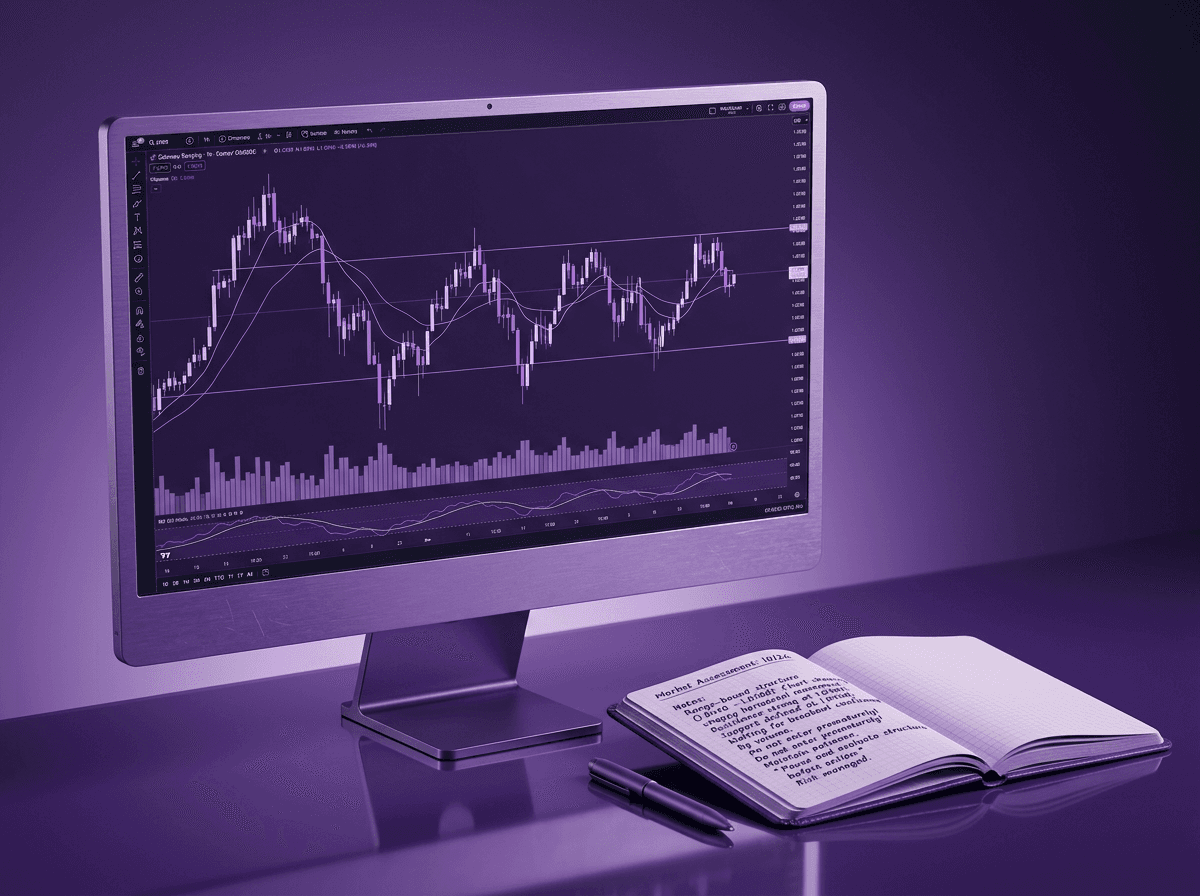
There is no such thing as a bad month to trade. There are only traders who refuse to adapt. Some weeks the market trends cleanly and your breakout system prints money. Other weeks it chops sideways and every entry gets stopped out. The system did not break. The conditions changed.
The discipline is not in trading every day. It is in recognizing when your system and the current market are mismatched, and choosing to sit out, reduce size, or adjust instead of forcing trades that do not fit.
TL;DR
Your system works in specific conditions. When conditions change, the edge temporarily disappears.
Forcing trades during mismatched conditions is the fastest way to destroy a good month.
Sitting out is a valid, high-value trading decision, not a sign of weakness.
Reducing position size during uncertain conditions protects capital without requiring you to go completely flat.
A pre-market condition assessment prevents most forced trades before they happen.
Why Your System Stops Working Some Weeks
Every trading system has a market condition it was designed for. Trend-following systems thrive in directional markets. Mean-reversion systems work in ranges. Breakout systems need volatility expansion.
When the market shifts from your system's preferred condition to a different one, your edge shrinks or disappears entirely. That is not a flaw in the system. That is how all systems work, including the ones used by institutional traders and hedge funds.
The mistake is assuming your system should work in every condition. It will not. No system does. The traders who survive long-term are the ones who recognize the shift and adjust their behavior accordingly.
Walkthrough: The Trend Trader in a Ranging Market
You trade EUR/USD breakouts on the 1H chart. Your system enters when price breaks above a consolidation zone with momentum confirmation, targeting 2R.
In a trending week, this works beautifully. Price breaks out, follows through, and hits your target. Three trades, two winners at 2R, one loser at 1R. Net: +3R.
Then the market shifts to a tight range. Price keeps breaking above resistance, triggering your entry, then immediately reversing back into the range. Monday: stopped out. Tuesday: stopped out. Wednesday: stopped out again. Three consecutive losses at 1R each. Net for the week: negative 3R.
Nothing about your system changed. The market condition changed. If you had identified the range on Monday morning during your pre-market routine, you could have skipped the entire week and saved 3R of losses.
Reading the Market Before Forcing a Setup
Before you look for trade setups, assess the condition of the market. This takes five minutes and saves you from hours of frustration.
Ask three questions:
1. Is price making higher highs and higher lows, or lower highs and lower lows? If yes, the market is trending. Your trend system is in play.
2. Is price bouncing between the same support and resistance levels repeatedly? If yes, the market is ranging. Trend systems will get chopped up. Either switch to a range-based approach or sit out.
3. Is volatility expanding or contracting? Check the average daily range for the last five days against the 20-day average. If recent ranges are significantly smaller, the market is quiet and breakout entries are likely to fail.
This assessment does not require a special indicator. It is basic price structure reading. But doing it before you start looking for setups changes your entire decision framework for the session.
An A-plus setup in the wrong market condition is not an A-plus setup. Context matters as much as the pattern itself.
When Sitting Out Is the Highest-EV Decision
Most traders think of not trading as doing nothing. In reality, sitting out during poor conditions is one of the most profitable decisions you can make, because it prevents losses that would erase gains from your good weeks.
Consider the math. If your system produces +10R during trending weeks and you trade four trending weeks per month, that is +40R. If you also trade four ranging weeks and lose 3R each time, your net drops to +28R. Those ranging weeks cost you 30% of your potential profit.
Now imagine you sit out during those ranging weeks entirely. Zero trades, zero losses. Your net stays at +40R. You made 43% more profit by doing less.
This is why trading patience is not a personality trait. It is a mathematical advantage. The patient trader captures the same upside but avoids the unnecessary downside.
Adjusting Size Instead of Abandoning Your Plan
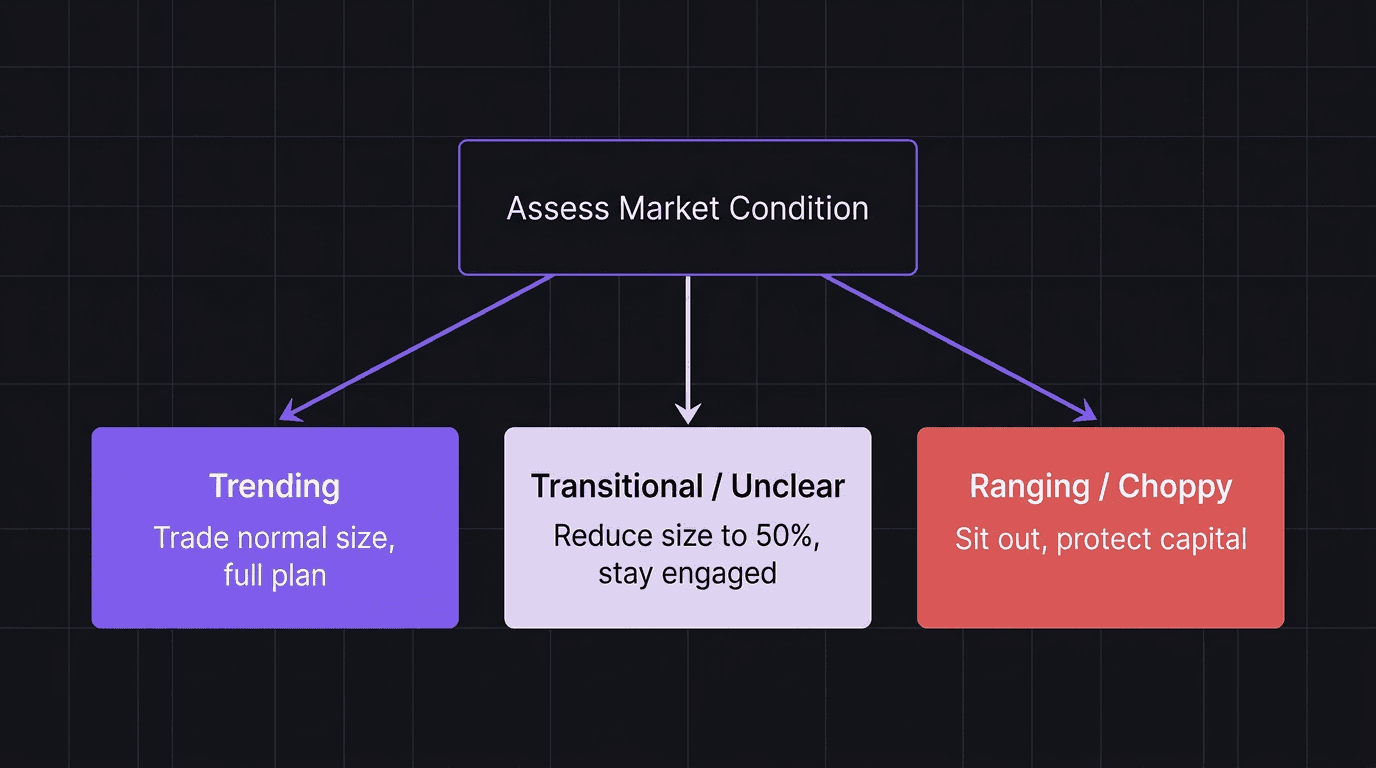
Sitting out completely is not always the right call. Sometimes the market is in a transitional phase where the condition is unclear. In those situations, reducing position size is the middle ground.
If your normal risk is 1% per trade, drop to 0.5% during uncertain conditions. You still get to trade, which keeps you engaged and collecting data. But the cost of being wrong is halved, which protects your account during a period where your edge is weaker.
This approach also protects your psychology. Going from full trading to zero trading feels abrupt and can create its own problems (boredom, FOMO, jumping back in too aggressively when conditions improve). A reduced-size session lets you stay in the game without betting the farm on uncertain conditions.
The key rule: never increase size during uncertain conditions. That is the opposite of what your instincts will tell you (you lost money this week, so you need to make it back by sizing up). Resist that urge. Uncertain conditions plus larger size is the recipe for blown accounts.
Know when to stop trading entirely, and know when to continue with reduced exposure. Both are valid adaptation strategies.
How EdgeFlo Pre-Market Checklist Prevents Forced Trades
The hardest part of adapting to conditions is doing it consistently. In the moment, with charts open and adrenaline flowing, the temptation to trade is strong even when conditions are wrong.
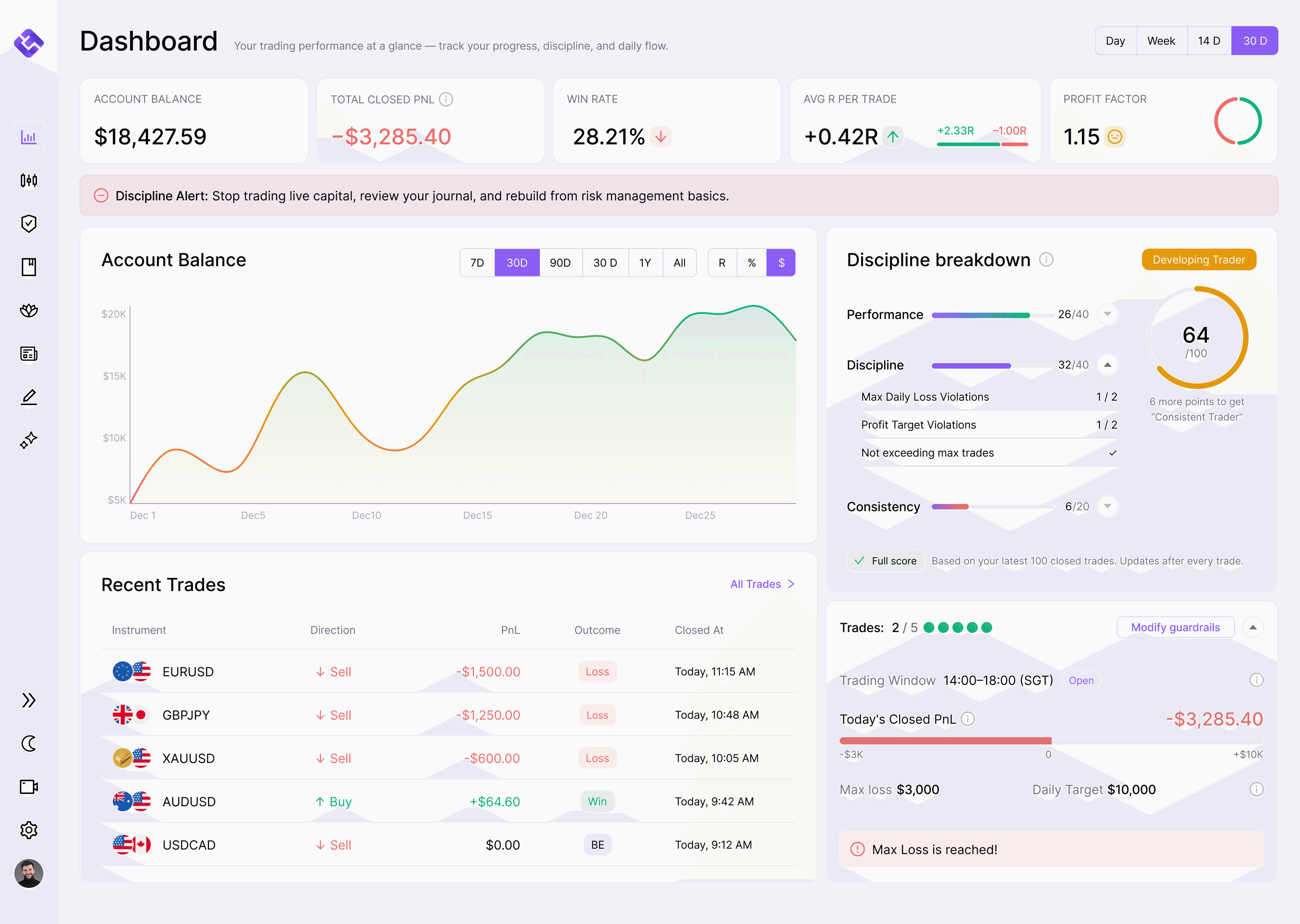
EdgeFlo's pre-market checklist prompts you to assess market conditions before you start scanning for setups. The checklist surfaces questions about trend direction, volatility, and session context, which forces a deliberate condition assessment before the first trade.
That matters because most forced trades happen when the trader skips the condition check and jumps straight into pattern scanning. By the time they realize the market is ranging, they have already entered two or three trades that did not fit their system.
The checklist does not make the decision for you (you can still choose to trade in any condition), but it makes the decision conscious. And conscious decisions, even imperfect ones, are dramatically better than reflexive trades driven by boredom or the need to feel productive.
Adapting to conditions is not about being smarter than the market. It is about being honest about when your system has an edge and when it does not. The market does not owe you a setup every day. The discipline is accepting that reality and protecting your capital until conditions align again.
The Edge Brief
Receive Insights on trading psychology, discipline, and the behavioral patterns that create consistent traders from our Founder and the EdgeFlo team, delivered to your inbox.
Think different. Trade different.
Why does my trading system stop working some weeks?
Should I trade during low-volatility weeks?
How do I know if the market is ranging or trending?
Is sitting out a valid trading decision?

Turn discipline on.
Every session.
EdgeFlo is the environment serious traders operate inside.
Start 7-Day Free Trial
Cancel anytime.
No long-term commitment.

Think Different, Trade Different.