

Trading Systems Beat Talent Every Time
Talented traders still lose without systems. Learn why trading systems beat raw talent and how to build your first complete system.
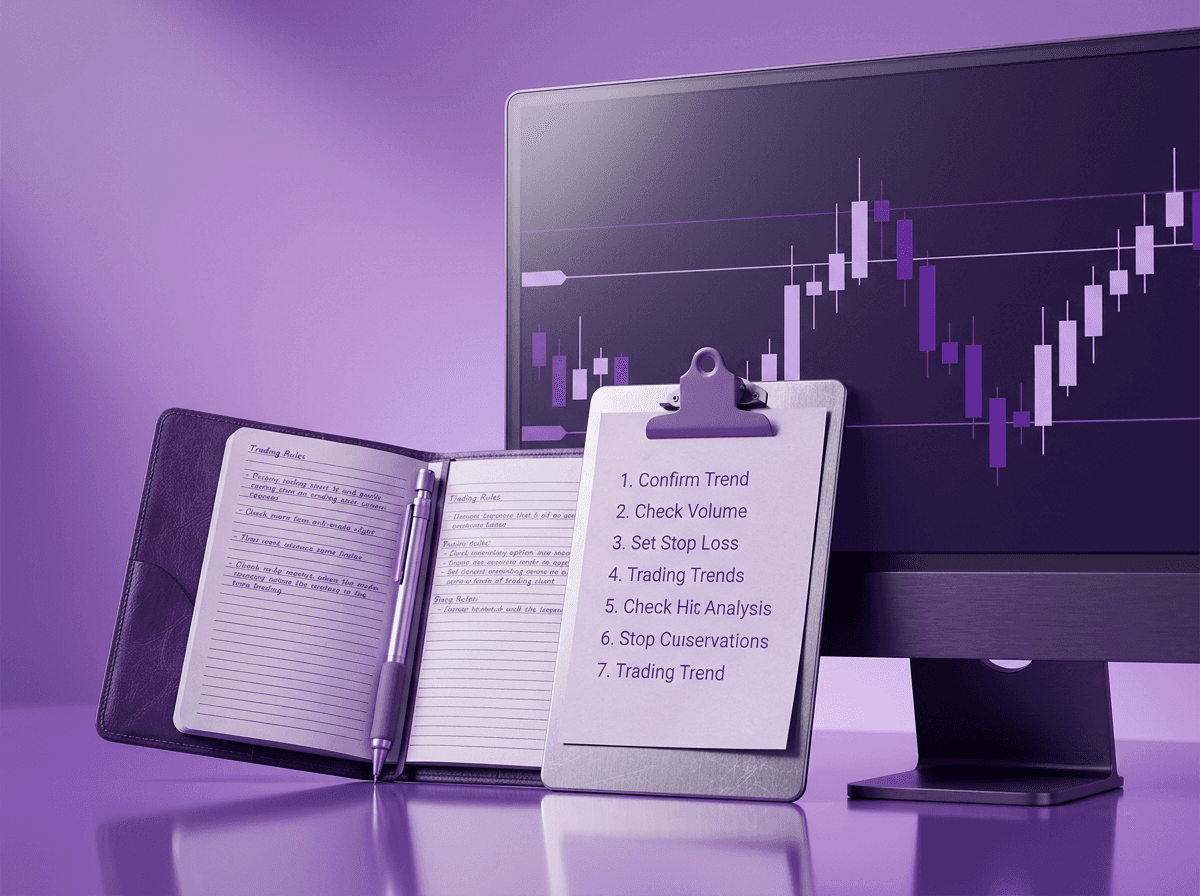
Why Trading Systems Beat Talent (And How to Build Yours)
You can read charts better than most people in any trading Discord. You spot setups, understand structure, and know exactly what "should" happen next. Yet your account still bleeds. That is the talent trap, and trading systems beat talent because a system removes the one variable talent cannot fix: you making a different decision every time the same setup appears.
Talent gets you into the room. A system keeps you alive once you sit down.
TL;DR
Chart reading skill without a system leads to inconsistent execution and blown accounts.
A trading system is a written, repeatable set of rules for entries, exits, and risk.
Talented traders lose because they improvise instead of following a documented plan.
You only need one setup, one session, and strict rules to build a profitable system.
Test any system over at least 100 trades before trusting it with real capital.
Why Talented Traders Still Lose
Ever watched someone break down a chart perfectly in hindsight but struggle to pull the trigger on the same pattern live? That is what happens when skill exists without structure.
Talented traders tend to rely on feel. They "know" what a good setup looks like, so they skip the checklist. They adjust stop losses because the candle "doesn't look right." They size up after a win streak because they feel hot.
None of those decisions come from a system. They come from the moment. And the moment changes every single time.
Walkthrough: The Talented Improviser
A trader spots a bullish break of structure on GBP/USD during London session. He enters at 1.2640 with no written plan, placing his stop at 1.2610 (30 pips) and targeting 1.2730 (90 pips) because it "looks like it could go there." Position size: 0.5 lots.
Price stalls at 1.2670. He moves his target down to 1.2680 and closes for 40 pips instead of 90. Profit: 0.5 lots = $5/pip. $5 times 40 pips = $200.
The next day, the same setup appears. This time he hesitates, enters late at 1.2660, and gets stopped out at 1.2630 for a 30-pip loss. Loss: $5 times 30 pips = $150.
Two identical setups. Two different entries, two different management styles, two different outcomes. Talent was present both times. A system was not.
The problem is not ability. The problem is that without a mechanical trading plan, every trade becomes a new experiment. You cannot measure what you cannot repeat.
What a Trading System Actually Is
A trading system is not a strategy. A strategy tells you where to enter. A system tells you everything: when to look, what to look for, how much to risk, where to get out, and what to do after the trade closes.
Think of it like a restaurant kitchen. A talented chef might improvise a great meal once. But a kitchen that produces the same quality plate 200 times a night runs on systems: recipes, timing protocols, station assignments, and quality checks.
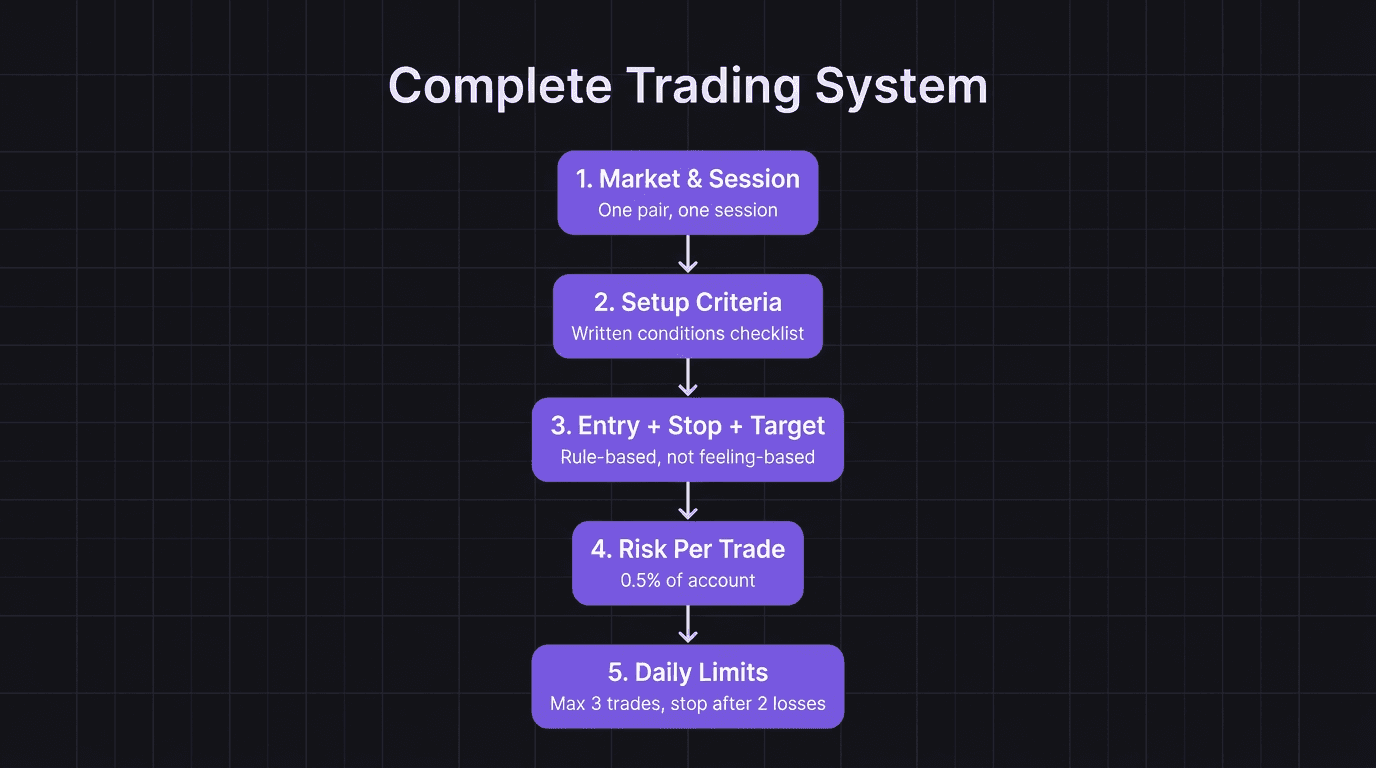
Your trading system needs these components:
Market and session: which pair you trade and which session you trade it in
Setup criteria: the exact conditions that must be present before you look for an entry
Entry trigger: the specific price action event that puts you in the trade
Stop loss placement: a rule-based level, not a feeling-based one
Take profit method: fixed R target, structure-based exit, or trailing method
Risk per trade: a fixed percentage of your account (0.5% or 1%)
Daily limits: maximum number of trades and maximum daily loss before you stop
Every one of those items should be written down before you open your charts. If any component requires a judgment call in the moment, it is not a system yet. It is a suggestion.
Building Your First Complete System
Start with what already works. If you have a trading edge that has shown promise in backtesting, use that as the foundation. If you do not have one yet, pick a single strategy and commit to learning it deeply before adding anything else.
Step 1: Pick One Setup
You do not need five setups. You need one that you understand completely. A pullback to a demand zone. A break of structure and retest. A liquidity sweep into an order block. Whatever it is, define it so clearly that a stranger could read your notes and identify the same setup on a chart.
Step 2: Write the Rules
For every trade, you should be able to answer these questions before you click buy or sell:
Does the higher timeframe support this direction?
Is price in the right zone for my setup?
Has my entry trigger fired?
Where is my stop loss?
Where is my take profit?
What is my lot size at 0.5% risk?
If the answer to any question is "I'm not sure," you do not take the trade. That is the system protecting you from yourself.
Step 3: Set Daily Limits
Two to three trades per day is enough. If you lose two in a row, stop for the session. This is not about limiting opportunity. It is about preventing the cascade where one loss turns into five because you wanted to "make it back."
Having trading rules you follow without exception is what separates a system from a strategy you sometimes use.
Testing and Trusting the System
A system you have never tested is a guess wearing a suit. Before you risk any capital, you need proof that the rules actually produce a positive result over a meaningful number of trades.
Backtesting your strategy over 100 or more historical trades gives you baseline numbers: win rate, average winner, average loser, and expectancy. Those numbers tell you whether the system has an edge.
Walkthrough: The System Follower
A trader writes a system for trading demand zone pullbacks on EUR/USD during London session. The rules: enter only when higher timeframe is bullish, price sweeps below the zone and reclaims, stop loss 25 pips below zone low, take profit at the next supply zone (target varies, minimum 2R).
She backtests 120 trades over 6 months of historical data. Results: 42% win rate, average winner 3.2R, average loser 1R.
Expectancy check: (0.42 times 3.2R) minus (0.58 times 1R) = 1.344R minus 0.58R = 0.764R per trade.
Positive expectancy. She forward tests on demo for one month, taking 22 trades. Results hold. Win rate: 41%. Average winner: 3.1R. She moves to live at 0.5% risk.
After 50 live trades, the account is up 14.7%. Not because she is talented. Because the system is proven and she follows it.
The difference between this trader and the talented improviser from earlier? She made the same decision 50 times in a row. He made 50 different decisions.
If you find yourself hopping between strategies every few weeks, the problem is not the strategy. It is that you never gave any single system enough trades to prove itself.
When Trust Breaks Down
There will be losing streaks. Your system will lose five trades in a row and you will want to change something. Do not. A system with positive expectancy over 100 trades will have ugly stretches inside those 100 trades. That is probability at work.
The only time to change a rule is when your data (not your feelings) shows a statistically meaningful shift across a full quarterly review. One bad week is not data. It is noise.
How EdgeFlo Helps You Build and Follow a System
EdgeFlo gives you the structure to document, execute, and track a system in one place. The Edge trade plan builder lets you write your rules, set them as your active plan, and reference them during every session instead of relying on memory.
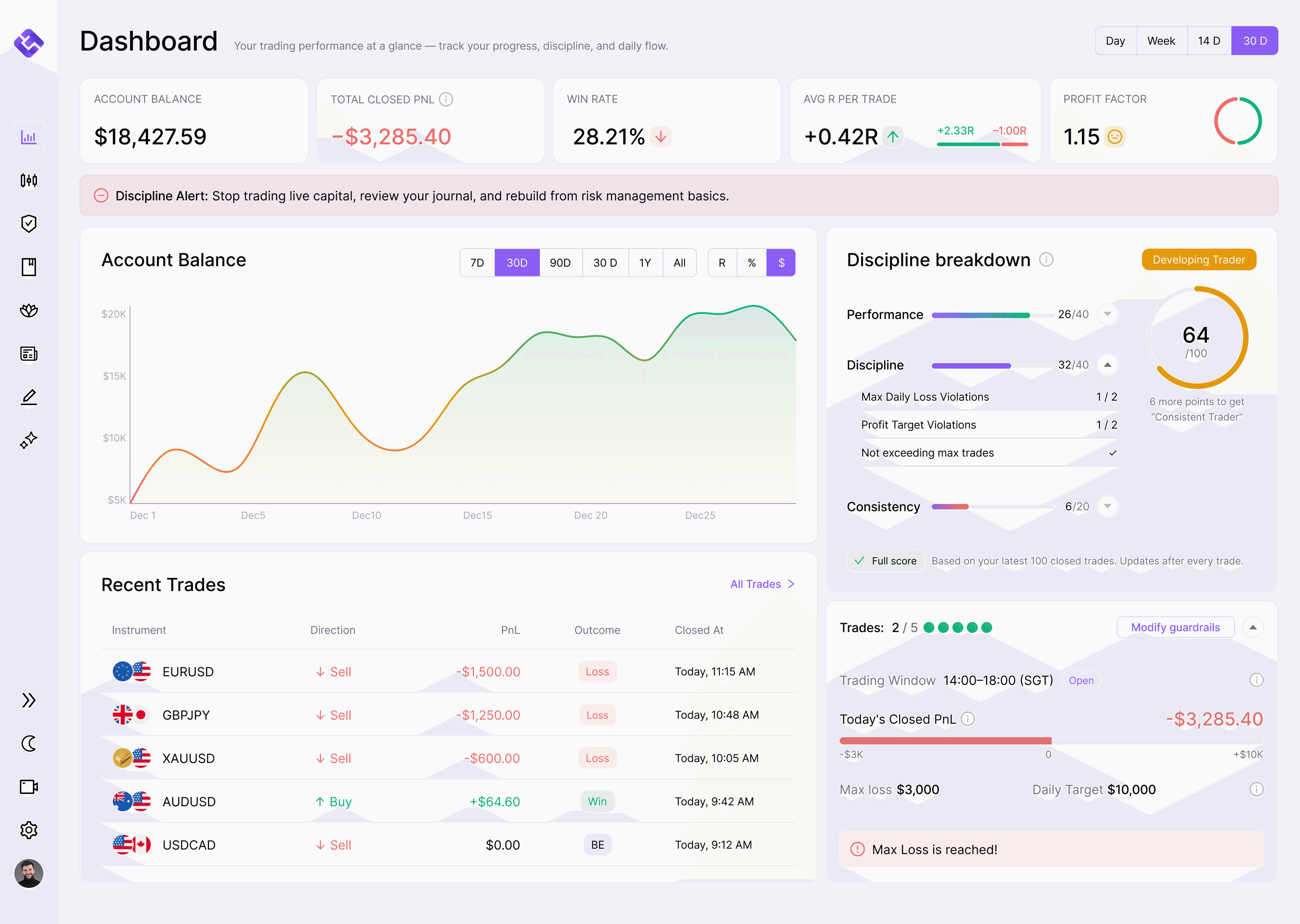
After each trade, the AI-powered journal auto-imports your results and asks what you followed and what you skipped. Over time, your dashboard shows plan adherence alongside performance, so you can see whether bad results came from a broken system or from you breaking the system.
Guardrails like daily loss limits and trade count caps enforce your rules at the execution level. You can override them, but you have to consciously choose to break your own system. That friction is the point.
The Edge Brief
Receive Insights on trading psychology, discipline, and the behavioral patterns that create consistent traders from our Founder and the EdgeFlo team, delivered to your inbox.
Think different. Trade different.
Why do talented traders still lose money?
What is a trading system?
How many trades do I need to test a system?
Can I use someone else's trading system?

Turn discipline on.
Every session.
EdgeFlo is the environment serious traders operate inside.
Start 7-Day Free Trial
Cancel anytime.
No long-term commitment.

Think Different, Trade Different.