

Trading Lifestyle: How Sleep and Diet Shape Your Results
Your brain is your trading edge. Learn why sleep, diet, and alcohol directly impact execution quality and how to track lifestyle factors in your journal.
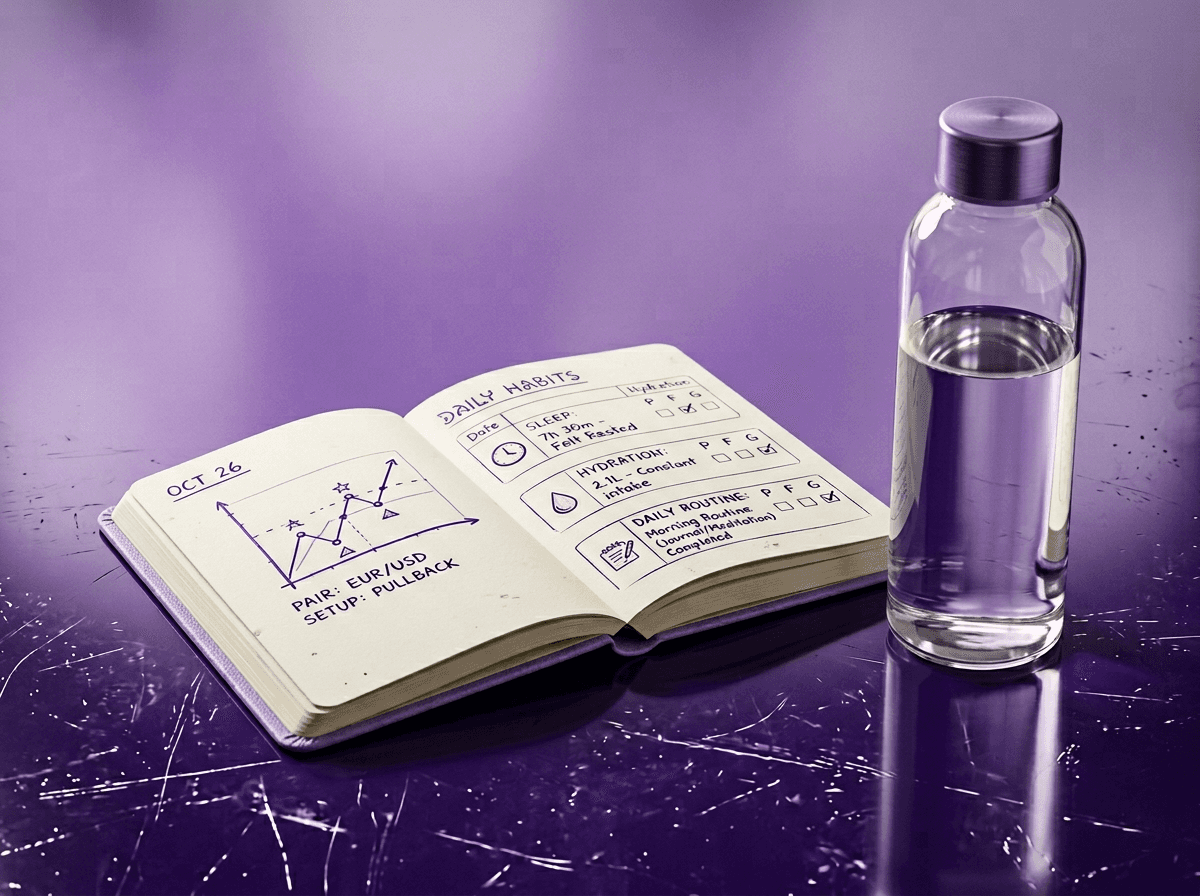
You can have the best strategy on your charts and still trade like an amateur. The difference often has nothing to do with setups, entries, or indicators. It has everything to do with what you did in the 12 hours before you opened your platform. Sleep, diet, and substance habits directly shape your execution quality, and most traders never connect the two. Your brain is your trading edge. If you run it on four hours of sleep, energy drinks, and fast food, your edge disappears before the session even starts.
TL;DR
Trading on four hours of sleep impairs decision-making at levels similar to mild intoxication.
Poor diet creates blood sugar crashes that cause mid-session hesitation and impulsive entries.
Cutting alcohol eliminates groggy mornings, reactive trades, and hangover-fueled revenge trading.
Adding three lifestyle fields to your trading journal reveals patterns you cannot see any other way.
Your strategy is your technical edge; your brain is your mental edge. Neglect either one and the other stops working.
Four Hours of Sleep Is Trading Drunk
You would never sit down at your desk after three beers and execute a trade. But trading on four hours of sleep produces a remarkably similar impairment. Reaction time slows. Pattern recognition degrades. That clean setup you spotted during your pre-market routine suddenly looks like abstract art.
Here is what actually happens. Sleep deprivation hits the prefrontal cortex first, the part of your brain responsible for impulse control, risk assessment, and executive function. Those are the exact skills you need for trading. Without them, you hesitate on valid entries, hold losers too long, and convince yourself that a C-grade setup is an A-grade opportunity.
The worst part is that sleep-deprived traders rarely realize they are impaired. You feel awake enough. You have coffee. You think you are fine. But your journal tells a different story when you review the data.
Walkthrough: The Tuesday Fog
A trader journals EUR/USD during the London session. Monday night, they sleep seven hours and trade well: two setups, two clean entries, one win at 1.5R and one small loss at 1R. Net positive.
Tuesday night, a late movie and phone scrolling cut sleep to four and a half hours. Wednesday's session looks different. They skip the pre-market checklist, enter GBP/USD five minutes before London open (too early), and move their stop loss wider after price dips against them. The trade hits the widened stop for a 1.8R loss instead of the planned 1R.
When they review both days side by side, the pattern is obvious. The strategy did not change. The brain running the strategy changed.
Diet: Garbage In, Garbage Decisions
If you are running on instant noodles and iced coffee, your blood sugar is on a roller coaster that makes price action look stable. A sugar spike at 8 AM gives you false confidence. The crash at 9:30 AM gives you hesitation and brain fog right when your session demands focus.
Professional athletes do not eat junk before competition. Professional traders should not either. Your trading session is a cognitive performance event. Fuel it like one.
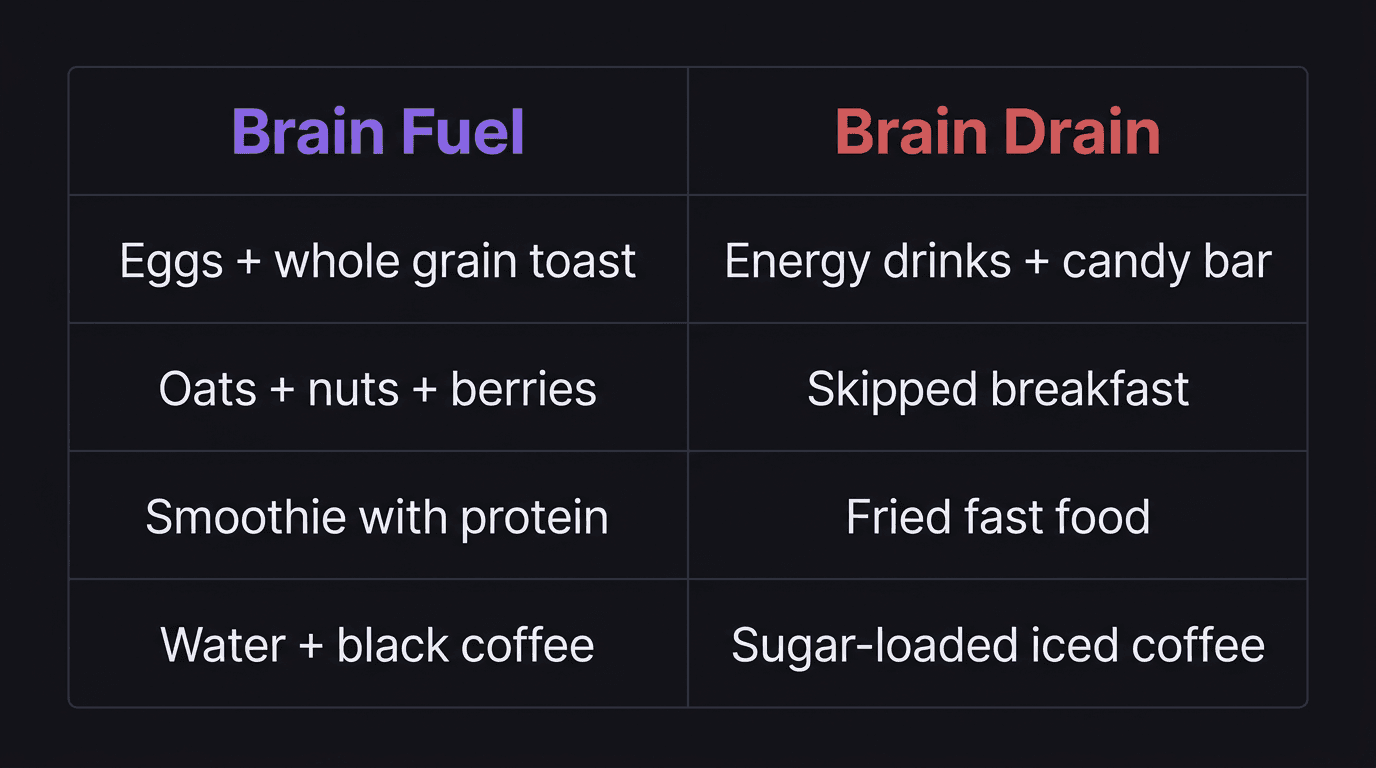
What works: protein, healthy fats, and complex carbohydrates before your session. Eggs, oats, nuts, or a simple smoothie. Nothing fancy. The goal is stable blood sugar for three to four hours.
What does not work: energy drinks, sugary coffee, skipping breakfast entirely, or eating heavy fried food that puts you into a food coma by mid-session.
Alcohol: The Hidden Account Killer
This one is uncomfortable, but it needs to be said. Alcohol disrupts sleep architecture even when you feel like you slept enough. You wake up groggy. Your first reaction is to force a trade to "make up" for feeling off. That leads to impulsive entries, wider stops, and the kind of revenge trading spiral that wipes out a week of gains in one session.
Traders who cut alcohol often report a noticeable improvement within two to three weeks. Not because alcohol directly causes bad trades, but because removing it fixes a chain reaction: better sleep leads to sharper mornings, which leads to cleaner execution, which leads to fewer emotional spirals.
You do not have to become a monk. But if you are serious about trading consistency, track your alcohol intake alongside your trades for one month. The correlation usually speaks for itself.
Walkthrough: The Hangover Spiral
A trader goes out on Thursday night, has four drinks, and gets to bed at 1 AM. Friday morning, they wake up at 6:30 AM for the London session. Technically five and a half hours of sleep, but the quality is shot.
First trade: GBP/JPY long, entered 15 minutes before the planned window. Stopped out at 1R. Instead of walking away (which the trading plan says to do after a loss on a low-energy day), they take a second trade. Then a third. By 10 AM, they are down 3.2R and tilted.
The following Monday, fully rested and sober, the same trader takes one clean setup on EUR/USD and banks 2.1R. Same strategy. Same market. Different brain.
Track It or It Does Not Exist
Here is where this connects to your journal. Most traders log entries, exits, and maybe an emotion tag, but building a consistent journaling habit means going beyond the basics. Almost nobody tracks the lifestyle inputs that drove those emotions in the first place.
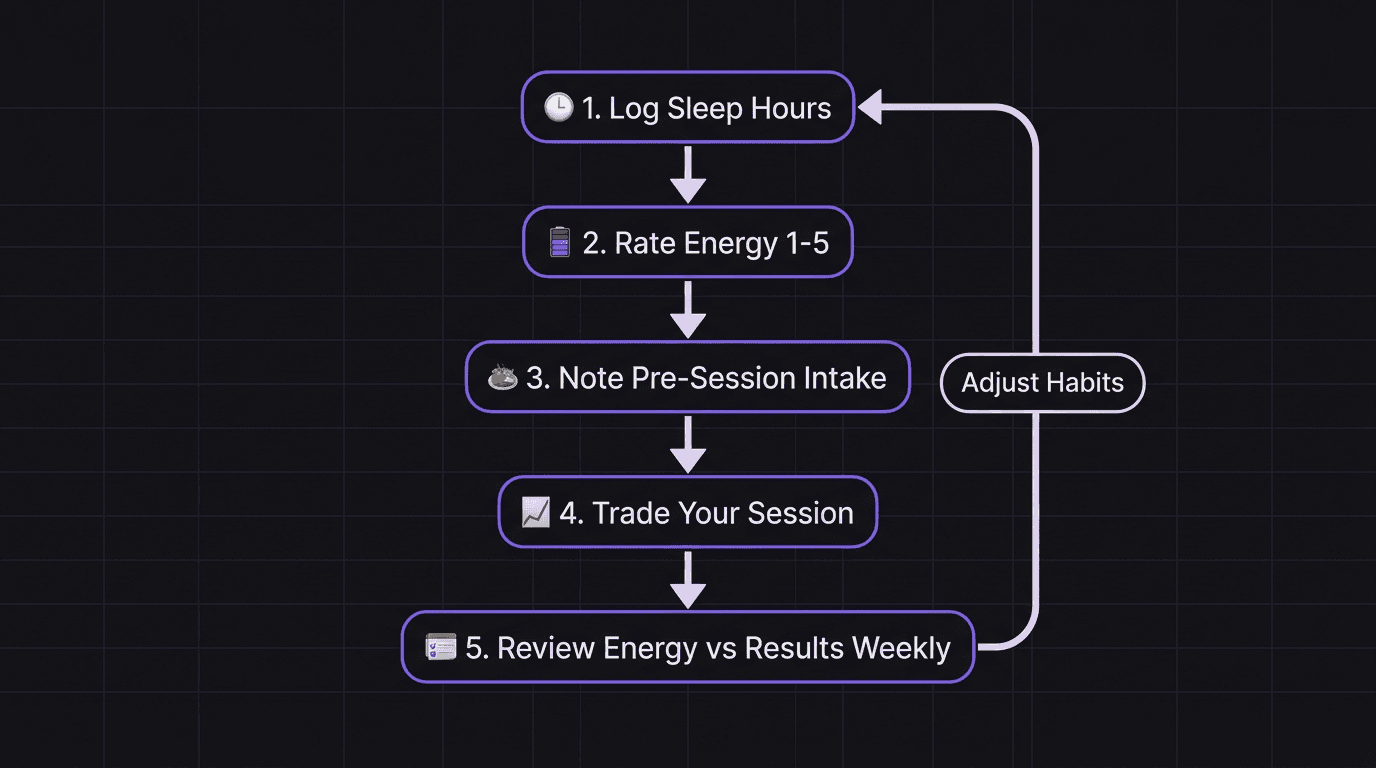
Add three fields to every journal entry:
Hours of sleep (actual, not "time in bed")
Energy rating (1 to 5, gut feel when you sit down)
Pre-session intake (what you ate, drank, or consumed)
After 20 to 30 entries, sort your trades by energy rating. You will likely find that your best execution clusters around ratings of 4 and 5, and your worst trades pile up at 1 and 2. This is not motivational fluff. It is data. And once you see it in your own journal, the lifestyle changes stop feeling optional.
Your Strategy Is Half the Edge
Think of it this way. Your strategy is your technical edge. Your brain is the hardware running that edge. If you put premium software on a machine with a failing processor, the software does not matter.
The traders who perform at a high level for years treat their body like part of the system. They sleep seven to eight hours. They eat real food before sessions. They limit substances that degrade cognitive function. Not because they read it in a self-help book, but because their journal data proved it cost them money to do otherwise.
If you have been struggling with inconsistency and you have already refined your strategy, entries, and risk management, look at the other side. Look at the human running the system. That might be where the leak is.
How EdgeFlo Connects Lifestyle to Performance
EdgeFlo's trading journal supports custom fields, so you can add sleep, energy, and intake tracking alongside your standard trade entries. The emotion tagging feature lets you flag sessions where fatigue or low energy influenced your decisions, and the weekly AI report (Plus) can surface patterns between lifestyle tags and execution quality.
Instead of guessing why Tuesdays are your worst day, you can see it in the data. Maybe every low-energy Tuesday follows a Monday night with less than six hours of sleep. That kind of feedback loop turns vague "I should sleep more" into a specific, journal-proven rule.
The Edge Brief
Receive Insights on trading psychology, discipline, and the behavioral patterns that create consistent traders from our Founder and the EdgeFlo team, delivered to your inbox.
Think different. Trade different.
Does sleep really affect trading performance?
What should traders eat before a trading session?
How do I track lifestyle factors in my trading journal?
Can quitting alcohol improve my trading?

Turn discipline on.
Every session.
EdgeFlo is the environment serious traders operate inside.
Start 7-Day Free Trial
Cancel anytime.
No long-term commitment.


Think Different, Trade Different.