

Strategy and Mindset: Why You Need Both
Great strategy with bad mindset loses money. Great mindset with bad strategy loses money. You need both. Here is how they work together.
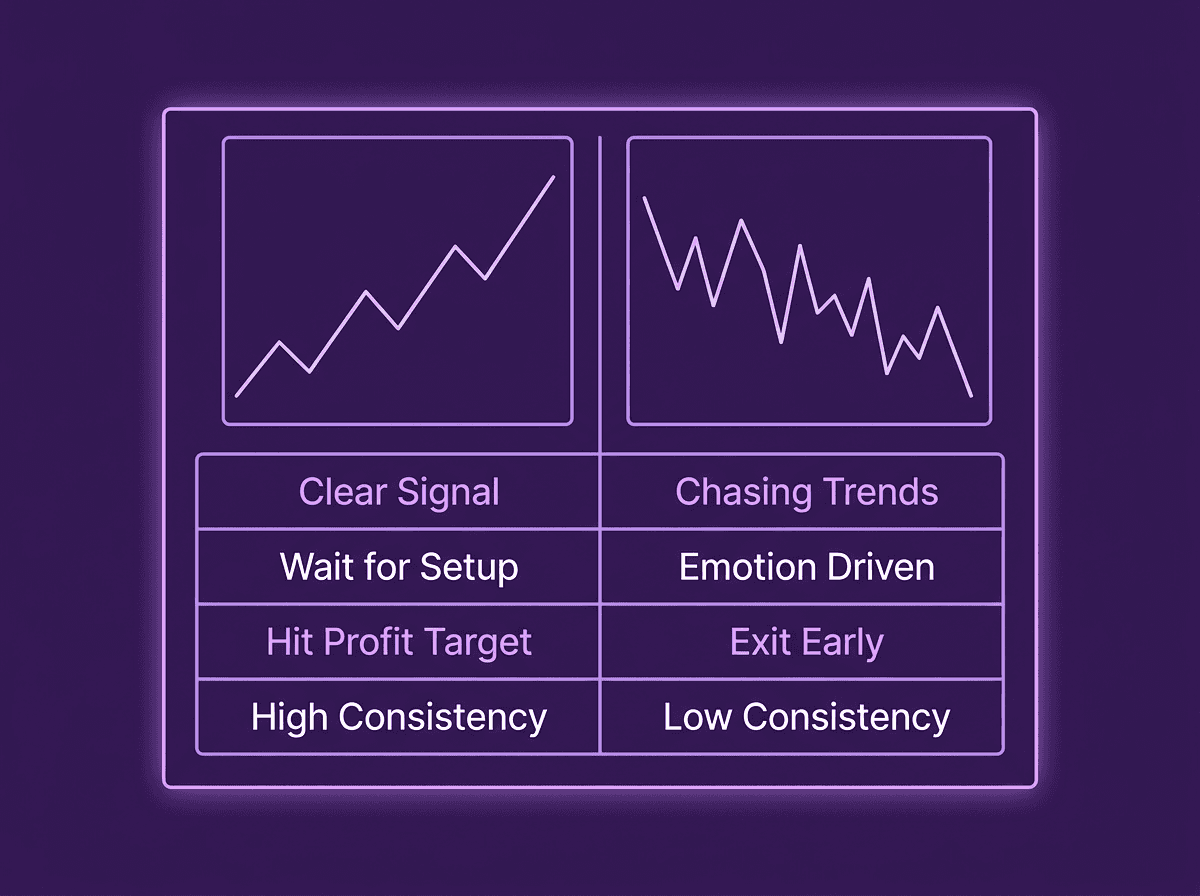
You can have the best trading strategy on the planet and still blow your account. You can also have bulletproof emotional control and still lose every week. Neither strategy nor mindset alone is enough. You need both, and you need them working together.
This sounds obvious. But the way most traders approach their development ignores one side completely. Strategy-obsessed traders jump from system to system, always looking for a better setup, while their emotions wreck every plan they touch. Mindset-obsessed traders meditate, journal, and read psychology books, but their actual edge is untested guesswork. Both types lose money for different reasons.
TL;DR
A great strategy with a bad mindset loses money through poor execution.
A great mindset with a bad strategy loses money through a flawed edge.
Build strategy first through backtesting, then develop the mindset to execute it.
The two are not separate skills. They reinforce each other in a feedback loop.
Most traders overinvest in one side and ignore the other.
What Happens With Strategy but No Mindset
Imagine a trader with an 80% win rate strategy. Eight out of every ten trades are winners when executed according to plan. On paper, this trader should be printing money.
But here is what actually happens.
Walkthrough: The 80% Win Rate That Lost Money
A trader has backtested a strategy on EUR/USD with clear rules: enter long at a demand zone when higher highs and higher lows confirm bullish structure. Stop loss below the zone, target at the next supply area. Win rate over 200 trades: 80%. Average winner: 40 pips. Average loser: 30 pips at $10/pip per standard lot.
Over 10 trades, this should produce 260 net pips, or $2,600 at one standard lot. But this month, the trader:
Closed 3 winners early at 15 pips instead of 40 because the candle "looked scary"
Doubled lot size on trade 7 after a 5-win streak because they felt invincible
Skipped trade 9 (a valid setup) because trade 8 was a loss and they were afraid
Actual result: instead of $2,600, the trader made $800. The strategy was profitable. The mindset was not. The execution gap between plan and reality cost $1,800.
This is the most common version of the strategy-mindset mismatch. The trader thinks the strategy is the problem and starts hopping to a new system. But the strategy was never the issue.
What Happens With Mindset but No Strategy
The opposite failure mode is rarer but just as destructive. Some traders have incredible emotional control. They can sit through drawdowns without flinching, follow rules to the letter, and never revenge trade.
But their rules are garbage. They are following a system they never tested. Their entries are based on hunches dressed up as criteria. Their risk management is sound, but the underlying edge does not exist.
Walkthrough: Disciplined Execution of a Losing System
A trader follows a moving average crossover strategy on GBP/USD. Buy when the 20 EMA crosses above the 50 EMA, sell when it crosses below. The trader executes with perfect discipline: every signal is taken, stop losses are always honored, position size is always 0.5 lots.
After 30 trades in a month, the result:
10 wins at an average of 25 pips: 250 pips gained
20 losses at an average of 20 pips: 400 pips lost
Net: negative 150 pips
At 0.5 lots ($5/pip): negative $750
The trader did nothing wrong emotionally. Every trade was by the book. But the book was wrong. A 33% win rate with a 1.25:1 reward-to-risk ratio produces a negative expectancy. No amount of mindset work fixes a system that does not have an edge.
This trader needs to go back to the drawing board and build a mechanical plan that has been validated with data, not discipline alone.
The Feedback Loop Between Strategy and Mindset
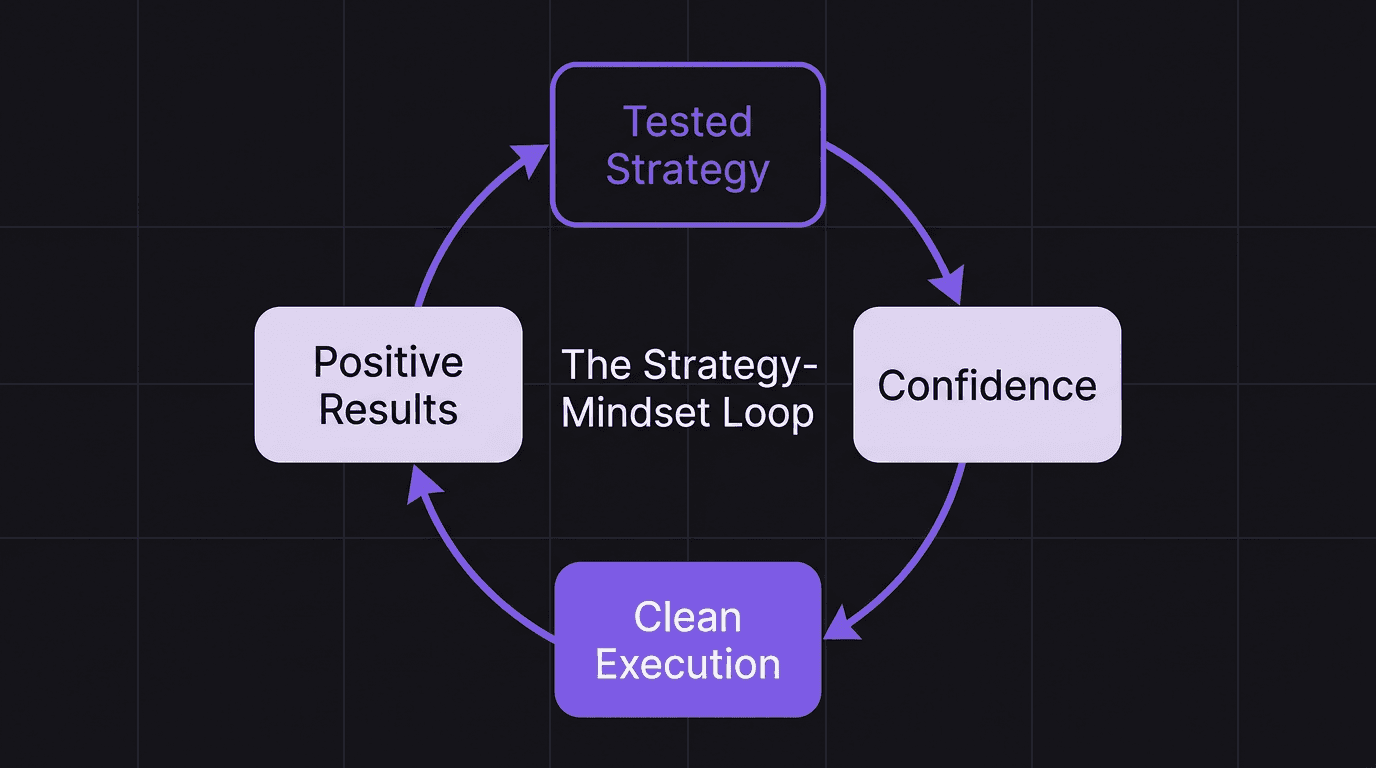
Strategy and mindset are not independent skills you develop in isolation. They form a feedback loop.
When you have a tested strategy with proven results, confidence follows naturally. You have 200 backtested trades showing that the system works. When trade 47 is a loser, you do not panic because you have evidence that the next 10 trades will produce a net positive.
That confidence makes you execute better. Better execution produces better results. Better results reinforce confidence. The loop compounds.
Without a tested strategy, there is nothing to be confident about. You are guessing, and your subconscious knows it. That is why you hesitate at entries, close early, and second-guess every decision. Your mindset problems are not the cause. They are a symptom of having no proven edge.
Which One to Build First
Start with strategy. This is not because strategy matters more. It is because mindset cannot develop without something real to anchor it.
You cannot practice emotional control if you do not know what your plan actually is. You cannot trust your analysis if you have never tested it against historical data. You cannot build the patience to hold through drawdowns if you have no evidence that the drawdown is temporary.
The development sequence looks like this:
Build a strategy with defined entry, exit, and risk rules.
Backtest it on at least 100 trades to confirm the edge exists.
Forward test on demo for 2 to 4 weeks to practice execution.
Transition to live with small size, where emotions start appearing.
Use the emotional friction of live trading to identify your mindset weaknesses.
Work on those specific weaknesses (not generic "mindset" advice) while continuing to follow the tested plan.
Step 4 is where most traders skip ahead too quickly. They jump from backtest to full-size live trading and wonder why their psychology crumbles. The emotions hit all at once because there was no gradual exposure.
The 90/10 Split Is Misleading
You have probably heard that trading is 90% mindset and 10% strategy. This is directionally true but practically misleading.
It is true in the sense that most traders who fail already have a workable strategy. Their losses come from execution errors driven by emotions, not from bad setups. For that population, yes, mindset is the bottleneck.
But if you take that statement and skip strategy development entirely, you end up as the disciplined trader executing a losing system. The 90/10 split only applies after you have confirmed that the 10% (strategy) actually works.
A better framing: strategy is the foundation. Mindset is the structure built on top. You cannot build a house on sand, no matter how beautiful the architecture.
How EdgeFlo Keeps Both Sides Visible
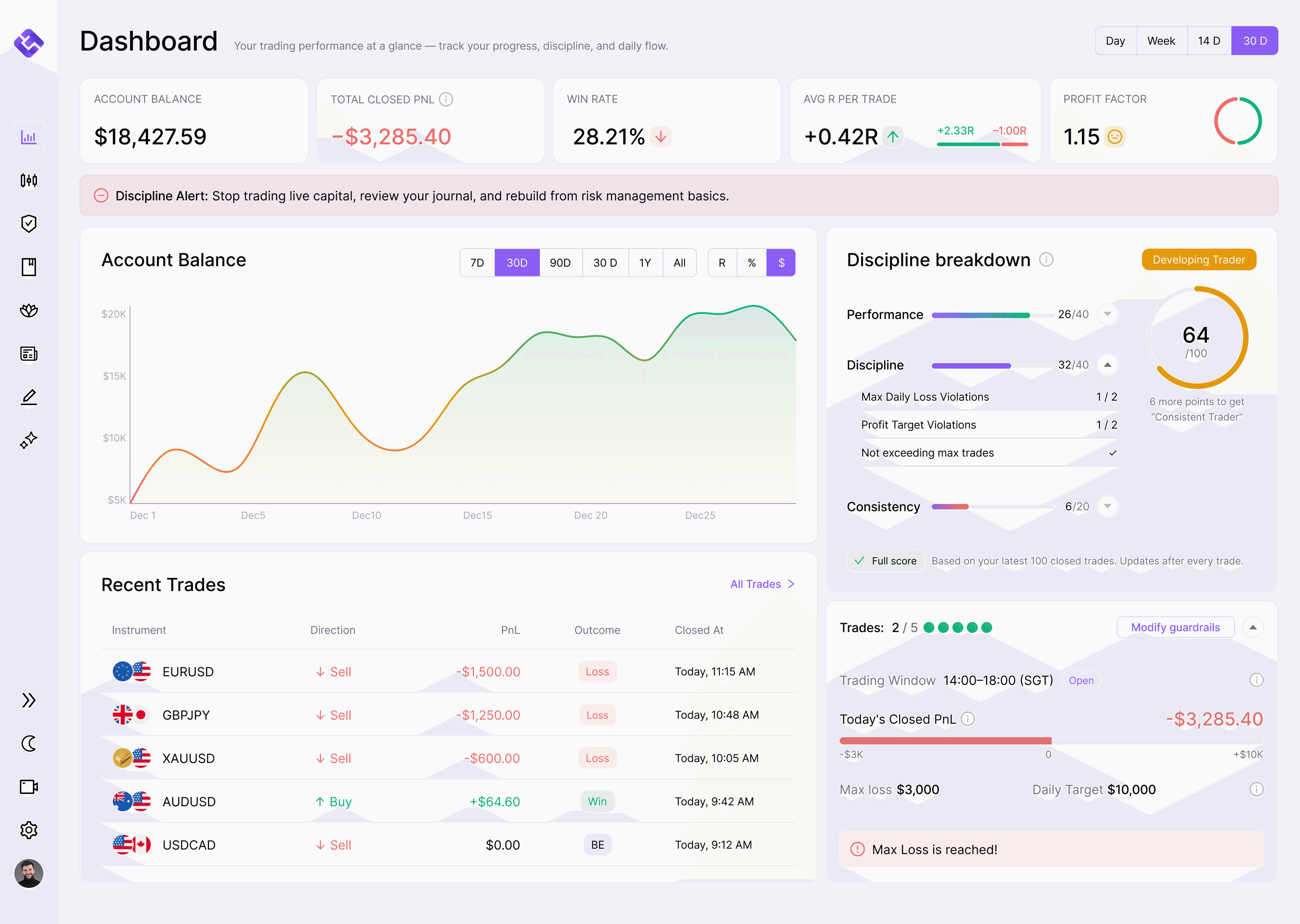
EdgeFlo's Edge feature lets you document your strategy, store your rules, and keep them visible during execution. This solves the strategy side by making your plan accessible when emotions are high, not locked in a notebook across the room.
On the mindset side, FloAI (Plus) surfaces patterns in your journal entries and highlights recurring emotional triggers. Instead of generic mindset advice, you get specific feedback: "Your win rate drops 15% on Fridays" or "You overtrade after consecutive wins." That is mindset work with data behind it, not just motivation.
The Edge Brief
Receive Insights on trading psychology, discipline, and the behavioral patterns that create consistent traders from our Founder and the EdgeFlo team, delivered to your inbox.
Think different. Trade different.
Is trading more about strategy or mindset?
Can a great mindset compensate for a bad trading strategy?
What should you develop first, strategy or mindset?
Why do traders with good strategies still lose money?

Turn discipline on.
Every session.
EdgeFlo is the environment serious traders operate inside.
Start 7-Day Free Trial
Cancel anytime.
No long-term commitment.

Think Different, Trade Different.