

Scalping vs Swing Trading: Which Fits Your Life
Scalping demands full-time screens and fast reactions. Swing trading fits part-timers. Compare lifestyle costs before picking a side.
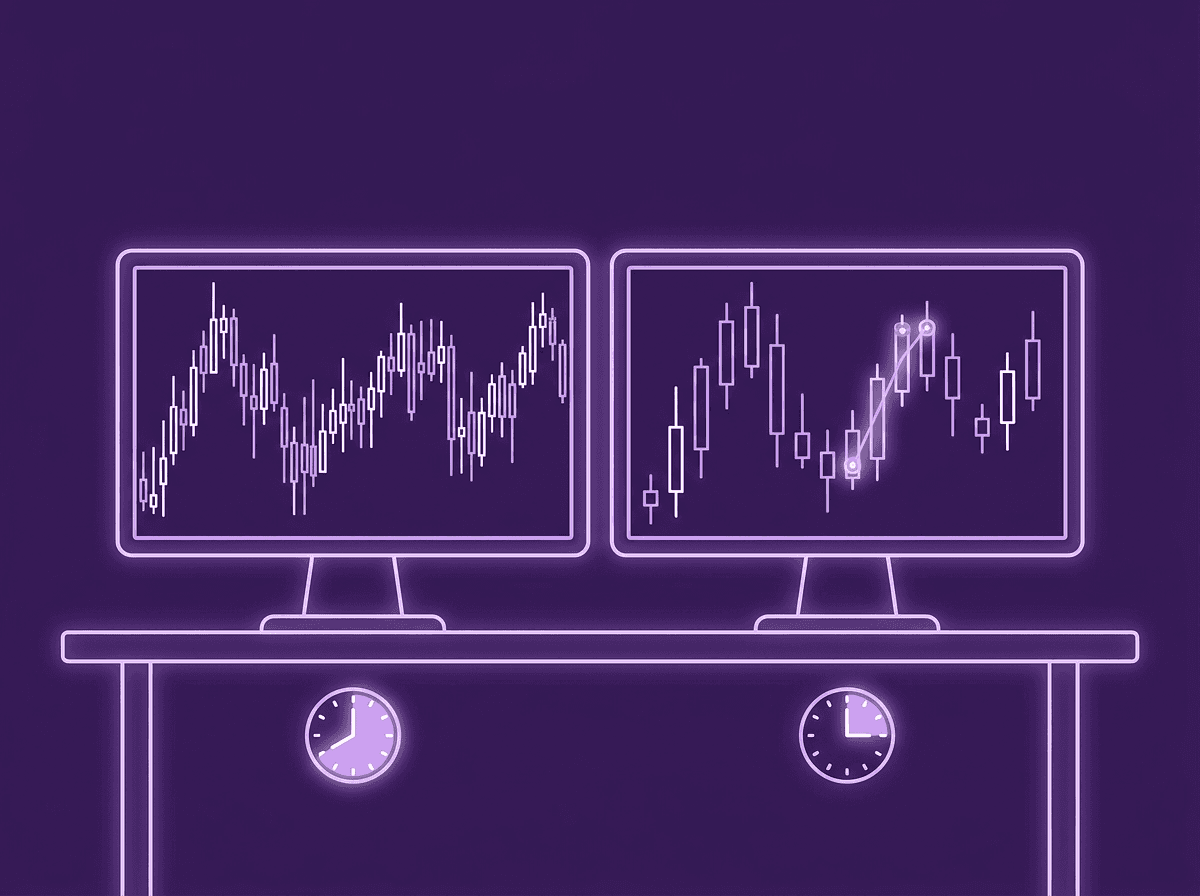
Scalping and swing trading are not just different strategies. They are different lifestyles. Scalping demands full-session screen attention, fast decision-making, and the ability to absorb dozens of small losses without flinching. Swing trading needs patience, the discipline to let trades run for days, and only 15 to 30 minutes of daily chart review. Neither is better. The better question: which one can you sustain for years without burning out?
TL;DR
Scalping requires 4+ hours of uninterrupted screen time during liquid sessions.
Swing trading requires 15 to 30 minutes per day and works around any schedule.
Scalping produces more trades (and more emotional triggers) per day.
Swing trading demands patience through multi-day holds and overnight gaps.
Choose based on your available time and emotional wiring, not which sounds more exciting.
What Scalping Actually Demands From You
Scalping sounds exciting. Quick in, quick out, stack small wins all day. The reality is different.
A scalper works the 1-minute or 5-minute chart during the most liquid forex kill zones. That means London open, New York open, or the overlap. You need to be at your screen, fully focused, for the entire session. Four hours minimum. Every session.
You are targeting 5 to 15 pips per trade. At 1 standard lot on EUR/USD, that is $50 to $150 per winner. But your losers come just as fast. A 3-trade losing streak happens in 20 minutes, not 3 days. The emotional hits stack up rapidly.
Scalping also demands tight spreads, fast execution, and a platform that does not lag. One extra second of slippage eats your entire edge on a 7-pip target.
The people who thrive at scalping share a specific profile: they react fast under pressure, they process losses quickly without emotional residue, and they have no other obligations competing for their attention during trading hours.
If that description does not fit your life right now, scalping is the wrong style. Not forever. Just right now.
What Swing Trading Actually Demands From You
Swing trading sounds boring to the action-oriented trader. And that is exactly why it works for most people.
You enter on the 4-hour or daily chart. Your targets sit 100 to 300 pips away. You hold positions for days, sometimes weeks. You check your charts once or twice per day, typically in the evening or early morning.
The daily time investment is minimal: 15 to 30 minutes to scan your watchlist, manage open trades, and set alerts. That is it. The rest of your day belongs to your job, your family, or whatever else fills your schedule.
But swing trading has its own challenges. You need to sit through overnight gaps, news events, and multi-day pullbacks without panic-closing. Trading patience is a skill, and swing trading tests it constantly. A trade that is up 80 pips on Wednesday might pull back to breakeven on Thursday before eventually hitting your 200-pip target on the following Tuesday.
Can you watch 80 pips of unrealized profit evaporate and do nothing? That is the real question swing trading asks.
Screen Time, Stress, and Lifestyle Compared
Here is the honest comparison most articles skip:
Factor | Scalping | Swing Trading |
|---|---|---|
Screen time per day | 4 to 8 hours | 15 to 30 minutes |
Trades per week | 20 to 100+ | 2 to 6 |
Pip target per trade | 5 to 15 | 100 to 300 |
Hold duration | Seconds to minutes | Days to weeks |
Emotional hits per session | High (many decisions) | Low (few decisions) |
Compatible with a day job | No | Yes |
Primary stress type | Rapid-fire decision fatigue | Patience through drawdowns |
The stress profiles are completely different. Scalping stress comes from speed: make a decision now, and the next one is 30 seconds away. Swing trading stress comes from waiting: your trade is open, the market is doing its thing, and you have to let it play out.
Most beginners underestimate how draining rapid-fire losses feel. Scalping versus day trading already involves different paces, but the gap between scalping and swing trading is massive. Three losing scalps in 10 minutes feel worse than one losing swing trade over a week, even if the dollar amount is identical.
Walkthrough: Same Dollar Risk, Different Experience
Trader A is a scalper on EUR/USD. She risks 0.5% of her $10,000 account per trade ($50 risk). She targets 10 pips with a 7-pip stop using 0.71 lots ($7.10/pip). In one London session, she takes 8 trades. She wins 4 and loses 4. Each winner nets 10 pips at $7.10/pip ($71). Each loser costs 7 pips at $7.10/pip ($49.70). Net result: $284 in wins, $198.80 in losses. Net gain: about $85 for 4 hours of intense focus.
Trader B is a swing trader on EUR/USD. She risks the same 0.5% ($50) per trade. She targets 200 pips with a 70-pip stop using 0.07 lots. She takes 2 trades that week. She wins 1 and loses 1. The winner nets 200 pips at $0.70/pip ($140). The loser costs 70 pips at $0.70/pip ($49). Net gain: about $91 for roughly 2 hours of total chart time across the entire week.
Similar dollar outcomes. Completely different lifestyles.
The Burnout Test: Which One Can You Sustain
Forget which style makes more money per month. Ask which style you can do for 3 years without quitting.
Scalping burnout is real. The constant screen time, the rapid emotional cycles, and the inability to step away during a session create a lifestyle that many traders cannot sustain. If you dread sitting down at your charts, you will not do the work long enough to get good at it.
Swing trading burnout looks different. It is boredom. The "I have not taken a trade in 4 days" restlessness. The temptation to drop to a lower timeframe just to feel like you are doing something. That temptation leads to revenge trading or overtrading on a timeframe you have not studied.
Here is a simple test: trade each style on a demo account for two weeks. Not to measure profitability (the sample is too small), but to measure how you feel at the end of each session.
After two weeks of demo scalping, do you feel energized or drained? After two weeks of demo swing trading, do you feel patient or restless?
Your emotional response to the pace tells you more than any win rate calculation. Pick the style you can sustain. Sustainability is the edge nobody talks about.
One-session trading is another option for traders who want a middle ground: full focus during one session, then done for the day. It sits between scalping and swing trading in terms of commitment.
How EdgeFlo Supports Both Styles in One Platform
Whether you scalp or swing trade, your workflow needs the same core elements: risk calculation, journaling, and performance tracking. EdgeFlo handles all three without switching between apps.
For scalpers, the auto risk calculator sizes every position instantly so you never waste seconds on lot-size math during fast-moving sessions. One-click trading removes the execution friction that costs pips on tight targets.
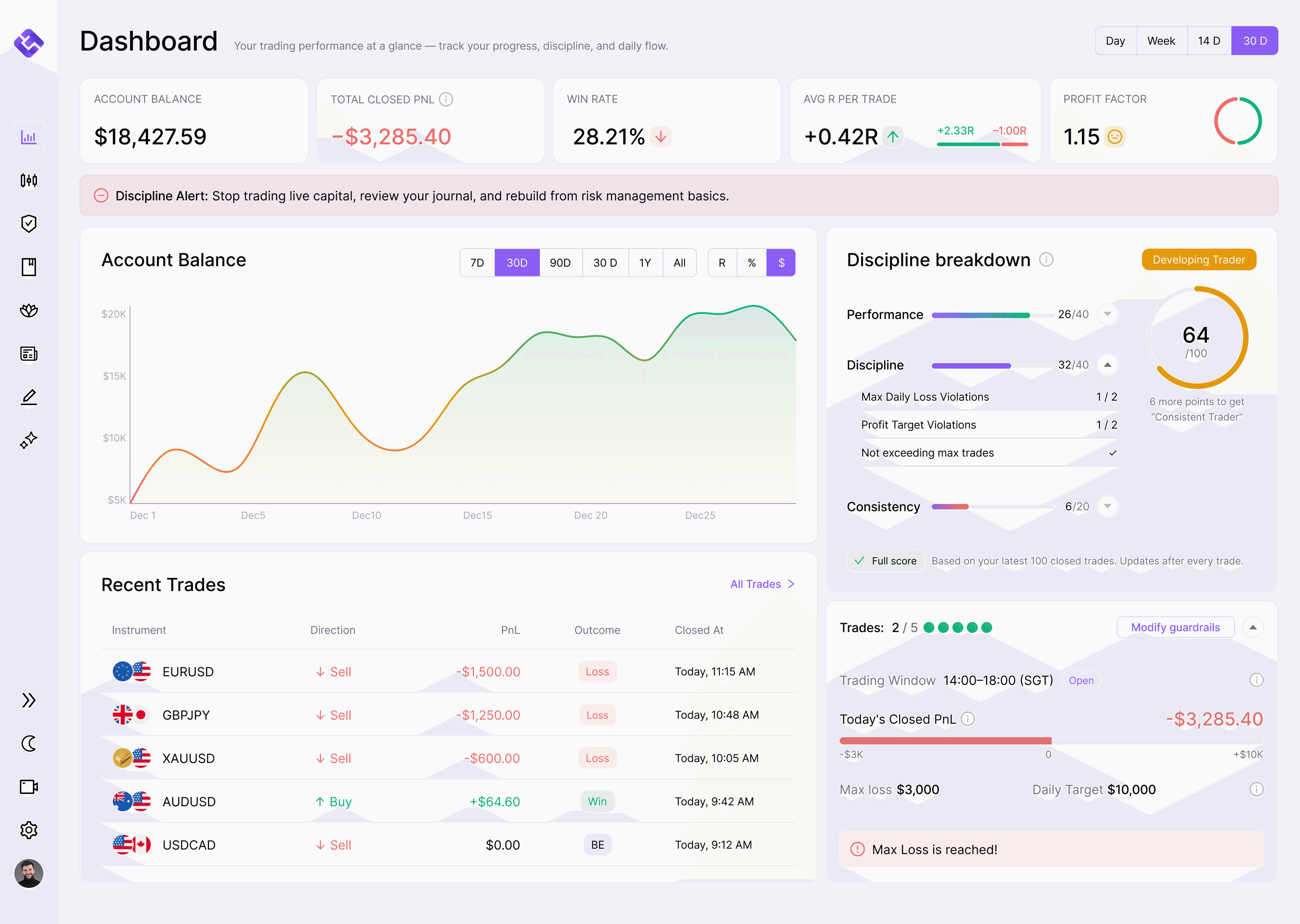
For swing traders, the journal auto-imports completed trades so nothing falls through the cracks during multi-day holds. You review once, tag your emotions, and move on. The dashboard tracks your performance across timeframes, so you can see which style actually produces your best numbers over time.
One platform, both styles, zero excuses.
The Edge Brief
Receive Insights on trading psychology, discipline, and the behavioral patterns that create consistent traders from our Founder and the EdgeFlo team, delivered to your inbox.
Think different. Trade different.
Is scalping more profitable than swing trading?
Can I scalp with a full-time job?
How many hours a day does swing trading take?
Which style has less stress?

Turn discipline on.
Every session.
EdgeFlo is the environment serious traders operate inside.
Start 7-Day Free Trial
Cancel anytime.
No long-term commitment.

Think Different, Trade Different.