

Bread and Butter Setups: Why 3R Trades Pay the Bills
Sniper entries make the highlight reel. Consistent 2R to 5R setups make the money. Learn how to identify and rely on repeatable bread-and-butter trades.
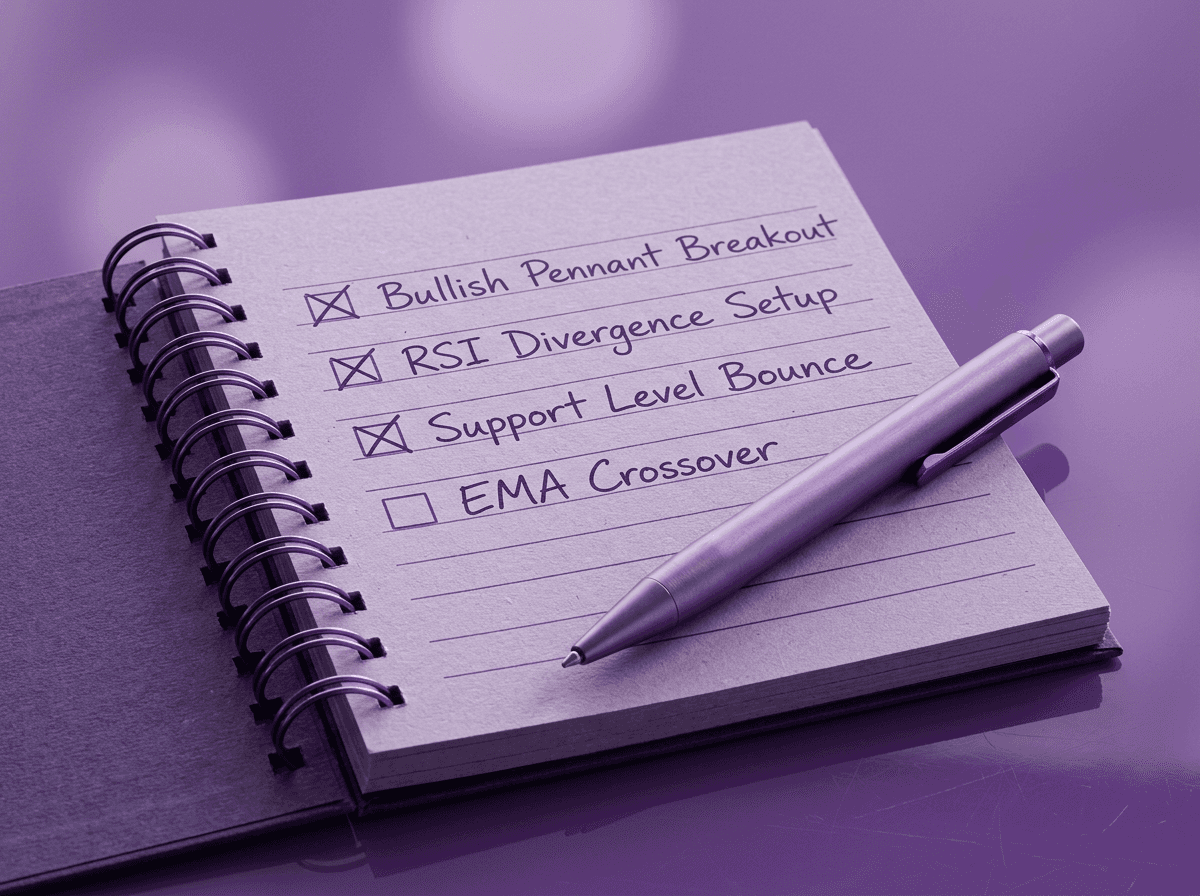
Every trading highlight reel shows the 10R sniper entry. The one-in-a-hundred trade where entry, timing, and momentum aligned perfectly. It looks incredible. It feels incredible.
But it pays the bills about as often as a lottery ticket covers rent.
The trades that actually build accounts are the 2R and 3R setups that show up every week. They are not exciting. They will never make a viral screenshot. But string twenty of them together over a month and the math speaks for itself.
TL;DR
Bread-and-butter setups are repeatable, moderate-R trades you can rely on week after week.
They typically produce 2R to 5R returns and appear frequently enough to generate consistent income.
One to three well-tested setups is enough. More is clutter.
Document your setups in a trading playbook so you execute them identically every time.
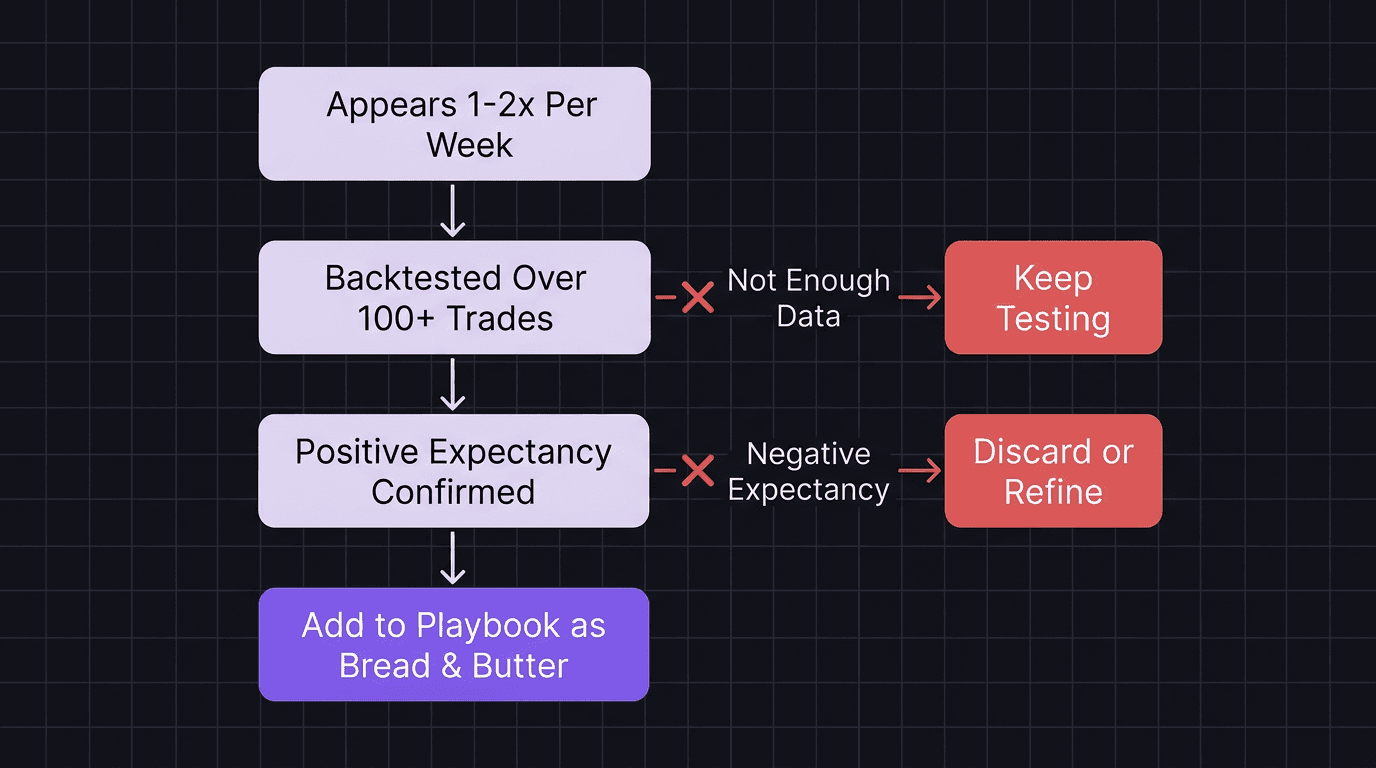
Backtesting over 100 or more trades proves a setup qualifies as bread and butter.
The Highlight Reel Problem
Social media shows you the outlier. The 10R trade. The 50R entry. The screenshot of $40,000 profit on a single position. You see it and think: that is what I need to learn.
So you spend weeks trying to catch the perfect entry. You skip the 2R setups because they feel small. You hold every trade for the moon because you want the big number. You wait for conditions that barely ever align because you are filtering for perfection.
Meanwhile, the trader who takes three 3R setups a week has made 9R in a month while you are still looking for one 10R trade.
Here is the reality: most months, even excellent traders never get a 10R trade. Their profit comes from the boring setups they take repeatedly, with the same rules, the same entry criteria, and the same exits.
What Makes a Setup "Bread and Butter"
A setup qualifies when it meets three criteria:
1. Frequency. It appears at least once or twice per week in your chosen market and session. A setup that only triggers once a month is a bonus, not a foundation. Your bread and butter is the pattern you can count on seeing regularly.
2. Positive expectancy over a large sample. Not just "it worked the last three times." You have backtested it across 100 or more historical occurrences and confirmed it produces a positive expectancy. If the win rate is 45% and the average win is 3R, you know the math is on your side.
3. Executability under pressure. You can take the trade when you are tired, stressed, or coming off a loss. The rules are clear enough that you do not need to be in peak mental state to identify and execute the setup. If the setup requires five confluences, two timeframes, and a gut feeling, it is not a bread-and-butter trade. It is a judgment call.
How Consistent 3R Trades Build an Account
Take a $25,000 account risking 1% per trade ($250 risk). Your bread-and-butter setup has a 45% win rate and averages 3R per win.
You take 8 trades per month (2 per week).
Wins: 3.6 (round to 4 for a given month)
Losses: 4.4 (round to 4)
Winning trades: 4 times $750 = $3,000
Losing trades: 4 times $250 = $1,000
Net profit: $2,000
That is an 8% return in one month from unglamorous, repeatable trades. No sniper entry required. No holding through overnight chaos. Just the same pattern, executed the same way, over and over.
Over a quarter, that compounds. And as the account grows, the 1% risk amount grows with it, so the dollar profits scale without changing the strategy.
Walkthrough: Identifying Your Bread and Butter
You trade GBP/USD during the London session. After reviewing your journal, you notice a pattern: pullback to a supply or demand zone after a market structure shift, with liquidity swept before entry. It appears about twice per week.
You backtest this setup over 120 occurrences across 8 months of chart history. Results: 52 wins, 68 losses (43% win rate). Average win: 3.2R. Average loss: 1R.
Expectancy: (0.43 times 3.2R) minus (0.57 times 1R) = 1.376R minus 0.57R = 0.806R per trade.
That is 0.806R expected per trade. Over 8 trades per month, that is 6.45R in expected monthly returns. On a $25,000 account risking 1%, that is $1,612 expected per month.
You do not need another setup. This one does the job. Document it in your playbook, set the rules, and execute.
The walkthrough also reveals something important: the win rate was only 43%. You lose more often than you win. If you did not know the R multiple data, you might have abandoned this setup after a rough week. That is why tracking both metrics matters.
Why One to Three Setups Is Enough
More setups means more decisions, more rules to remember, and more room for confusion under pressure. The trader who knows one setup deeply will outperform the trader who knows ten setups shallowly.
Your trading edge lives in repetition and refinement, not variety. Each time you take your bread-and-butter setup, you learn something about how it behaves in different conditions. Tight range days versus trending days. Early London versus late London. High-volume weeks versus holiday weeks.
That granular understanding only comes from hundreds of repetitions of the same pattern. If you split your attention across ten setups, you never reach that depth with any of them.
Think of it like a restaurant. The places that do one thing extremely well tend to outperform the ones with a 15-page menu. Same principle.
The Bonus Trade (Not the Foundation)
Sniper entries, 10R trades, and perfect timing still happen. When they do, you take them. But they are dessert, not the main course.
Your monthly income plan should never depend on catching outlier trades. If you build your plan around bread-and-butter setups and the outlier shows up, that month is exceptional. If the outlier does not show up (which is most months), you still hit your targets.
This mindset shift is the difference between trading as a business and trading as a gamble. A business has predictable revenue from repeatable processes. An A+ setup is a welcome surprise, not a requirement.
How EdgeFlo Supports Repeatable Setups
EdgeFlo's Edge plan lets you store your bread-and-butter setup as an active playbook entry. When you sit down to trade, the setup criteria sit on screen next to your chart: entry conditions, stop placement rule, take-profit logic, and required confluences. No guessing. No improvising.
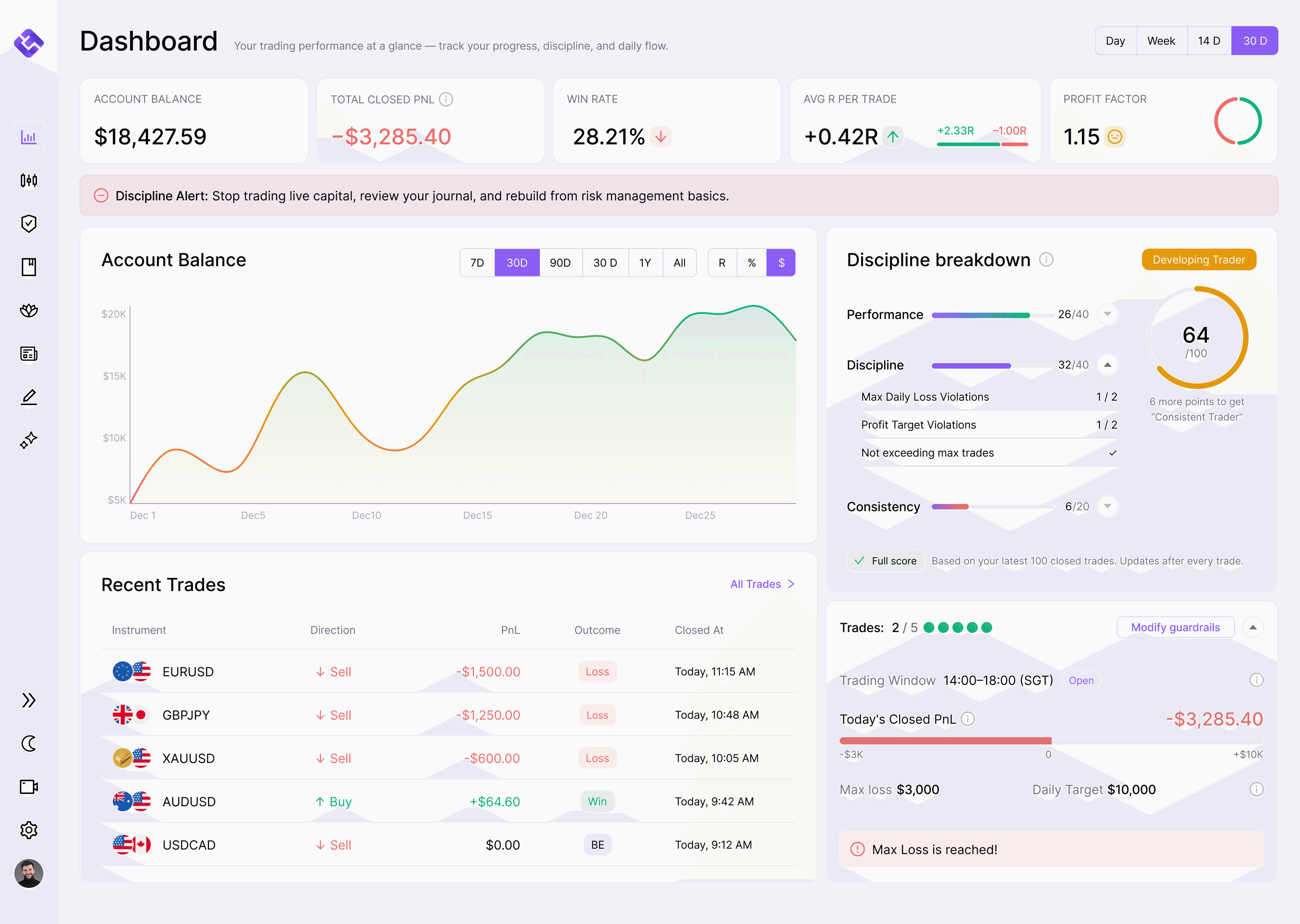
The journal tracks each trade by setup type, so your dashboard shows exactly how your bread-and-butter setup performs over time. If your average R starts drifting, you see it in the data before it costs you money. That feedback loop is how consistent setups stay consistent.
Post-trade self-reporting prompts you to flag whether you followed the setup rules or deviated. Over a month, those flags reveal whether your discipline is holding or slipping, and that information is worth more than any single trade.
The Edge Brief
Receive Insights on trading psychology, discipline, and the behavioral patterns that create consistent traders from our Founder and the EdgeFlo team, delivered to your inbox.
Think different. Trade different.
What is a bread-and-butter trade setup?
How many bread-and-butter setups do I need?
Should I skip my bread-and-butter setup if a bigger trade is possible?
How do I know if a setup qualifies as bread and butter?

Turn discipline on.
Every session.
EdgeFlo is the environment serious traders operate inside.
Start 7-Day Free Trial
Cancel anytime.
No long-term commitment.

Think Different, Trade Different.