

Amygdala Hijack: Why You Panic Exit Trades
Your amygdala triggers panic when trades move against you. Learn how this brain mechanism causes premature exits and what to do instead.
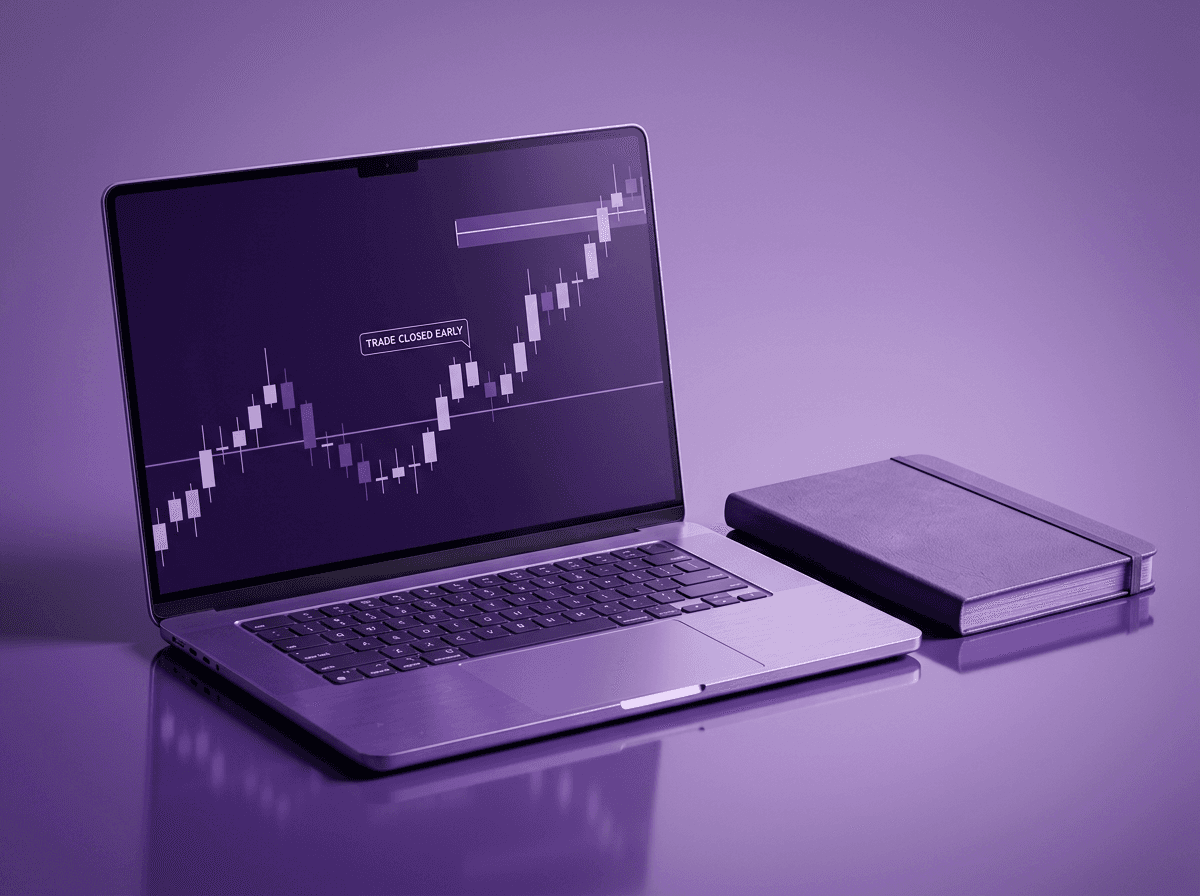
You enter a sell on GBP/USD. The setup is clean. Your analysis checks out. Then a single bullish candle pushes price 20 pips against you, and suddenly your hands are on the mouse, heart pounding, ready to close the trade before your stop loss is even touched.
That is not a strategy problem. That is your amygdala hijacking your execution.
The amygdala is the part of your brain responsible for detecting threats. It evolved to keep you alive when a predator charged at you. In trading, it fires the same alarm when you see red on your P&L. The result: you close trades early, skip valid setups, and give back profits you earned by following your plan.
TL;DR
Your amygdala treats losing trades like physical threats and triggers panic responses.
This panic causes premature exits, even when your analysis is still valid.
You cannot eliminate the amygdala response, but you can build systems that prevent it from controlling your trades.
Pre-defined stop losses and proper position sizing reduce the emotional intensity of drawdowns.
The gap between knowing your plan and executing it under pressure is the amygdala gap.
Your Brain's Smoke Detector
Think of the amygdala as a smoke detector mounted in your kitchen. It does not know the difference between your house burning down and a piece of toast getting too dark. It just screams.
In trading, the "smoke" is any price movement against your position. A 15-pip pullback in an otherwise valid setup triggers the same hormonal cascade as a genuine account-threatening event. Your palms sweat. Your chest tightens. A voice in your head says: get out now.
This is the fight-or-flight response activating. Your brain floods with cortisol and adrenaline, the same chemicals that helped cavemen outrun predators. Useful when a lion is charging. Terrible when you are watching a 5-minute candle on EUR/USD.
The problem is speed. Your amygdala processes a threat in roughly half a second. Your prefrontal cortex (the rational, analytical part of your brain) takes several seconds to evaluate whether the threat is real. By the time logic catches up, you have already clicked the close button.
What an Amygdala Hijack Looks Like in a Trade
Here is a scenario you have probably lived through.
Walkthrough: The Panic Close on GBP/USD
You spot a supply zone on GBP/USD during London session. Price is in a premium area. Structure is bearish. You enter a sell at 1.2680 with a stop loss at 1.2720 and a target at 1.2600.
Risk: 40 pips. Reward: 80 pips. A clean 1:2 setup. You are risking 0.5 lots.
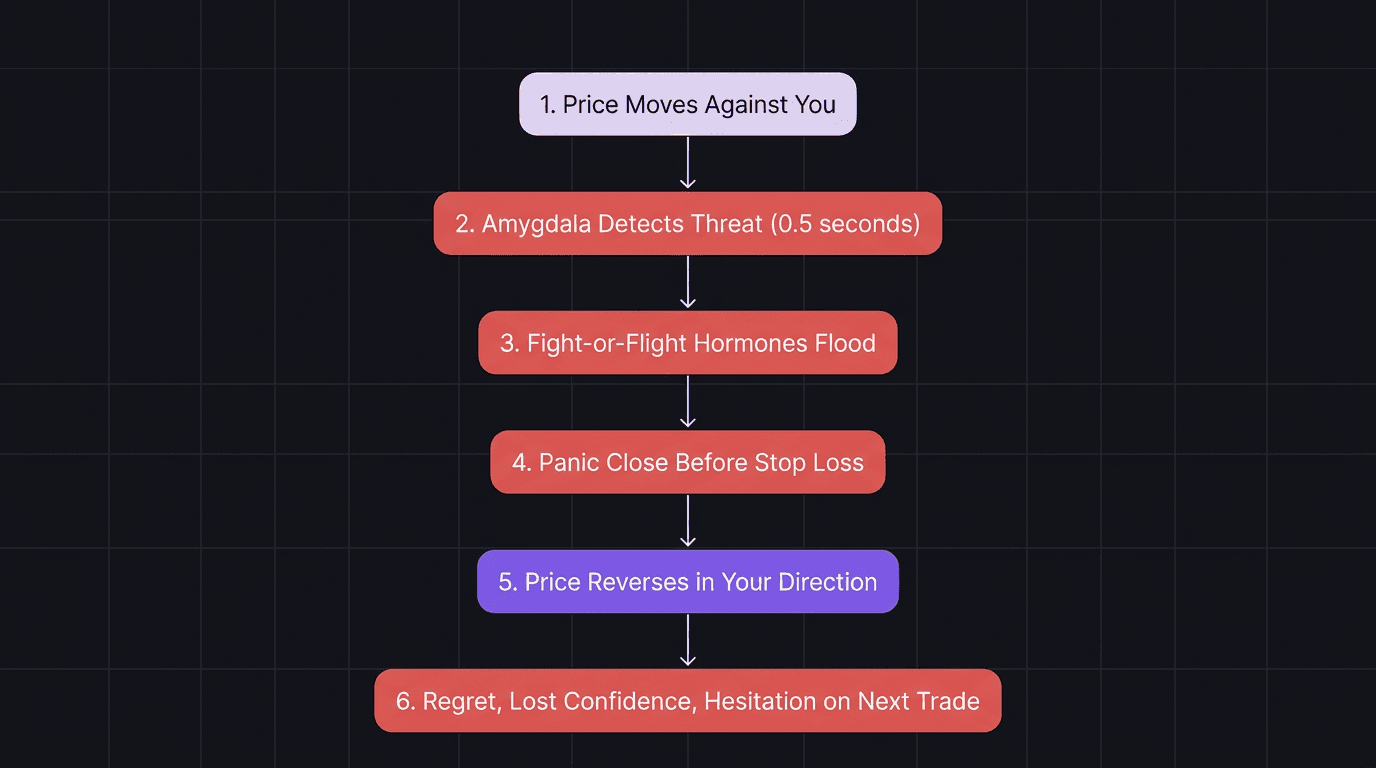
Three minutes after entry, a bullish engulfing candle pushes price to 1.2705. You are 25 pips underwater. Your stop is still 15 pips away, but your amygdala does not care about the math. It sees red, and it screams.
You close the trade at 1.2705 for a 25-pip loss ($125).
One hour later, you check the chart. Price reversed from 1.2710 (never hit your stop) and dropped to 1.2595, blowing past your original target. Had you held, you would have banked 80 pips ($400).
Instead, you locked in a loss and missed the move.
Why Logic Fails Under Pressure
You already know this pattern is irrational. That is the frustrating part. On a calm Sunday evening, you can analyze the chart and say, "I would have held that trade." But when real money is on the line and the candle is moving against you, knowledge evaporates.
This is because the amygdala operates faster than the prefrontal cortex. Your emotional brain makes the decision before your rational brain finishes evaluating the situation. It is the same reason you jump at a loud noise before you realize it was just a door slamming.
Every pip that moves against you registers as pain. And the amygdala has one job: avoid pain. It does not care about your 1:2 risk-to-reward ratio. It does not care that your backtest shows a 45% win rate with positive expectancy. It wants the pain to stop, right now.
This is why reading about trading fear is not enough. Intellectual understanding does not override a biological response. You need structural solutions.
The Amygdala Gap: Demo vs Live
Ever crushed it on a demo account and then fallen apart on live? That is the amygdala gap.
On demo, there is no real money at risk. Your amygdala stays quiet because there is no genuine threat. You follow your plan. You hold trades to target. You feel confident.
The moment you switch to a live account (or start a funded challenge), your hard-earned money is on the line. Now every pip against you triggers the smoke detector. Same strategy, same chart, completely different emotional experience.
This is why traders say, "Demo results don't transfer." The strategy transfers fine. Your psychology does not, because the amygdala only activates when it perceives something real to lose.
Three Structural Fixes for the Hijack
You cannot willpower your way past a biological response. But you can build an environment where the amygdala has less to react to.
1. Size Down Until the Dollar Amount Is Boring
If a 25-pip drawdown on 0.5 lots ($125) triggers panic, you are trading too big for your current psychological tolerance. Drop to 0.2 lots. Now the same drawdown is $50. Still uncomfortable, but not panic-inducing.
The goal is to find the position size where normal pullbacks do not activate your threat detection system. You can scale up gradually as your nervous system adapts to the reality of live trading.
2. Pre-Define Every Exit Before Entry
When your amygdala fires, it overrides decision-making. The fix is to make the decision before the pressure starts. Write your stop loss, your target, and your management rules into your trading plan before you click buy or sell.
Then follow one rule: you do not touch the trade until it hits stop or target. No manual closes. No "just this once." The plan is the plan.
3. Label the Feeling, Then Wait
Neuroscience research shows that naming an emotion reduces its intensity. When you feel the panic rising, say to yourself: "That is my amygdala. This is the fight-or-flight response. My stop is in place."
This small act of labeling gives your prefrontal cortex a few extra seconds to come online. It does not eliminate the feeling, but it creates a gap between the impulse and the action. That gap is where discipline lives.
The Real Cost: Hesitation After the Hijack
The damage from an amygdala hijack does not end with one bad trade. After you panic-close and watch price go your way, something worse happens: you lose trust in yourself.
The next time a valid setup appears, you hesitate. You see the entry, you know it aligns with your plan, but somewhere in your subconscious, your amygdala remembers the last time. It whispers: "This is going to happen again."
So you skip the trade. And that trade works. Now you are frustrated, angry, and doubting your entire approach.
This is how a single amygdala hijack turns into a multi-week spiral. The hijack causes the exit. The exit causes regret. The regret causes hesitation. The hesitation causes missed winners. The missed winners cause self-doubt. And self-doubt feeds the next hijack.
Breaking this cycle requires treating the root cause (your threat response), not the symptom (the bad trade).
How EdgeFlo Helps You Trade Through the Hijack
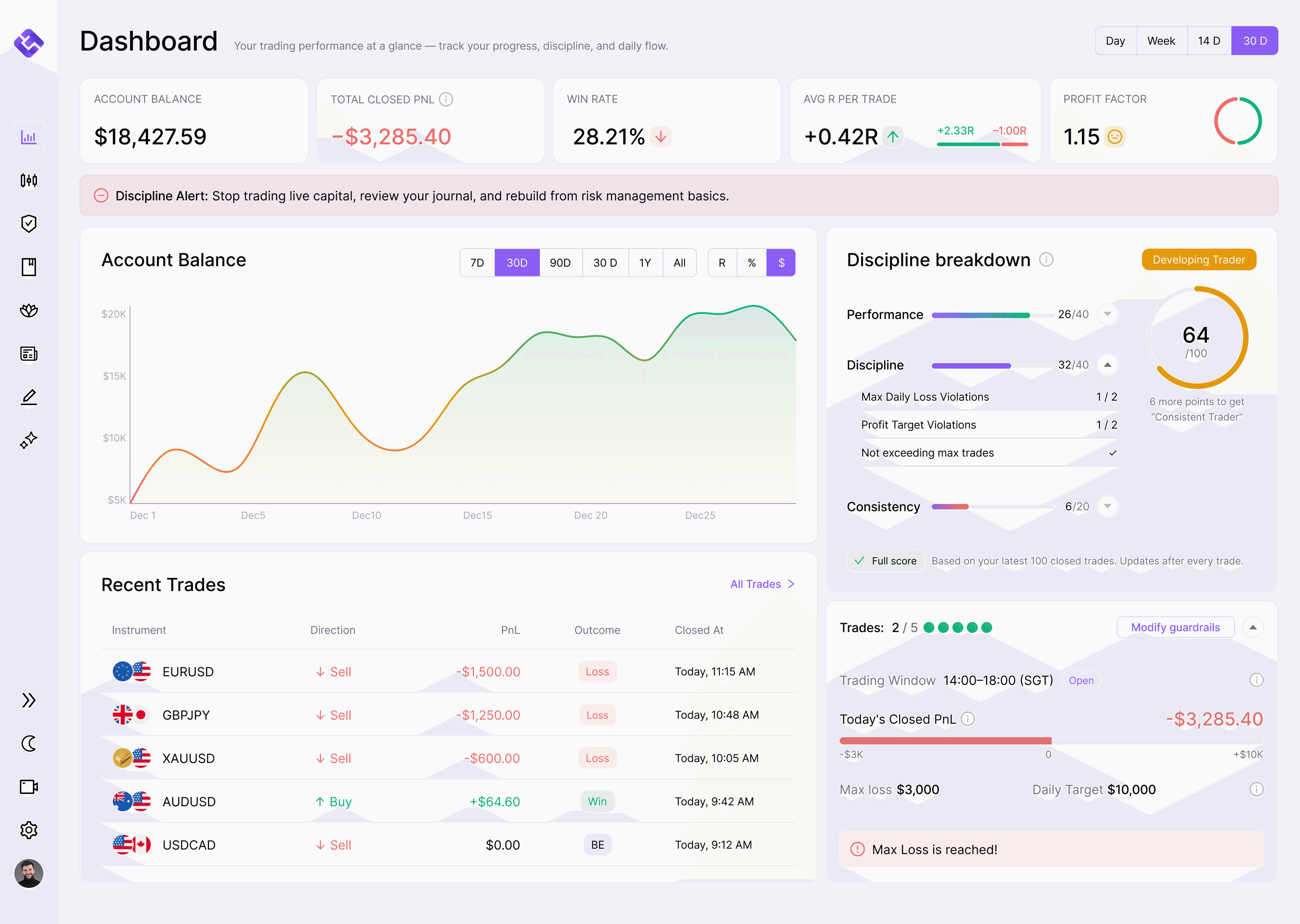
EdgeFlo is built around the idea that discipline breaks down under pressure. That is why it puts guardrails between your impulse and your execution. You can set daily loss limits, max trade counts, and risk-per-trade caps that restrict your activity when your amygdala is most likely to be running the show. You can override these guardrails, but you have to consciously choose to, which forces your prefrontal cortex back into the decision.
The AI-powered trading journal auto-imports your trades and lets you tag the emotion you felt during each one. Over time, you start seeing patterns: which sessions trigger panic, which setups cause hesitation, which conditions make you override your plan. Sanctuary provides guided reset routines to help you decompress before re-entering the market after a stressful session.
Awareness does not eliminate the amygdala response. But a system that tracks it, surfaces it, and makes rule-breaking a conscious choice instead of a reflex changes the equation.
The Edge Brief
Receive Insights on trading psychology, discipline, and the behavioral patterns that create consistent traders from our Founder and the EdgeFlo team, delivered to your inbox.
Think different. Trade different.
What is an amygdala hijack in trading?
Can you eliminate the amygdala response while trading?
Why do I panic when a trade moves against me?
How do I stop panic-exiting trades?

Turn discipline on.
Every session.
EdgeFlo is the environment serious traders operate inside.
Start 7-Day Free Trial
Cancel anytime.
No long-term commitment.

Think Different, Trade Different.