

Trading Habit Tracker: See Why Your Bad Days Keep Happening
A trading habit tracker reveals the link between your daily habits and your worst trading days. Track meditation, exercise, and chart prep to fix execution.
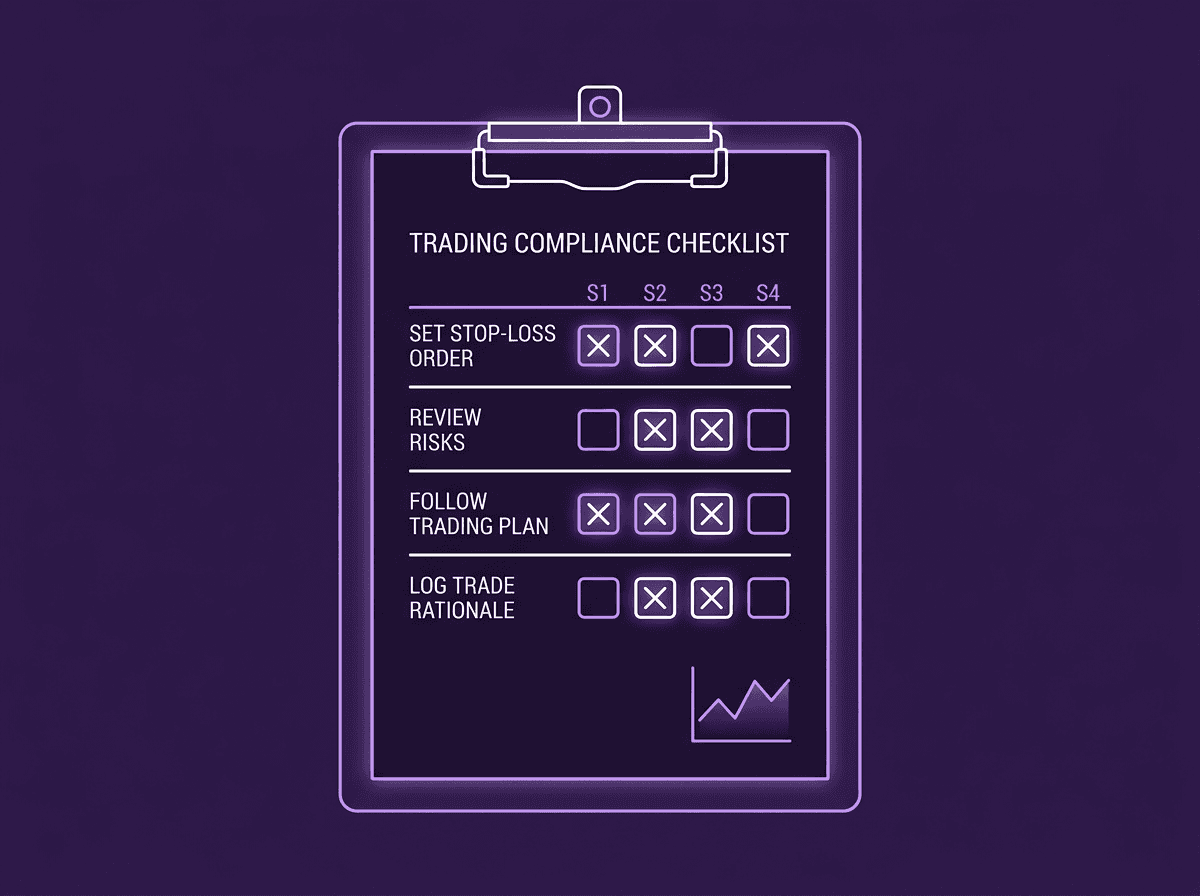
A trading habit tracker is a daily log that records whether you completed key routines (meditation, exercise, chart analysis, plan adherence) and then maps those habits against your trading performance. When you have a string of bad days, the tracker shows you exactly which habits you skipped before each one. Most traders blame the market or their strategy when execution falls apart. The real cause is usually simpler: you stopped doing the things that keep your head clear and your process sharp. A habit tracker makes that invisible connection visible.
TL;DR
Track seven daily habits: meditation, exercise, clean diet, study, chart analysis, follow your plan, journal.
Bad trading days almost always correlate with skipped habits, not bad strategy.
A habit tracker creates a data trail so you can see the pattern instead of guessing.
Review your tracker weekly alongside your trading journal to spot weak spots.
Even tracking alone (without perfect compliance) improves awareness and accountability.
Why Habits Matter More Than Strategy
You could hand two traders the exact same strategy. Same entry criteria, same risk rules, same pairs, same timeframes. Six months later, one is profitable and the other has blown an account.
The difference is not intelligence. It is not screen time. It is what each trader does every day before they open a chart.
Brett Goh puts it bluntly when teaching his trading dashboard system: "These are the good habits that will actually make you a profitable trader. If you do them every day, you become a profitable trader much faster."
That is not motivational fluff. It is mechanical. The habits that support clear thinking, physical energy, and emotional regulation directly affect your ability to follow rules under pressure. Skip meditation for a week and watch how quickly you start taking revenge trades. Stop exercising and notice the brain fog creeping in during your session.
Strategy is the what. Habits are the whether. Whether you actually execute the strategy when it matters.
Ever had a week where you knew your setup, saw it form perfectly, and still didn't take it? Or took a trade that was clearly outside your plan? Those aren't strategy problems. Those are habit problems wearing a strategy mask.
The Seven Habits That Separate Consistent Traders
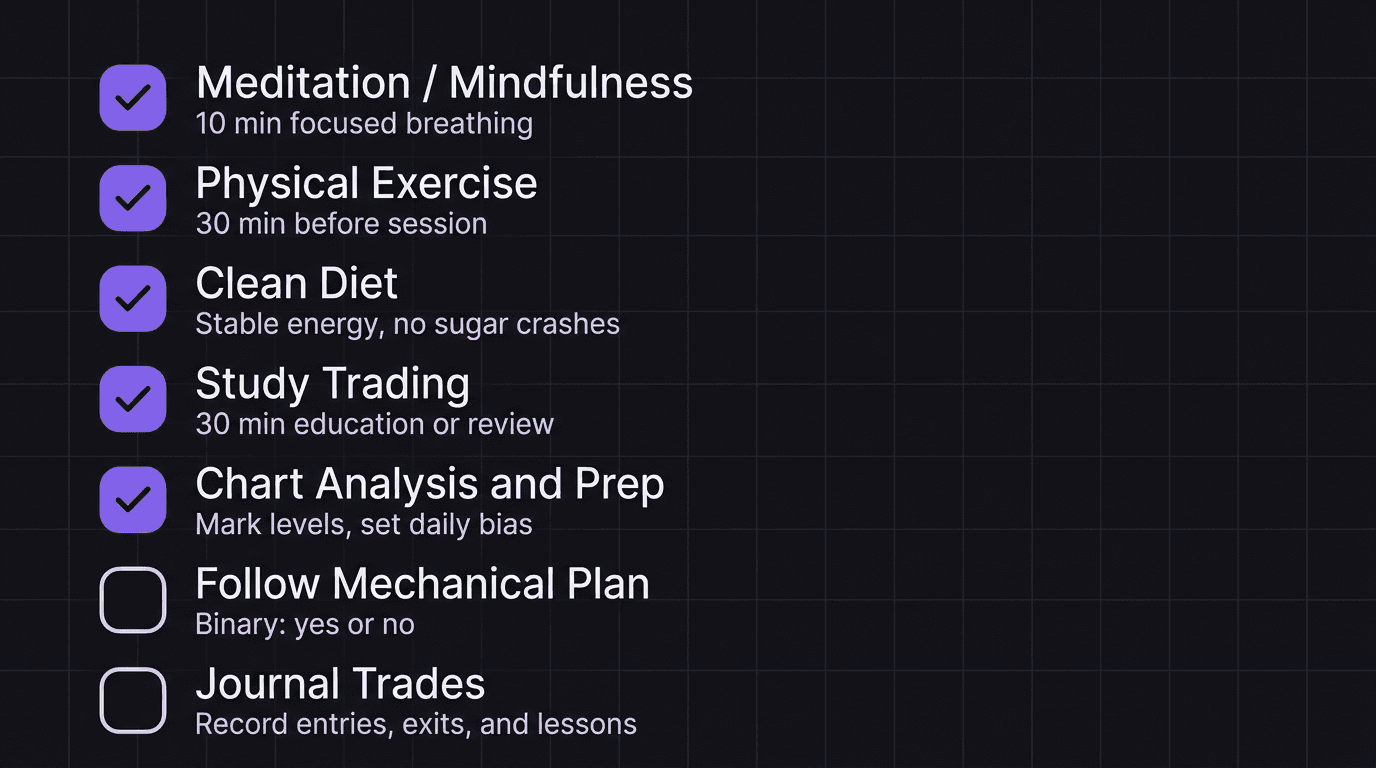
Brett Goh's trading dashboard includes a habit tracker with seven specific items. These aren't random wellness suggestions. Each one directly feeds execution quality.
1. Meditation or mindfulness. Even 10 minutes of focused breathing before your session reduces impulsive decisions. It trains your brain to observe without reacting, exactly the skill you need when price spikes against your position.
2. Physical exercise. Trading is a mental performance sport. Your brain runs on oxygen and blood flow. A 30-minute workout before your session sharpens focus and lowers cortisol (the stress hormone that makes you panic-sell).
3. Clean diet. Sugar crashes and caffeine spikes create emotional volatility. That volatility shows up on your P&L. You don't need a perfect diet. You need stable energy through your trading session.
4. Study and education. Thirty minutes of studying price action, reading market analysis, or reviewing concepts from your strategy. This is not optional. Markets evolve. Your understanding needs to keep up.
5. Chart analysis and prep. Mark your levels, identify your bias, note the key zones before the session opens. This is the pre-market routine that stops reactive trading.
6. Follow your mechanical plan. Did you actually trade according to your rules today? Not "mostly." Not "except for that one trade." Binary: yes or no.
7. Journal your trades. Record what you did, why you did it, and what happened. The journal is where learning actually occurs. Without it, you repeat mistakes and never know why. Proper journaling closes the feedback loop.
How a Habit Tracker Reveals Your Weak Spots
Tracking alone does not fix anything. But it does something powerful: it creates data where before there was only feeling.
Without a tracker, a bad week feels random. "The market was choppy." "My setups weren't there." "I just had bad luck."
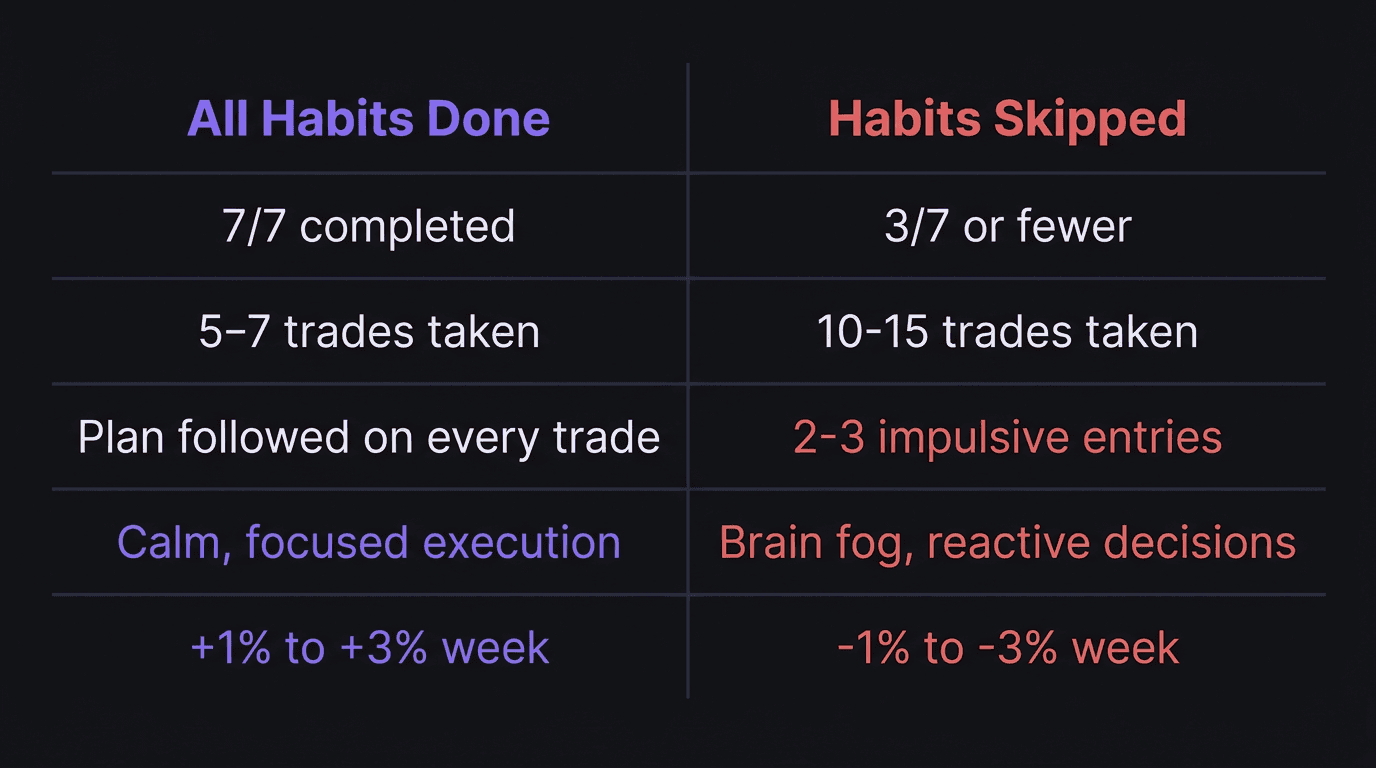
With a tracker, you look back and see something specific. Monday: skipped meditation, skipped exercise, took three impulsive trades, lost 2.4%. Tuesday: skipped meditation again, studied for only five minutes, broke your plan twice, lost 1.8%.
See the pattern? You didn't have a strategy problem. You had a morning routine problem.
Brett Goh explains this correlation directly: "You started trading but you don't meditate, you don't work out... your trading performance was actually quite trash... you had too much brain fog and you can't really focus on the charts. When you go back and look at the habit tracker, you're able to find out why."
That "why" is the whole point. Trading without tracking habits is like trying to lose weight without stepping on a scale. You might think you're doing everything right. The data tells a different story.
Walkthrough: The Tracker Catches What You Missed
> Trader: A part-time forex trader working the New York session on EUR/USD and GBP/USD. > > Week 1 (all habits tracked): Meditated every morning. Hit the gym four out of five days. Prepped charts during pre-market routine. Followed the plan on every trade. Results: +3.2% on the week with 7 trades, 5 winners. > > Week 2 (habits slipping): Skipped meditation Monday, Wednesday, and Friday. No gym all week because of a schedule change. Skipped chart prep twice and traded "by feel" during the session. Results: -2.1% on the week with 12 trades, only 4 winners. > > The strategy didn't change. The pairs didn't change. The market wasn't dramatically different. But the trader took nearly double the trades (12 vs. 7), which signals overtrading and impulsive entries. The habit tracker shows exactly why: no meditation, no exercise, no chart prep on the worst days. > > Without the tracker, this trader blames the market. With it, they see the fix: get back to the morning routine. That realization takes 30 seconds instead of weeks of frustration.
Correlating Habits to Trading Performance
The tracker becomes truly powerful when you combine it with your journal. Habits in one column. Trading outcomes in another. Patterns emerge within two weeks.
Here is how to read the correlation:
Habit pattern | Likely trading outcome |
|---|---|
All 7 habits done | Best execution days, lowest impulsive trades |
Exercise + meditation skipped | Brain fog, poor focus, early exits or late entries |
Chart prep skipped | Reactive trading, chasing moves, entering without levels |
Plan not followed | Overtrading, revenge trades, rule breaks |
Journaling skipped | Same mistakes repeated, no post-session learning |
You don't need a statistics degree. Just look at your worst three trading days in the past month. Pull up the habit tracker for those days. Count how many habits you completed.
Now look at your best three days. Count again.
The gap is your answer.
Some traders discover that meditation is their keystone habit. When they meditate, everything else follows. Others find that exercise is the domino. One good workout and they have the discipline to prep charts, follow the plan, and journal afterward.
Your keystone habit is the one that, when done, makes all the others easier. Find it. Protect it. Never skip it.
How to Build Your Own Habit Tracker
You don't need fancy software. A spreadsheet works. A notebook works. The format matters less than the consistency.
The Basic Structure
Create a grid. Dates run down the left column. Habits run across the top row. Each cell is binary: done or not done.
Date | Meditate | Exercise | Diet | Study | Chart Prep | Followed Plan | Journaled | Trading Result |
|---|---|---|---|---|---|---|---|---|
Mon | Y | Y | Y | Y | Y | Y | Y | +0.8% |
Tue | N | N | Y | Y | N | N | N | -1.2% |
Wed | Y | Y | Y | N | Y | Y | Y | +0.4% |
That last column ("Trading Result") is what ties everything together. It doesn't have to be P&L. It could be an execution quality score (1-10) based on how well you followed your rules, regardless of whether the trade won or lost.
The 30-Minute Daily Planner
Brett Goh takes this further with a daily planner that structures every 30 minutes of the day to a specific task. "I actually structure out every 30 minutes of my day to a specific task," he explains.
You don't have to go that granular. But blocking specific times for your key habits prevents them from getting "squeezed out" by other tasks. If meditation is at 7:00 AM, chart prep at 7:30 AM, and your session starts at 8:00 AM, those habits have a protected slot.
The traders who say "I'll meditate when I have time" never meditate. The traders who say "I meditate at 7:00 AM" do.
Weekly Review Protocol
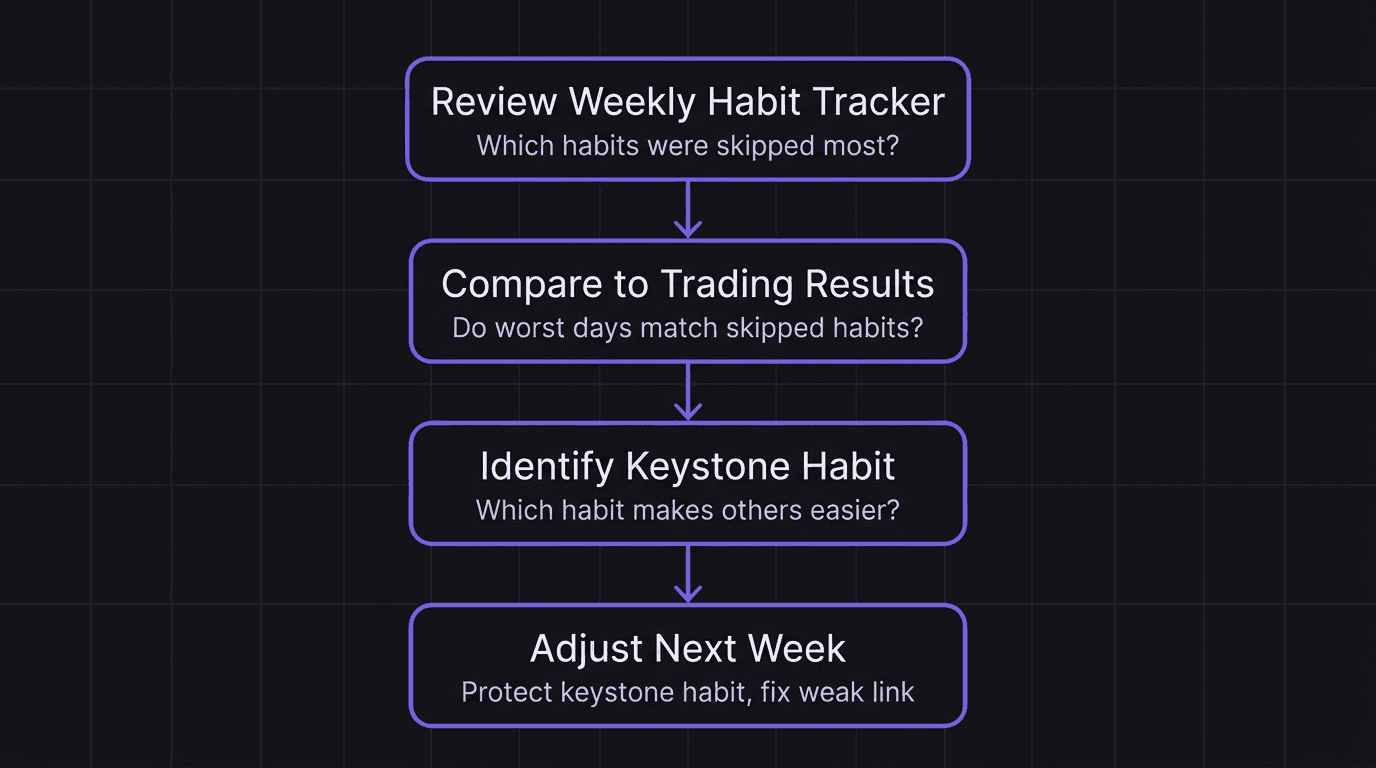
Every weekend, review the tracker alongside your journal. Ask three questions:
Which habits did I skip most this week? That is your weak link.
Do my worst trading days line up with skipped habits? If yes, you found the cause.
What is my keystone habit? Which single habit, when completed, makes the rest follow?
This review takes 15 minutes. It tells you more about your trading problems than hours of chart analysis.
Don't skip the review. The tracker is useless if you fill it in and never look back. The data is only as good as the attention you give it. Sound familiar? Same reason a journal only works if you actually review it.
How EdgeFlo Supports Daily Routines
Building habits is one thing. Remembering to do them at 6:45 AM when you'd rather check your phone is another.
EdgeFlo's pre-market routine feature is a customizable checklist that includes meditation, plan review, chart prep, and news check. You configure the items that match your habit list, and it prompts you to complete each one before you start trading. It turns your habit tracker into an active gate rather than a passive log.
The difference matters. A spreadsheet records what you did after the fact. A pre-market checklist prompts you to do it before you trade. One creates awareness. The other creates structure. Both are useful, but the combination is where trading discipline compounds.
The Edge Brief
Receive Insights on trading psychology, discipline, and the behavioral patterns that create consistent traders from our Founder and the EdgeFlo team, delivered to your inbox.
Think different. Trade different.
What is a trading habit tracker?
What habits should traders track daily?
How does a habit tracker improve trading performance?
Can I build a trading habit tracker in a spreadsheet?

Turn discipline on.
Every session.
EdgeFlo is the environment serious traders operate inside.
Start 7-Day Free Trial
Cancel anytime.
No long-term commitment.

Think Different, Trade Different.